


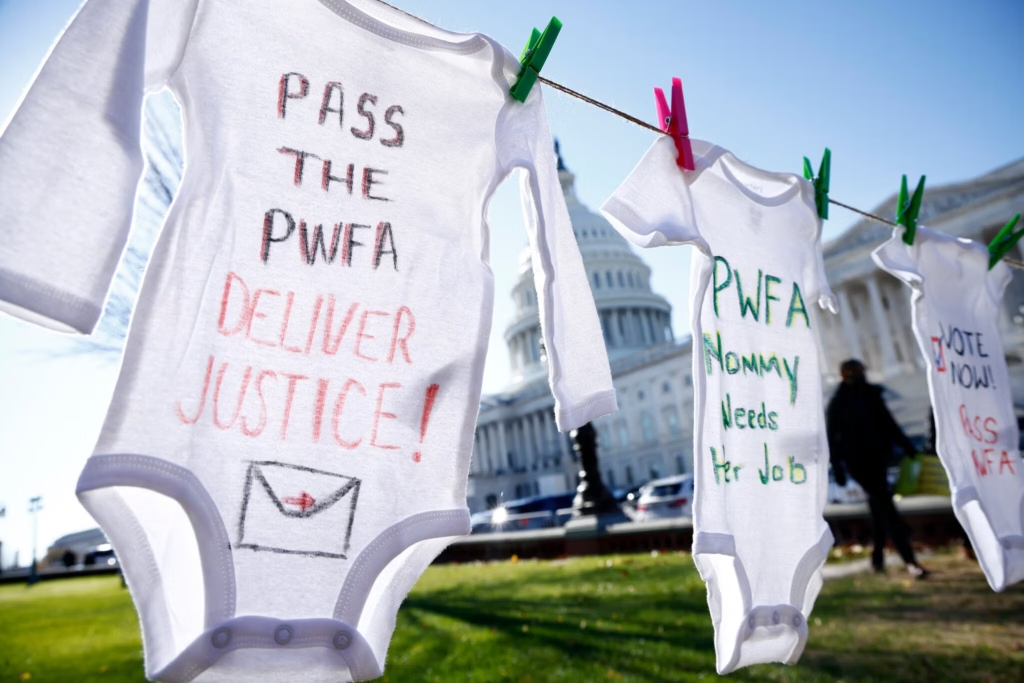
Key Points: 5th Circuit Proxy Voting Ruling
- On November 20, 2026, the full 5th Circuit Court of Appeals ruled 9-8 that the House cannot count absent members voting by proxy toward a quorum.
- The case, Texas v. Blanche, centers on the Pregnant Workers Fairness Act, passed in a December 2022 spending bill. Of 431 final votes, 226 were cast by proxy.
- The court’s order bars federal enforcement of that law against the State of Texas only. The law still applies elsewhere.
- Legal experts say the reasoning could invite new challenges to other laws in the same spending package.
- The Supreme Court is expected to be asked to review it, though a new Texas attorney general takes office in January.
Sometimes a court ruling is narrow in its order and wide in its meaning. This is one of those.
The 5th Circuit proxy voting ruling is about one law in one state. It is also about how Congress counts itself.
What the 5th Circuit Proxy Voting Ruling Says
In 2020, the House changed its rules during the pandemic. Members who could not travel were allowed to let a colleague vote for them.
In December 2022, the House passed a $1.7 trillion spending bill under those rules. It included the Pregnant Workers Fairness Act, which requires employers to accommodate pregnant workers.
Texas sued. It argued the bill was not validly passed because the Constitution requires a quorum, meaning a majority of members present, to do business.
Judge Cory Wilson wrote for the majority. He said, “Presence by proxy does not suffice,” and held that members must be physically present to count toward a quorum.
The 9-8 Count and Who Stood Where
The majority included Chief Judge Elrod and Judges Jones, Smith, Willett, Ho, Duncan, Engelhardt and Oldham. Judge James Graves Jr. wrote the dissent, joined by Judges Stewart, Richman, Southwick, Higginson, Douglas and Ramirez.
Judge Haynes did not sign the dissent but noted in a footnote that she disagreed with the majority. The court’s own count was 9-8.
Graves said the court gave no clear reason for limiting its judgment to one small part of a multi-trillion dollar bill. The dissent also argued that the majority added a physical presence requirement that is not in the text.
A Court That Changed Its Mind
This is not the first time the 5th Circuit looked at the case. In August 2025, a three judge panel upheld the House’s rule, reasoning that the Constitution sets a number for a quorum and does not require bodies to be in the room.
The full court then took the case and wiped out that decision. According to a legal commentary on the 2025 ruling, Judge Wilson was the dissenter on that panel.
If that account is right, the judge who lost in 2025 wrote the winning opinion in 2026. That shows how much a case can change when it moves from a panel to the whole court.
Who Is Affected, Layer by Layer
Here is a way to see the effect that headlines often skip. Think of it in three layers.
- Layer one: Texas state employees. Federal enforcement of the Pregnant Workers Fairness Act against Texas is blocked. Protections under Title VII and Texas state law still exist for those workers.
- Layer two: everyone else. The act remains in effect nationally. Employers in the 5th Circuit states may cite the ruling in federal court, but it does not erase the law.
- Layer three: other laws. Judge Wilson said the ruling does not automatically void every part of the spending package. Still, it opens the door to new challenges.
Legal commentators mentioned the ban on TikTok on government devices and a law on counting presidential electoral votes as examples. That is their view of what could be tested, not a prediction of what will win.
The One Vote That Mattered Most
Only one member of the House raised a quorum objection during the vote. That was Rep. Chip Roy, according to the case summary.
Think about what that means. Hundreds of members cast votes, and the legal question rested on a single objection.
The lesson is one lawyers know well. A procedural point can sit unnoticed for years and then carry the weight of a major case.
What It Means for the Next House
Democrats had planned to bring back a limited form of proxy voting. Under that plan, new parents could name a colleague to vote for them for up to 12 weeks after a birth.
Rep. Brittany Pettersen has led that push, and House Rules Committee ranking member Jim McGovern said he would add it to the rules if Democrats take the majority. Opponents have cited constitutional worries and past misuse.
This ruling was about counting proxies toward a quorum. A new parent plan would raise a related question but not an identical one.
That is our analysis, not a legal finding. Still, it shows why lawmakers on both sides will be reading the opinion closely.
What Happens Next
The decision is widely expected to be appealed to the Supreme Court. A law firm summary says a petition would be due around February 18, 2027, though extensions are possible.
There is a twist. Republicans lose control of the Texas attorney general’s office in January after a Democrat won the race, and that office brought the case. One legal writer noted the new attorney general may not pursue it.
Other courts had earlier rejected challenges to proxy voting on different grounds, citing the Constitution’s Speech or Debate Clause. So the legal fight is far from over.
For now, the ruling stands for Texas and shapes the debate everywhere. The next move belongs to the Supreme Court, or to a new attorney general.