


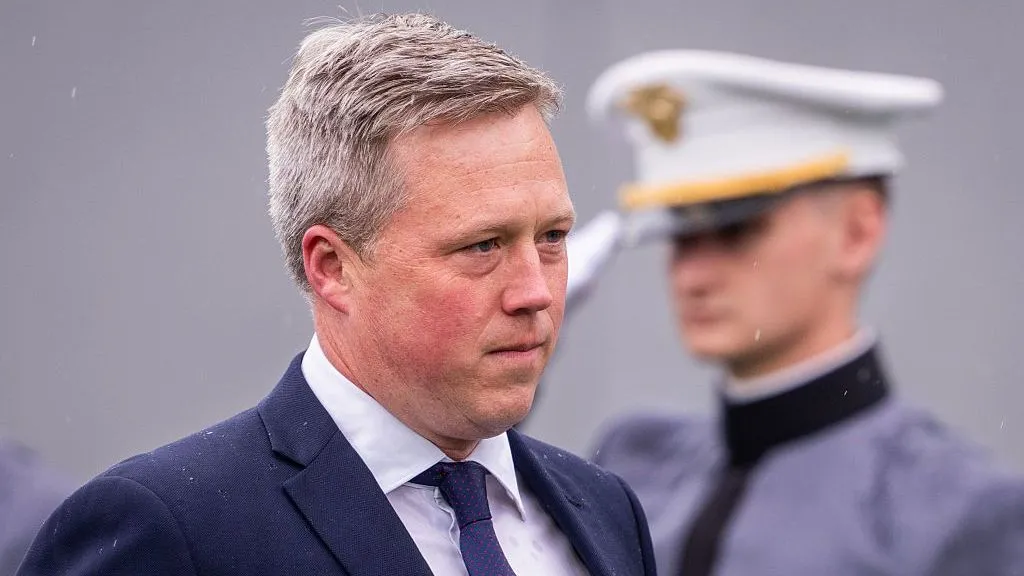
Key Points: Army Secretary Driscoll Resigns
- Army Secretary Driscoll submitted his resignation Monday, effective September 3
- Months of tension with Defense Secretary Pete Hegseth reportedly forced the exit
- Driscoll clashed with Hegseth over Army modernization and general firings
- His departure marks the latest in a growing pattern of Pentagon leadership turnover
The Pentagon just lost one of its most prominent civilian leaders, and the reasons behind his exit reveal a deepening rift at the top of America’s military hierarchy.
Why Army Secretary Driscoll Resigned Now
Dan Driscoll submitted his resignation to President Trump on Monday, with multiple sources confirming he plans to leave the post effective September 3.
Here’s how the decision came together. Driscoll spoke directly with Trump about “the current state of the Army” before formally tendering his resignation, according to a US official.
The timing lines up with earlier reporting too. NBC News reported last week that Driscoll had told close associates he wanted to leave the administration by Labor Day specifically.
What Actually Drove This Decision
Here’s the core conflict at the center of Driscoll’s exit. A source familiar with his resignation said he raised concerns about “Army transformation and readiness” being blocked by Hegseth’s firing of responsible generals.
That friction traces back to earlier this year, when Hegseth removed Army Chief of Staff Gen. Randy George and two other senior generals, decisions that reportedly caught Driscoll off guard entirely.
Here’s a specific flashpoint worth understanding. The New York Times reported Hegseth allegedly removed four officers, two Black men and two women, from a promotions list after Driscoll himself refused to do so.
A separate February incident added more strain too, when Hegseth ordered Driscoll to remove a senior advisor, Col. Dave Butler, a directive Driscoll reportedly resisted.
Why This Rivalry Ran So Deep
Here’s context explaining why Hegseth reportedly wanted Driscoll gone for some time. One official told Reuters that Hegseth viewed Driscoll as a bureaucratic threat, but Driscoll’s close friendship with Vice President JD Vance made removal politically difficult.
Driscoll brought genuine credibility into the role too. As the youngest Army secretary in US history, he gained prominence advocating for cheaper weapons acquisition and modernized drone capabilities.
He also took on unusually high-profile diplomatic work for an Army secretary, joining negotiating teams working to end Russia’s war with Ukraine earlier this year.
What This Means For The Pentagon Going Forward
Here’s the broader pattern this departure fits into. Driscoll becomes the latest senior Pentagon official to exit under Hegseth, following Navy Secretary John Phelan and Gen. Randy George’s earlier departures.
Multiple outlets report Hegseth is now considering Sean Parnell, an Army veteran currently serving as Assistant Secretary of Defense for Public Affairs, as Driscoll’s potential replacement.
With the ongoing war against Iran reportedly straining military leadership even further, this resignation adds fresh uncertainty to a Pentagon already navigating significant internal turnover heading into the fall.