


Published by TrenBuzz.com | May 2, 2026
Key Points at a Glance – Cuba Erupts on May Day as Trump Signs New Sanctions
- President Trump signed a new Cuba sanctions executive order on May 1, 2026 — targeting Cuban officials in energy, defense, mining, finance, and security sectors.
- Cuban Foreign Minister Bruno Rodriguez called the measures “illegal and abusive” and “collective punishment” of the Cuban people.
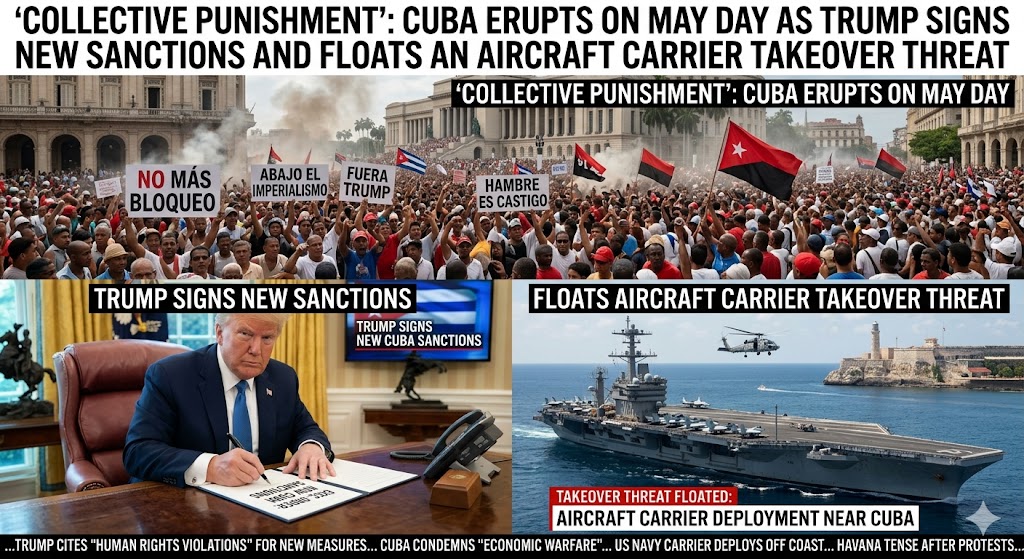
- Thousands of Cubans marched outside the US Embassy in Havana on International Workers Day vowing to “defend the homeland.”
- Trump told a Florida audience he was considering sending the USS Abraham Lincoln aircraft carrier — fresh from Iran — to stop “100 yards offshore” of Cuba.
- Only one Russian oil tanker has reached Cuba since the US oil blockade was imposed in January 2026 — causing widespread blackouts, fuel shortages, and hospital disruptions.
- The sanctions came despite diplomatic progress — senior US officials visited Cuba for talks in April 2026.
- Cuba’s tourism industry, once the country’s most lucrative sector, has plummeted as the crisis deepens.
- Trump’s order also targets adult family members of designated individuals — a sweeping and legally aggressive provision.
- Cuba has been under US trade embargo since 1960 — the new sanctions represent the tightest squeeze in decades.
- This year marks 100 years since Fidel Castro’s birth — a timing that has electrified Cuban state media.
On the same day workers around the world marched for their rights, Cuba marched for its survival — and Washington just made it harder.
Cuban Foreign Minister Bruno Rodriguez has condemned a new wave of US sanctions on the country as “illegal and abusive.” An executive order, signed on Friday by US President Donald Trump, targets officials in the energy, defense, financial or security sectors of Cuba’s economy — as well as those he alleges to have committed “human rights abuses” or corruption.
What the New Sanctions Actually Target
Trump’s executive order targets people known to “operate in or have operated in the energy, defense and related materiel, metals and mining, financial services, or security sector of the Cuban economy, or any other sector of the Cuban economy,” as well as Cuban officials judged to have engaged in serious human rights abuses or corruption, including misappropriation of public assets, expropriation of private assets for personal gain, or bribery. Critically, the order also extends sanctions to adult family members of designated individuals.
The breadth is staggering — essentially, any Cuban government official, their relatives, or anyone doing business with the Cuban state in any major sector could now be sanctioned.
“Collective Punishment” — Cuba Fires Back on May Day
The latest sanctions constitute “collective punishment” of the nation’s people, Cuban Foreign Minister Bruno Rodriguez said. “We firmly reject the recent unilateral coercive measures adopted by the United States government,” he posted on X in English. In a Spanish-language statement, he called the sanctions “illegal” and “abusive.”
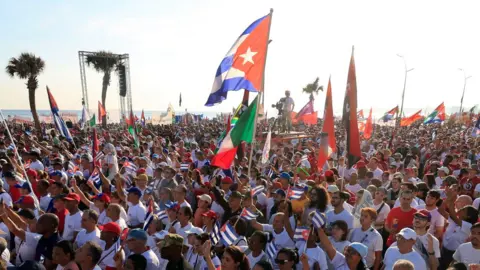
Cuba said the sanctions came despite moves toward dialogue between the two countries, with senior US officials visiting the island for talks in April. Thousands attended marches in Havana and other Cuban cities, vowing to “defend the homeland.”
The timing — International Workers Day — was no accident from Cuba’s perspective. State media framed the marches as the Cuban people’s answer to Washington’s economic warfare.

The Oil Blockade’s Devastating Toll on Cuba
A US blockade on oil to Cuba has led to fuel shortages and widespread blackouts, impacting hospital wards, public transport, and education. Only one Russian oil tanker has reached the country since the blockade was imposed. Trump has also threatened tariffs on goods imported into the US from any country that provides oil to the Caribbean nation.
Already in the throes of economic stagnation, the situation worsened for Cuba following the fuel blockade imposed by Washington in January. Supply shortages and power cuts have become the norm, and tourism — once Cuba’s most lucrative industry — has plummeted.
Trump’s Aircraft Carrier Threat — “On the Way Back From Iran”
Trump told an audience in Florida that the US would be “taking over” the Caribbean island, which lies 145 km from the US state of Florida, “almost immediately.” He added he might have a US aircraft carrier — possibly the USS Abraham Lincoln — “on the way back from Iran… stop about 100 yards offshore” of Cuba.
The comment drew immediate attention from international law experts — any military move against Cuba would face serious legal, diplomatic, and strategic challenges, and drew sharp condemnation from Latin American governments including Mexico, Colombia, and Venezuela.
The Historical Context — 66 Years and Counting
The US and Cuba have had a strained relationship since the communist Fidel Castro overthrew a US-backed government in 1959. US economic and trade embargoes on Cuba have been in place since 1960. This year, Cubans are celebrating 100 years since Castro’s birth — a milestone that has given the Cuban government added symbolic ammunition in framing Washington’s pressure as a continuation of a 66-year campaign against the island’s sovereignty.
Two countries. 90 miles apart. A century of conflict. And on May 1, 2026 — sanctions, marches, and a president talking about parking an aircraft carrier off Havana’s shore.
Disclaimer: This article is for general informational and news reporting purposes only. All quotes, sanctions details, and facts referenced are based on publicly available and credible sources including BBC, AFP, France24, and the White House Executive Order published May 1, 2026. TrenBuzz.com does not represent any government or diplomatic body. Readers are encouraged to follow official government and credible international news sources for real-time updates.