


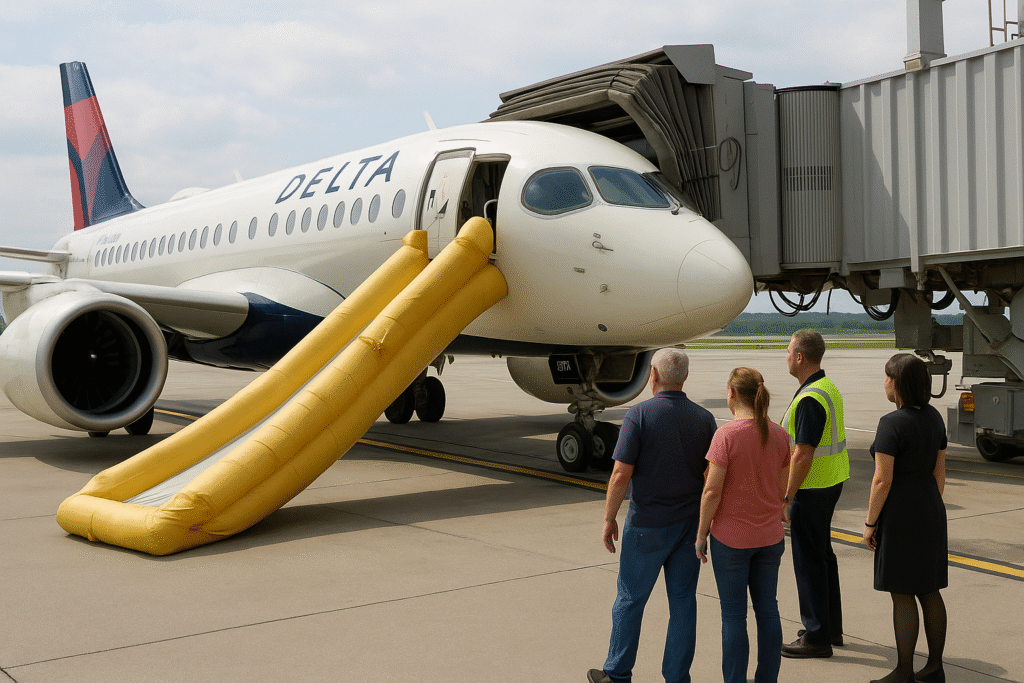
Delta Slide-Deployment Incident: On Oct. 25, 2025 a Delta Air Lines flight preparing to depart Pittsburgh International Airport (DL3248, PIT → SLC) experienced an inadvertent emergency slide deployment when a door was opened while the slide system was still armed. The inflated slide jammed against the jet bridge, stranding passengers briefly, delaying the flight around four hours and triggering maintenance, repacking and passenger-reaccommodation costs that industry reporting places in the five- to six-figure range.
Why this guide: accidental slide deployments are rare but they cause big operational headaches — immediate delays, expensive repairs, potential injuries and safety investigations. If you fly often, here’s a clear, calm breakdown of the timeline, the technical why, passenger rights, airline safety practice, and how to avoid getting blindsided next time.
1) The incident — concise timeline
Delta Slide-Deployment Incident: A Delta Airbus A220 (flight DL3248) was preparing to depart Pittsburgh for Salt Lake City when a cabin door was opened while it was still armed for departure.
That action automatically triggered the door’s emergency slide to inflate and deploy against the jet bridge. Ground crews then spent roughly an hour detaching and deflating the slide; the flight’s departure was delayed about four hours.
2) How does an emergency slide deploy by accident?
Modern evacuation slides are designed to deploy immediately if a door is opened while the door is set to “armed.”
Arming readies the slide so a single motion opens the door and the slide inflates automatically — a deliberate safety trade-off that speeds evacuations in true emergencies, but also makes inadvertent slide deployment (ISD) possible if checks and cross-checks fail.
3) Why it’s so expensive (repair + operational costs)
A single slide for a jet can cost tens of thousands of dollars to replace or repack; add technical inspections, crew reassignments, passenger hoteling, missed-connection rebookings and lost revenue and the total operational bill can reach six figures. Industry estimates reported for this event range from about $50–70k for hardware up to $100k+ when indirect costs are included.

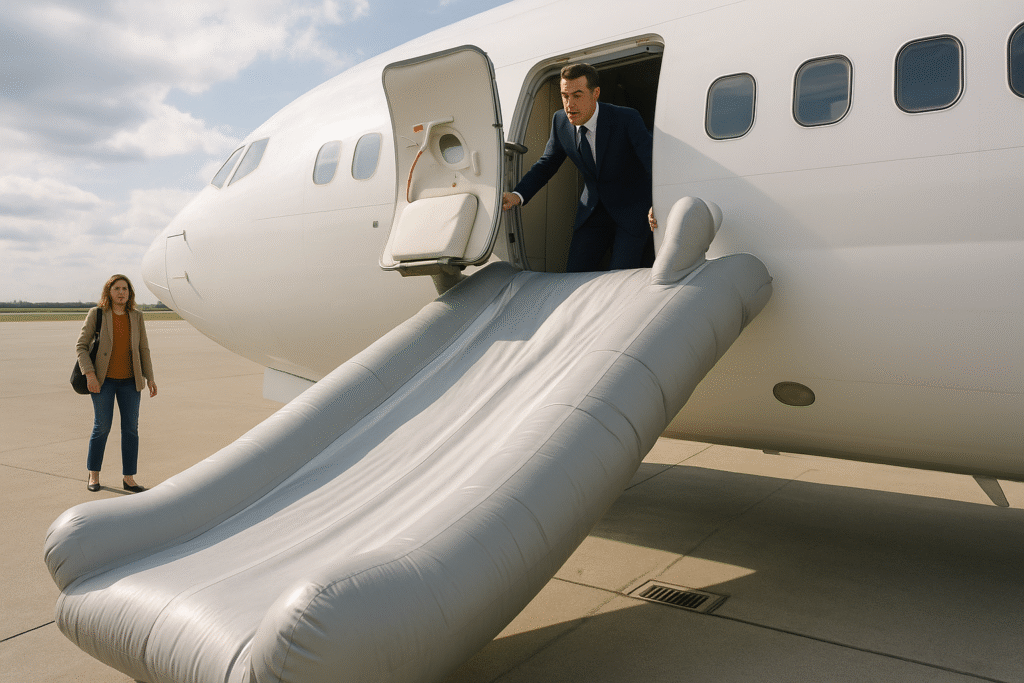
4) Passenger impact and what Delta reportedly did
Passengers aboard the affected flight were held while teams detached the slide and then deplaned after the jet bridge was reconnected. Many missed connections in Salt Lake City; Delta rebooked affected travelers and — according to reporting — provided hotel accommodations in some cases. Expect airlines to offer re-accommodation and standard delay-related care when the carrier is at fault.
5) Safety vs convenience — why the system is that sensitive
The “open door = deploy” logic exists so that in a true evacuation no extra step prevents an immediate exit. It’s safer to risk an occasional ISD than to introduce friction that could slow a mass evacuation. Engineers and regulators accept this design trade-off; the human factor (procedural cross-checks) is the main line of defense against accidental deployments.
6) Has this happened before? (short history)
Yes — accidental slide deployments and slide detachments have occurred across carriers and aircraft types in prior years (including Delta incidents reported in 2023–2024 and other carriers’ ISDs). Each is treated seriously because of safety risk and operational disruption; regulators and airlines open follow-up analyses to reduce recurrence.
7) What happens to the aircraft after a slide deployment
If a slide deploys accidentally, the aircraft is grounded until: (a) the slide is deflated and removed, (b) the door and slide unit pass inspection, and (c) the slide is repacked or replaced and certified as serviceable. That process requires trained maintenance technicians and often takes hours — which is why flights can be delayed or canceled.
8) Could people get hurt by an accidental slide? (safety concerns)
Yes, accidental deployments have injured passengers and crew in rare cases — a slide inflating unexpectedly can knock someone or leave an awkward obstruction. In the Oct. 25 event there were no widely reported serious injuries, but ground crews must take care when detaching slides to avoid strain or crush risks. If you’re nearby during a deployment, follow crew instructions and stay clear.
9) Passenger rights — refunds, rebooking, lodging and compensation
If an airline’s error causes delays or overnighting, passengers are typically entitled to re-accommodation and basic care (meals, lodging) under the carrier’s contract of carriage and U.S. Department of Transportation (DOT) guidance.
Specific compensation (vouchers, refunds) depends on the airline’s policies and whether the delay is within the carrier’s control. Document what happened, keep receipts, and ask gate agents for written confirmation if you pursue reimbursement.
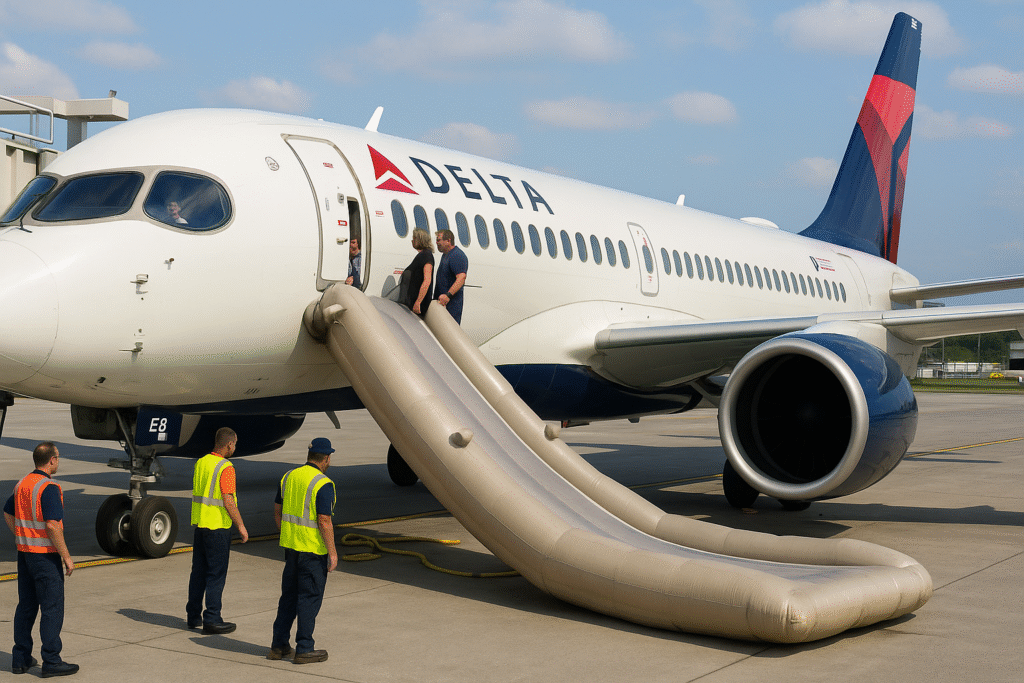
10) What airlines do after an ISD — investigations & retraining
Airlines log the event, inspect maintenance and door/slide components, and typically open an internal review. If human error is a factor crews may receive remedial training or retraining on standard operating procedures, and airlines sometimes adjust checklists to reduce future risk. Regulators (FAA in the U.S.) may be notified if the incident affects airworthiness or points to systemic issues.
11) Practical advice for passengers and crew
• If you’re stuck on an aircraft during an ISD: stay seated until crew instructs otherwise; don’t climb out onto the jet bridge if it’s blocked.
• If you miss connections, call your airline immediately and keep receipts for expenses. Take photos of the aircraft/slide if polite — they can help claims.
• For frequent flyers: note the flight number/time to aid claims and check your carrier’s contract of carriage for delay-handling rules.
• If you work in aviation: use cross-checks, verbal callouts and two-person confirmation on arm/disarm cycles to avoid human-factor errors.