


Desert of Ashes: Federal and local investigators continue probing after more than 300 piles of cremated human remains — commonly called “cremains” — were found on public land south of Las Vegas.
The discovery and subsequent recovery of roughly 315 sets of ashes has left families, funeral professionals and regulators seeking answers.
Below is a clear, careful rundown of what we know, what investigators are checking, why the find matters legally and ethically, and practical steps for family members who may be searching for loved ones.
We cite the most authoritative reporting available and keep emotive language to a minimum out of respect for the deceased and their families.
Desert of Ashes: How the discovery unfolded
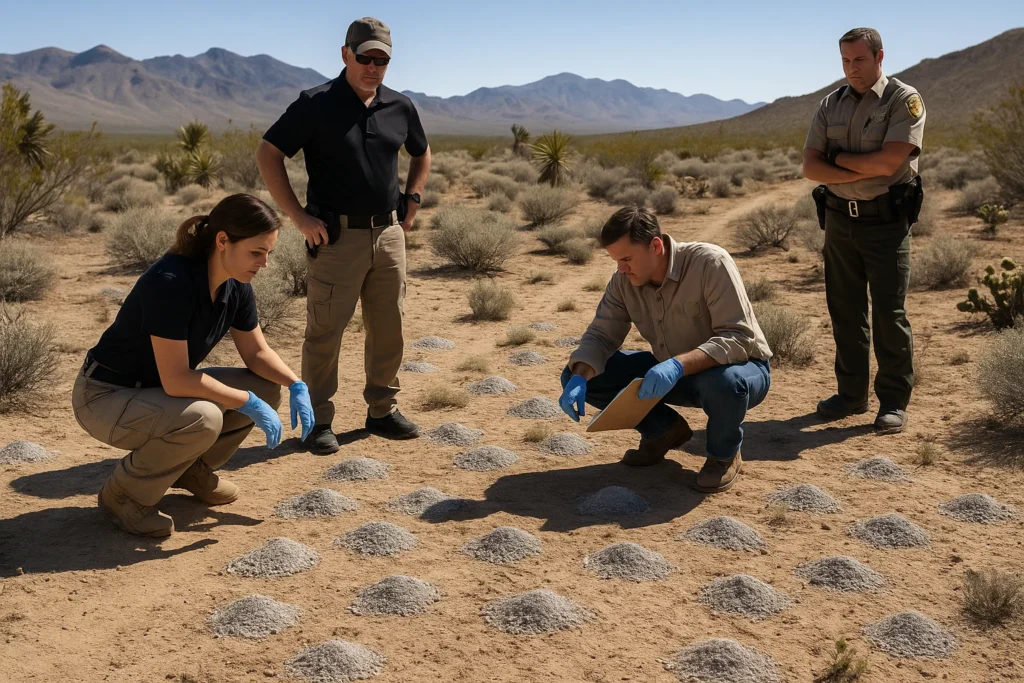
The first public reports described a passerby stumbling on dozens of small gray piles among sagebrush and cacti near Searchlight, Nevada — about 50 miles south of Las Vegas.
Initial counts reported about 70 piles; later searches and recoveries by a Las Vegas mortuary increased that number to roughly 315 piles.
The Bureau of Land Management (BLM) confirmed the piles were human cremated remains and said they were found on federal public land along a dirt road.
Local law enforcement and the BLM jointly opened an investigation to determine how the ashes ended up there and whether any laws were violated.
What investigators are focused on now
Officials have said they are trying to establish origin, chain of custody and whether a commercial funeral operation or an individual is responsible.
BLM rules allow private individuals to scatter ashes on public land but forbid commercial scattering operations on federal property without permission — that distinction is central to the probe.
Investigators are examining physical evidence at the sites — including urn fragments, cable ties and other materials — and are coordinating with funeral-industry regulators and local mortuaries.
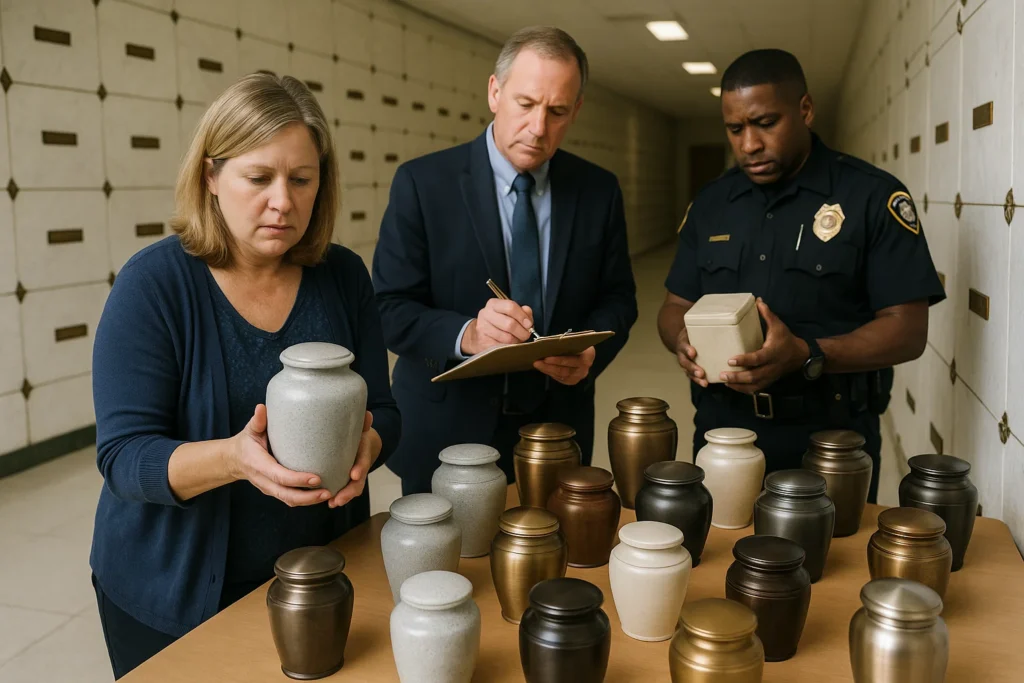
A Las Vegas funeral home, Palm Mortuaries and Cemeteries, has collected the recovered remains and placed them in secure custody pending identification efforts.

Why the discovery raises legal and ethical questions
Nevada law allows individuals to scatter ashes on public land, but federal BLM policy limits commercial disposal and requires permits for organised actions on federal property.
If a funeral home or third party disposed of multiple sets of remains in a coordinated way on BLM land, that could violate land-use rules — and potentially funeral-industry regulations governing the dignified handling of human remains.
Separately, the sheer number of unclaimed piles raises public-health and consumer-protection concerns: families expect honest, traceable handling of remains, and regulators are reviewing whether standards were breached.
Past national cases involving mishandled remains have triggered criminal investigations and civil claims; authorities say they are keeping an open mind while the facts are gathered.
Who has custody — and what will happen to the remains
Palm Mortuaries transported about 315 piles to its downtown facility where each set was placed in separate temporary urns and logged for safekeeping.
Officials said the mortuary will inter those sets in a crypt and maintain records so family members have a single, dignified location to contact if they believe the remains may belong to their loved ones.
The process of positive identification will be difficult: cremains usually lack DNA-friendly material unless a portion was retained before cremation, and urns in the field often carry no identifying information.
Investigators are asking funeral homes and families to check records, submit documentation and contact the authorities or the mortuary if they suspect a connection.
What families and the public should do if they’re concerned
If you believe a loved one’s cremains may be among those recovered, gather whatever documentation you have — cremation receipts, funeral-home contracts, urn identification or photos — before contacting the mortuary or BLM.
Palm Mortuaries and federal investigators have asked the public to reach out through official channels rather than visiting the site; doing so helps preserve the integrity of the investigation and protects the scene.
Families should also alert the Nevada Funeral and Cemetery Services Board and their funeral director; the board is coordinating with industry volunteers who helped collect the remains.
Those agencies can advise on documentation standards, possible forensic options and the next steps if the remains are believed to match a family’s records.
How authorities are balancing transparency and sensitivity
Officials have released limited detail as they confirm counts, log the recovered sets and avoid premature attribution of responsibility.
That cautious approach is intended to prevent misinformation and to ensure families are contacted through appropriate channels rather than learning news through social media or tabloids.
At the same time, federal investigators say they will provide updates as key factual milestones are reached — for example, when the origin of a given set of remains can be documented or when administrative violations are confirmed.
Media outlets and advocacy groups are pressing for quicker answers, which puts investigators in the familiar position of balancing timely public information with the needs of an ongoing inquiry.
What experts say about traceability and industry oversight
Funeral-industry experts note that cremation processes generate paperwork and that reputable funeral homes retain records tying cremains to specific services.
When records are missing or when providers close suddenly, families can face confusion; regulators say improved chain-of-custody rules and stronger audits could reduce the risk of similar incidents.
Some advocates call for stricter rules on how cremated remains are handled, documented and transported — particularly when multiple sets are involved — to ensure that families have recourse when anomalies occur.
Regulatory reforms could include mandatory labels on urns, standardized disposal logs and emergency reporting requirements for businesses that suddenly cease operations.
Possible outcomes investigators could pursue
If evidence indicates a funeral-provider violation of state licensure rules or federal land-use laws, regulators could seek administrative fines, license suspension or criminal charges depending on the severity of the violations.
If the evidence instead points to individual scattering by unrelated people, the case may remain an administrative and community-recovery matter rather than a criminal prosecution.
Investigators also face the practical question of what to do with unclaimed remains long term; interment in a dedicated crypt, as this mortuary plans, preserves dignity while allowing future claims.
That interim measure buys time for identification efforts and helps ensure respectful disposition if no claimant emerges.
What should be the top priority as investigators continue this probe?
Bottom line — a sensitive, ongoing investigation
The cremated human remains Nevada desert story is still unfolding: federal land managers, local police and funeral regulators are coordinating recovery, custody and identification efforts.
Authorities ask for patience as they sort an unusually large and delicate set of facts; the goal is to return dignity to the deceased and clarity to grieving families while establishing whether any laws were broken.
Disclaimer: This article summarises reporting current as of the publish date and is intended to inform readers about an active investigation.
If you have information relevant to the case, contact the Bureau of Land Management or the Las Vegas Metropolitan Police Department rather than visiting the recovery site.