


By TrenBuzz — A clear, step-by-step look at the news, the politics, the family story, and what today’s Washington gathering at the National Cathedral means for the nation.
Dick Cheney’s Death and the Washington Funeral: Headline snapshot
Former Vice President Dick Cheney died on November 3, 2025, at age 84, after complications related to pneumonia and cardiac/vascular disease, his family said.
On November 20, 2025, a memorial service at Washington National Cathedral drew presidents, past vice presidents, lawmakers and judges — but notably President Donald Trump and Vice President J.D. Vance were not invited.
Why this matters: a short primer
Dick Cheney was one of the most influential vice presidents in modern U.S. history, a figure whose policy imprint shaped national security debates for decades.
His passing and the orchestration of his funeral reflect both his political legacy and the deep rifts that now divide Washington’s conservative family.
Basic facts you need first
Dick Cheney died on Nov. 3, 2025, at 84 years old, surrounded by family; the family statement cited complications from pneumonia and longstanding cardiac and vascular disease.
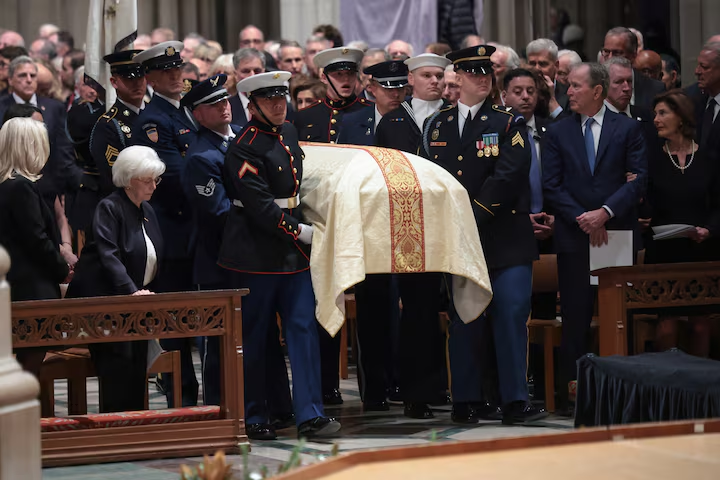
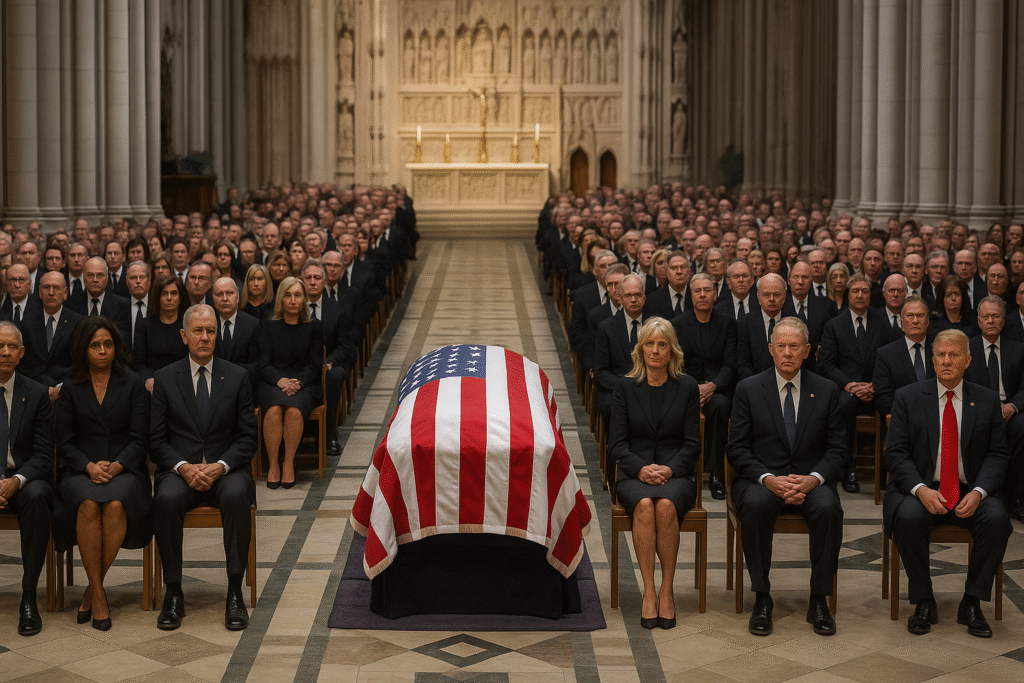
The funeral at the Washington National Cathedral on Nov. 20 was invite-only and included eulogies and military honors, drawing more than a thousand guests across party lines.
The most-talked about detail: Trump and Vance not invited
Multiple outlets reported that neither President Donald Trump nor Vice President J.D. Vance received invites to the Washington service. The detail quickly became the focal point of political conversation.
That omission is striking because presidential presence at major state and former-senior-official funerals is common; the Cheney family’s guest list choices tell a political story as much as a personal one.

Who did attend — and what their presence signaled
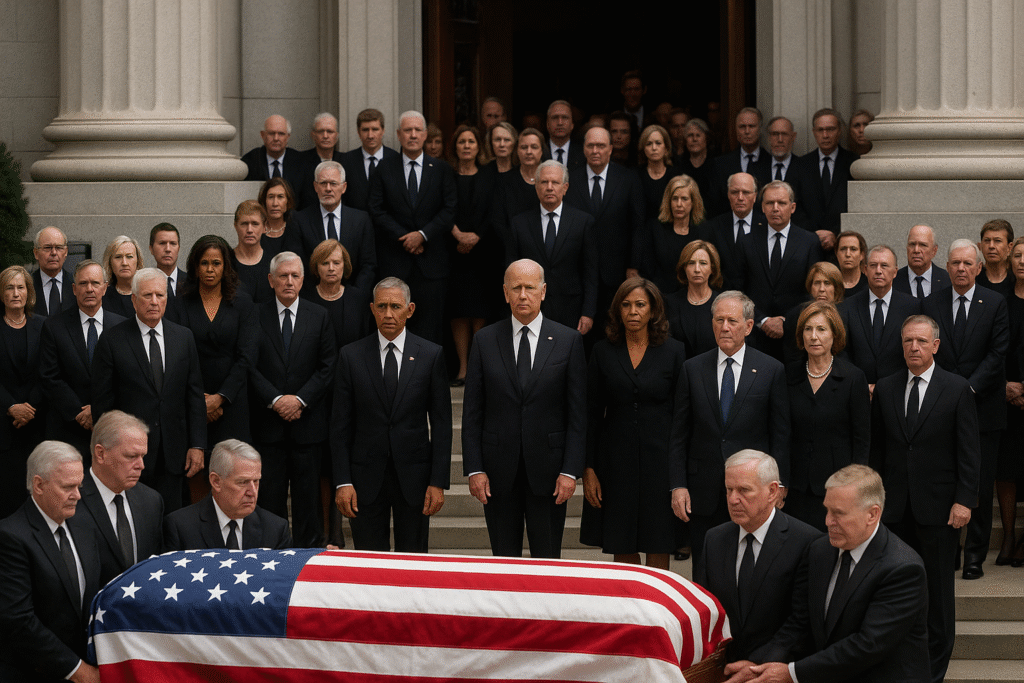
The National Cathedral service was attended by former Presidents including George W. Bush and Joe Biden, plus a range of former vice presidents and congressional leaders.
Bush delivered a tribute; Biden — who coincidentally marked a birthday the same day — appeared despite recent health treatments, underscoring the ceremony’s national weight.
Family and public statements
Lynne Cheney and daughters Liz and Mary stood at the center of family mourning and public remarks. Liz Cheney’s role in the House January 6th committee and her public opposition to former President Trump helped deepen personal and political fissures.
The Cheney family emphasized gratitude for ceremonies and remembrances while requesting privacy for close family-only moments — a reminder that public life and private loss often collide in Washington.
How we got here: a short political timeline
Cheney’s decades in public life — from congressional service to Defense Secretary to Vice President — built him a reputation as a hawkish and influential operator.
After 2016, the Cheney family’s public break with Trump-era conservatism became especially visible; Liz Cheney led high-profile oversight work after January 6 and later faced backlash within her party. Those fractures help explain the carefully curated guest list at the funeral.
The National Cathedral setting: symbolism and history
Washington National Cathedral has for generations hosted services for presidents and national figures — a civic space where private mourning becomes public ritual.
Holding the service there placed Cheney’s life within that civic tradition, with military honors and cross-party eulogies that highlighted his stature and the complicated, contested legacy he leaves.
What the exclusion of current leaders says about partisan fault lines
Leaving the sitting president and vice president off the guest list sends a clear political signal: families can and do curate memorial attendance based on relationships and personal judgments.
For Washington, it read as a rebuke — an explicit refusal to normalize ties between Cheney’s faction of the Republican establishment and the current White House leadership.
Reactions across the political spectrum
Voices on the right and left responded fast — some praising the bipartisan turnout as a testament to public service, others framing the exclusion as confirmation of long-running intra-party feuds.
Some commentators argued that the funeral’s guest list was an emblem of a conservative civil war: traditional national security conservatives versus populist nationalists. Others reminded audiences that funerals are primarily family matters.
Legal, personal and historical legacies to watch
Cheney will be remembered for his significant influence on U.S. foreign policy, including the build-up to the Iraq War and a strengthening of executive power arguments. Those parts of his record will continue to provoke debate.
His post-vice-presidential years — particularly the political stances that put his family at odds with Trump — will factor in how historians place his life in the broader sweep of 21st-century politics.
What the public should watch next
- Official tributes and coverage — Eulogies and transcripts from the National Cathedral service will be released and are the clearest public record of how contemporaries framed Cheney’s legacy.
- Political fallout — Expect op-eds, memoir excerpts and archival releases that will test narratives about Cheney’s place in modern conservatism.
- Family announcements — The Cheney family may release further guidance on how they want the public to remember him; watch for statements from Lynne and Liz Cheney.
Frequently asked questions — quick answers
When did Dick Cheney die?
He died the evening of Nov. 3, 2025, according to the family statement.
What was the cause of death?
The family said Cheney’s death resulted from complications of pneumonia and underlying cardiac and vascular disease.
Why were Trump and Vance not invited?
The family curated an invite-only event; media reporting frames their exclusion as rooted in long-standing political and personal tensions between the Cheney family and the current White House.
Was the funeral a national event?
Yes — the National Cathedral service included military honors and attendance by past presidents, vice presidents and congressional leaders.
Should sitting presidents be invited to the funerals of former senior officials even if family tensions exist?
A final note on tone and context
Public funerals for national figures mix grief with ceremony and politics. The Cheney service at the National Cathedral did what such events often do: honor a life while revealing the living’s divisions.
This episode is as much about contemporary party realignment as it is about one man’s life; historians will parse the long-term consequences, while families and colleagues live in the near term.
Disclaimer
This TrenBuzz article summarizes reporting available as of November 2025 and is for informational purposes only. It does not offer legal advice. Readers should consult primary sources and official statements for definitive records and consult qualified professionals for legal or medical interpretation.