


Key points
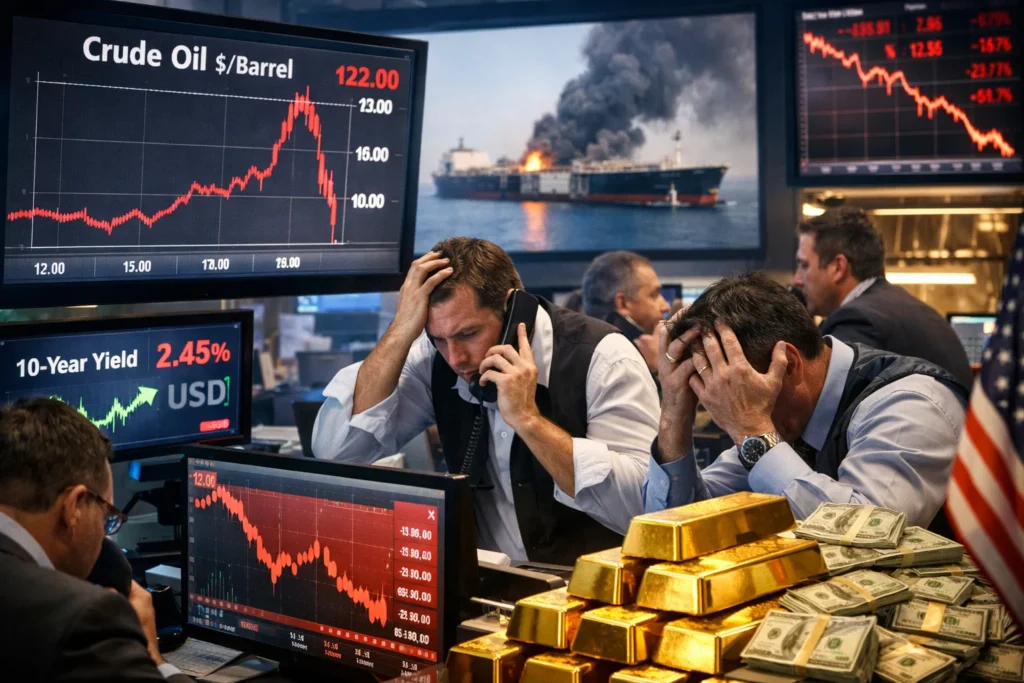
- Oil prices spiked into the near-$120 / barrel zone on a wave of supply-risk panic before pulling back sharply as diplomatic signals and talk of emergency reserve releases eased the rout.
- Gold unexpectedly fell amid the same shock, as traders sold bullion to raise cash and pile into the U.S. dollar and cash-yielding assets — a reminder that in fast crises gold doesn’t always behave as the pure “safe haven.”
- Big producers warned that prolonged disruption (especially if the Strait of Hormuz stays blocked) would be catastrophic for supplies — a risk that underpinned the intraday oil spike.
- The volatility ricocheted through equities, bond yields and FX, complicating the outlook for inflation and central-bank policy and raising the probability of near-term energy price pain for consumers.
Gold falls— the quick story
Markets went haywire: crude surged toward $120 a barrel on fears that Gulf oil flows could be disrupted, then fell back once diplomatic signals suggested the worst could be avoided — while gold, oddly, fell as dealers and funds sold metal to shore up cash and chase dollar-yielding instruments. The result: a reminder that commodity and FX shocks can produce counterintuitive moves and fast policy headaches.
What drove the twin moves (oil up, gold down)
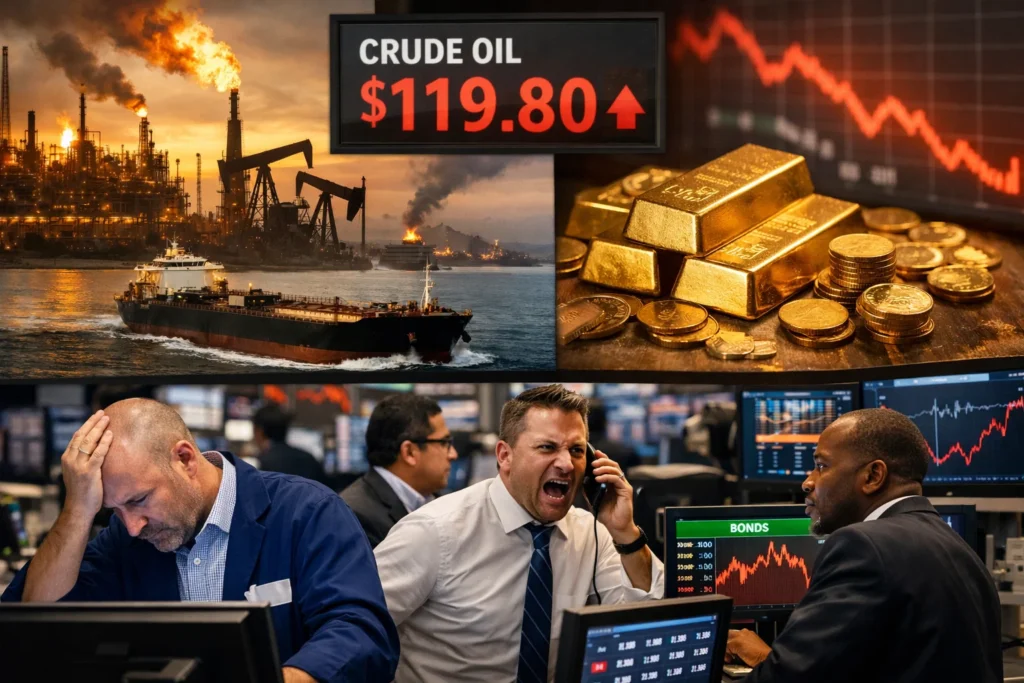
- Supply shock fears pushed oil — reports that regional fighting threatened tanker traffic and prompted production curbs sent prompt crude prices surging into the high-$100s/near-$120-per-barrel territory in intraday trading. That spike was fuelled by headline risk and the binary fear that the Strait of Hormuz could be choked — a route that normally handles roughly one-fifth of seaborne oil flows. When political leaders then signalled de-escalation and the G7 talked about contingency releases, the panic eased and prices corrected.
- Gold fell because of liquidity and dollar demand. In headline shocks, some investors liquidate positions to meet margin calls or fund dollar-denominated needs. With the U.S. dollar and short-term yields rising on safe-haven flows, non-yielding bullion became less attractive in the immediate term — explaining the puzzling drop in gold during the oil panic. Analysts also flagged that expectations for higher inflation (from oil) can eventually lift gold, but only after near-term liquidity stresses pass.

How the price action played out (timeline)
- Initial surge: News of strikes, shipping disruptions and producer shut-ins produced frantic buying in crude futures; WTI and Brent jumped sharply in after-hours / Asian trading sessions.
- Peak panic: Headlines pushed Brent toward the near-$120 mark; insurers and charters re-priced risk, making quick substitution of supply costly.
- Diplomatic check & pullback: Comments from senior political figures and talk of emergency reserve releases by major consuming countries (G7 considerations) reduced the immediate scarcity premium and sent oil lower from its intraday highs.
Market ripple effects — what fell, what rose
- Equities: Early losses in oil-sensitive and rate-sensitive sectors gave way to a mixed session as the energy rally faded; defence and energy names briefly outperformed on the spike.
- Bonds: Yields jumped on the inflation-risk repricing, then softened as the oil premium eased — but the episode raised realised volatility across yield curves.
- FX & dollar: The U.S. dollar strengthened on safe-haven flows and higher short rates, which in turn weighed on gold.
Why gold didn’t behave like a textbook safe haven
Investors treat gold differently depending on the shock:
- When shocks threaten balance sheets or force margin calls, gold is often sold to raise cash.
- When shocks primarily raise inflation expectations without immediate liquidity stress, gold tends to rally.
This episode included both a liquidity squeeze and a sharp dollar bid — the liquidity effect dominated in the short run, producing the fall in bullion even as oil spiked. Expect gold to stabilize or rebound only if inflation fears persist and dollar strength fades.
What this means for central banks and inflation
A sustained oil price above $100 would feed directly into headline inflation, complicating central-bank plans. Policymakers now face a trade-off:
- If oil stays elevated, core inflation risks rise, making rate cuts less likely and possibly prompting further tightening.
- If the price shock is short-lived (IEA/G7 releases or reopened shipping), the inflation impulse will be modest and transitory.
Either way, the episode increases volatility in inflation expectations — and that makes communications and data (PPI, CPI, jobless claims) in the coming weeks more important than usual.
Practical impacts for businesses and consumers
- Fuel & transport: Higher pump prices are the most visible near-term effect; airlines and shipping will face immediate cost pressure that can translate to higher fares and freight rates.
- Manufacturing & logistics: Firms with tight energy margins should stress-test supply costs and consider hedging where practical.
- Investors: Volatility means stop-loss and liquidity plans matter — commodity trading desks and funds should review margin buffers.
What to watch next (short checklist)
- Oil flows & tanker traffic: any new reports of blocked transits or producer shut-ins.
- G7 / IEA statements: moves toward coordinated reserve releases, and the scale discussed.
- Dollar & UST yields: a sustained dollar rally will keep pressure on gold.
- Inflation prints: next CPI/PPI reads that will shape central-bank guidance.