


Key Points
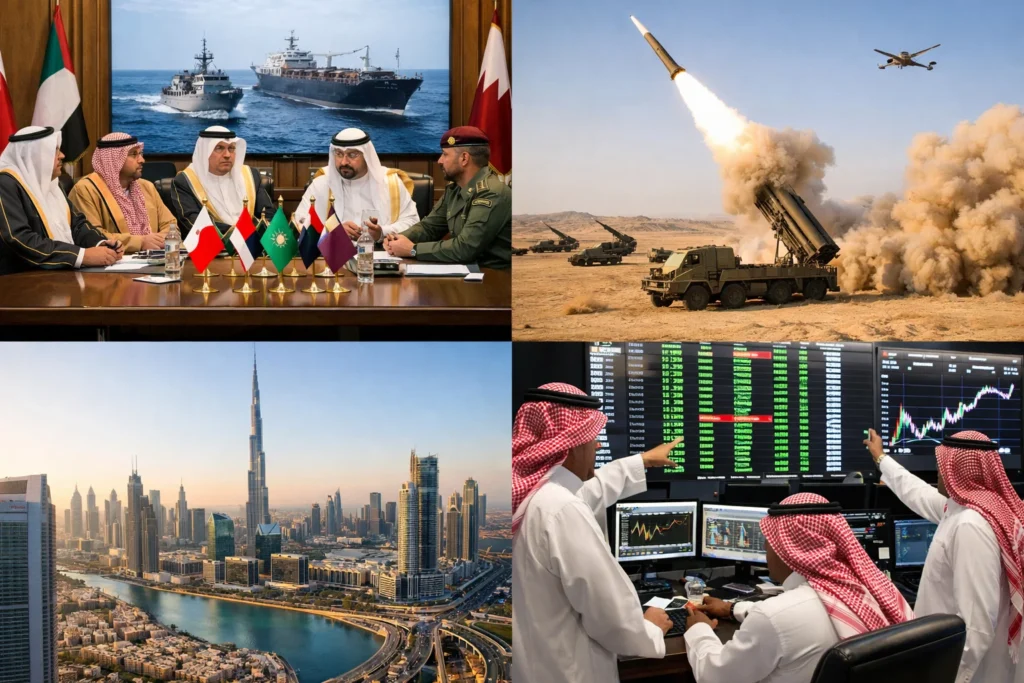
- Gulf Arab states are aligning on a shared response to the Iran crisis, with a sharp focus on maritime security, energy infrastructure, and deterrence.
- Bahrain has circulated a revised U.N. draft aimed at protecting shipping through the Strait of Hormuz, after earlier language faced resistance.
- Gulf governments want any end to the conflict to include stronger guarantees that Iran’s missile and drone threats will be reduced.
- Markets across Dubai, Abu Dhabi, Qatar, and Saudi Arabia have already reacted to hopes of de-escalation, showing how closely the region is tied to the outcome.
The Iran crisis is forcing Gulf leaders into a more coordinated posture, and the message from the region is increasingly clear: a ceasefire alone may not be enough. Reuters reports that Gulf Arab states want any diplomatic outcome to go beyond stopping the shooting and instead address Iran’s missile and drone capabilities, as well as the security of energy routes that pass through the Strait of Hormuz.
That is a major shift in tone. For years, Gulf capitals have balanced deterrence, diplomacy, and economic pragmatism. But with attacks and threats spilling into neighboring states, the region now appears more united around one priority: preventing the conflict from becoming a permanent security and energy shock. Reuters said Gulf states, especially Saudi Arabia, the UAE, and Bahrain, are pressing for enforceable guarantees rather than temporary calm.

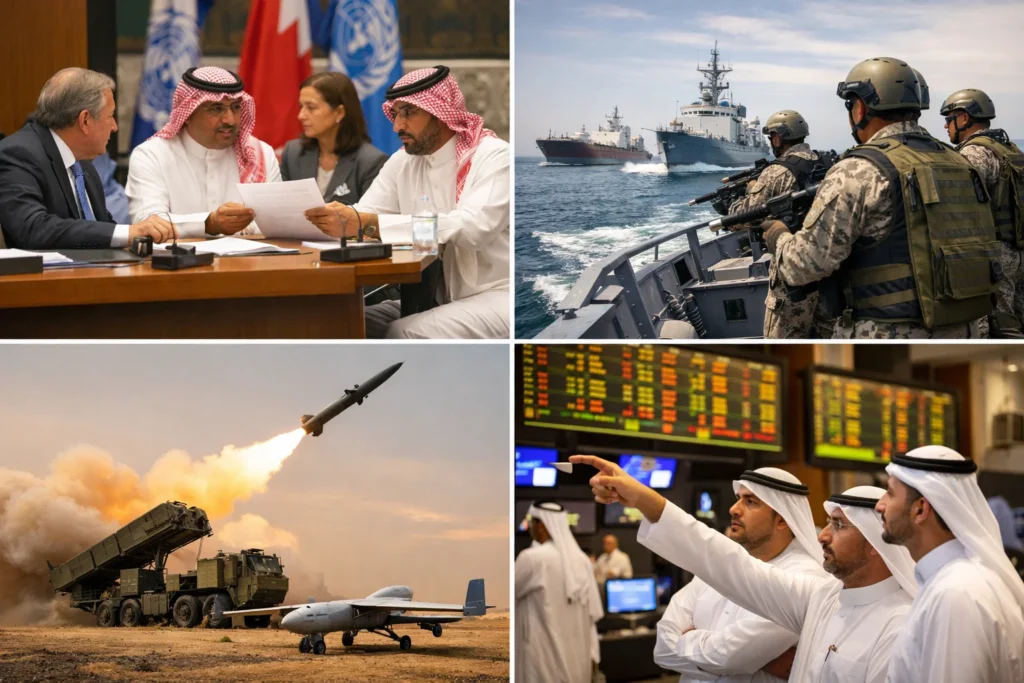
Maritime security sits at the center of that effort. Bahrain has circulated a revised draft at the U.N. Security Council aimed at safeguarding commercial shipping in the Strait of Hormuz, a route critical to global oil flows. The updated draft reportedly removes explicit binding language but still authorizes coordinated protective action for merchant vessels.
That matters because the Strait is not just a regional chokepoint; it is a global one. Reuters has reported that the war has disrupted oil and gas markets, pushing analysts to sharply raise price forecasts and intensifying concern about supply stability. Even before any formal diplomatic breakthrough, traders and policymakers are already treating Gulf coordination as a market-moving signal.
The political side is just as important. Egypt’s president warned that only U.S. President Donald Trump may be able to stop the war, while Gulf officials continue to emphasize the risk to civilian infrastructure and energy assets. That mix of urgency and caution suggests the region is preparing for both outcomes: a rapid de-escalation or a prolonged standoff.
For readers watching this story, the key takeaway is simple: the Gulf is no longer reacting country by country. It is moving toward a more coordinated security framework built around shipping protection, air defense concerns, and pressure for stronger international guarantees. In practical terms, that means the next headline may not be about one country’s statement, but about a broader regional strategy taking shape.
TrenBuzz question: Do you think the Gulf should prioritize diplomacy first, or stronger deterrence first? The answer may shape how the region handles the next phase of the crisis.