


By TrenBuzz — Published Oct 23, 2025 (updated with official data and reporting through October 22, 2025).
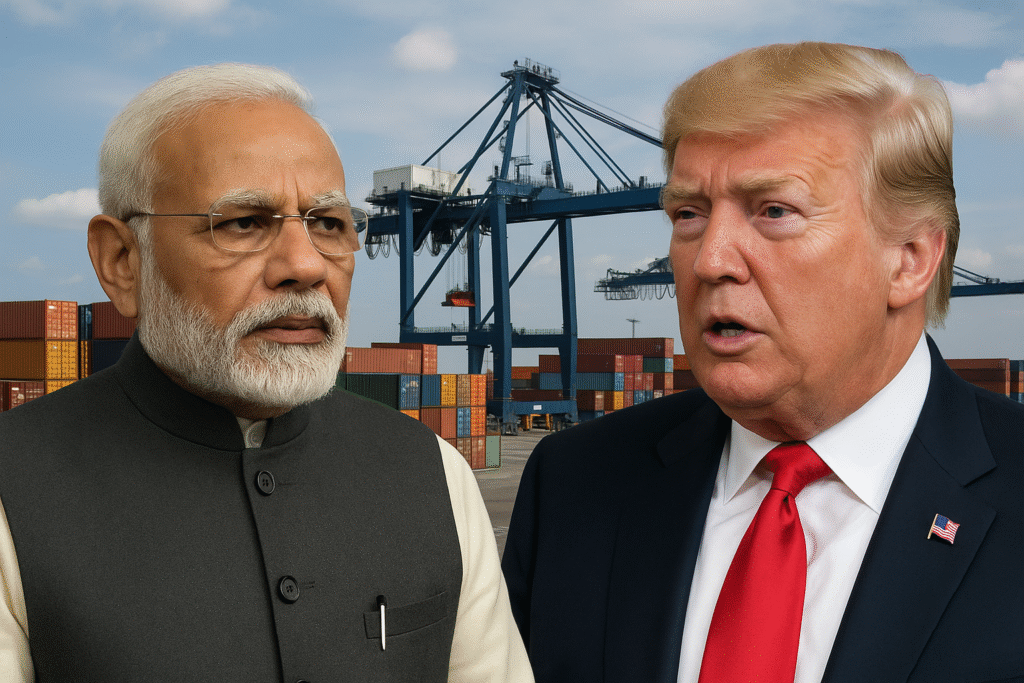
India Exports 2025 Hit New Highs: As of October 2025, the United States (under President Donald Trump’s administration) imposed very high reciprocal tariffs on many Indian imports earlier in 2025, including measures that raised duties to around 50% on a set of products. At the same time there are multiple media reports and diplomatic signals that Washington and New Delhi have been negotiating to reduce and normalize tariffs — with some reports indicating a possible pathway toward cuts in the mid-teens on certain categories (15–16%) as part of a broader trade negotiating package. These developments are fluid and tied to energy and agriculture concessions in talks.
Lead: why this matters right now
India’s export machine has been running hot in 2024–25 and into 2025, with government releases and trade trackers showing sustained year-on-year gains and optimistic targets for total exports. At the same time, major trade tensions with the U.S. — including sharply higher U.S. tariffs earlier in 2025 — have forced India to accelerate diversification of markets and deepen trade ties with BRICS partners and Gulf markets such as the UAE.
1) What happened with U.S. tariffs (short, factual)
In August 2025 the U.S. administration announced large reciprocal tariff increases affecting many Indian imports — reported as moves that effectively raised duties up to about 50% on a set of products as retaliation for policy disputes tied to energy and trade. Those tariffs were a major shock for exporters that depend on U.S. market access. Negotiations have continued and some outlets report talks toward lowering certain U.S. tariff lines to the mid-teens as part of a deal — but any precise schedule, scope, or binding agreement must be read from official trade texts once published.
2) India’s exports in 2025 — records and targets
India posted strong export growth through 2024–25 and into 2025. Official communications from India’s Commerce Ministry (Press Information Bureau) show year-on-year export gains in key months and an April–August 2025 run rate that pushed merchandise and services shipments higher, with government figures and ministers projecting another record export year overall. Independent trackers also report monthly export increases in late 2025. These gains underpin the “India exports 2025” narrative.
3) Why exports are still climbing despite tariff shocks
Multiple forces are supporting export growth: stronger services exports, a rebound in engineering and chemicals, continued global demand for pharmaceutical intermediates, and firms’ rapid switching to alternative markets. Government support measures and export promotion schemes helped cushion the blow from tariffs and gave exporters time to re-route orders. Official optimistic targets for 2025 assume continued elasticity in services and read-through demand in manufacturing.

4) Market diversification: BRICS and the UAE as strategic alternatives
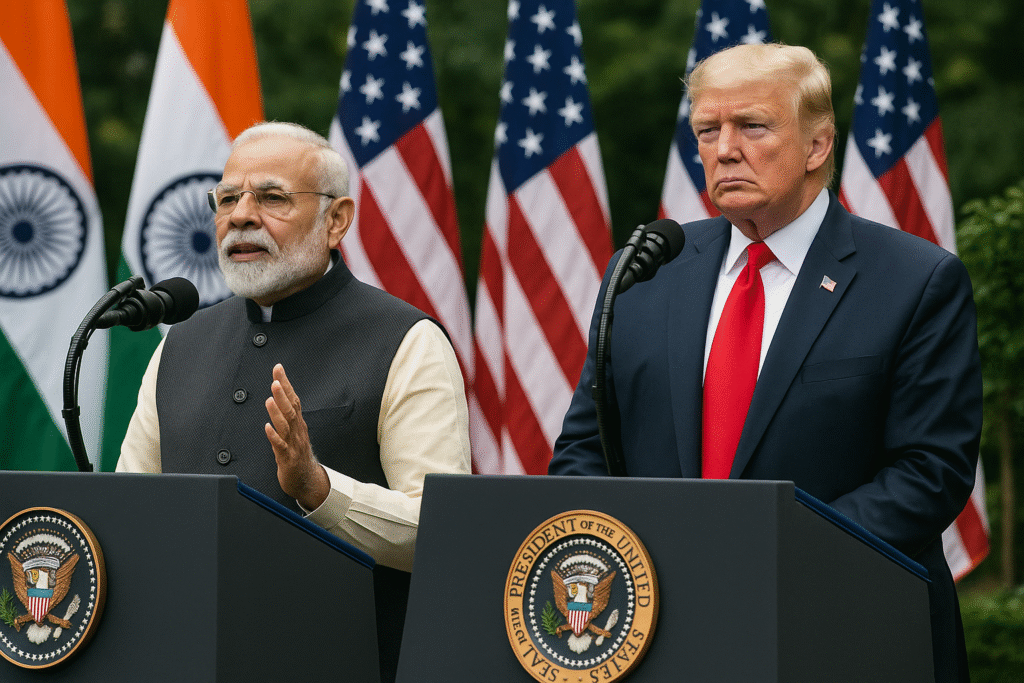
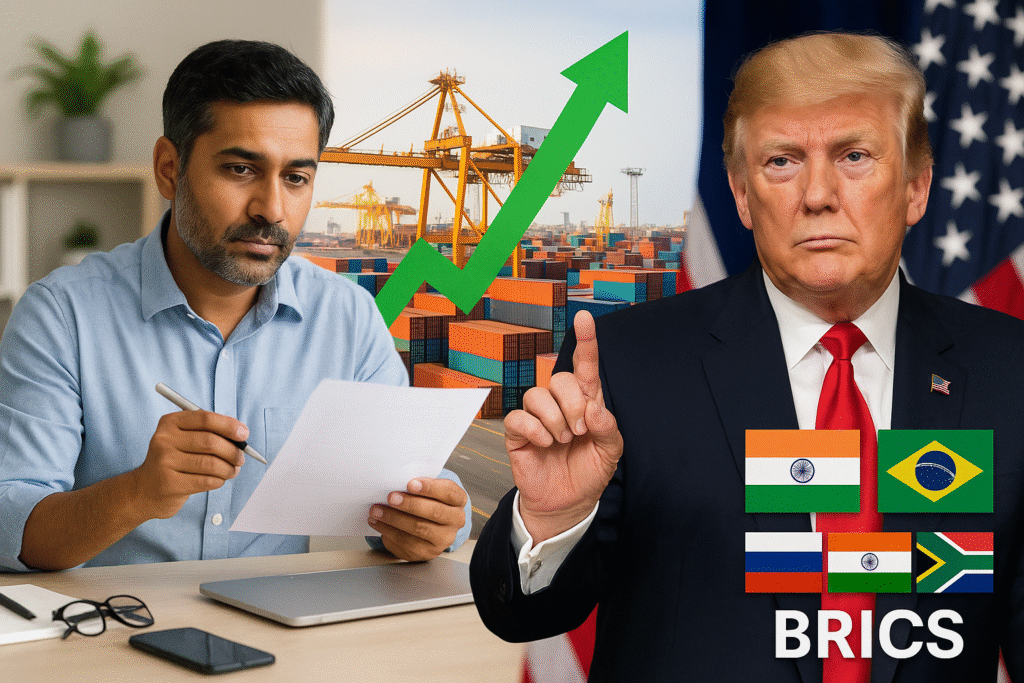
One clear response from exporters and policymakers has been accelerated market diversification. India’s trade with BRICS nations and Gulf partners has grown rapidly over recent years — BRICS accounted for a substantial and rising share of Indian trade going into 2024–25, and the UAE has become one of India’s top trade partners. This pivot is both strategic (political diversification) and practical (UAE and BRICS markets absorbed shipments, provided energy deals, or offered re-export hubs), cushioning exporters who face higher U.S. tariffs.
5) The real sector winners and losers
Sectors most exposed to U.S. tariffs (textiles/apparel, certain manufactured goods, and some chemicals) saw immediate pressure, with reported drops in shipments to the U.S. during mid-2025 months. Services, software, and pharmaceutical segments have shown relative resilience and in many cases achieved record or near-record receipts, offsetting some goods declines. Firms able to pivot distribution channels to BRICS partners and the UAE reported quicker recoveries.
6) The diplomatic and trade-deal angle
Behind headlines about tariffs there have been intense negotiations. Multiple outlets reported active U.S.–India negotiations where tariff reductions (by either side) could be linked to energy purchases, agricultural access, and other trade concessions. Media accounts in October 2025 suggested a possible framework in which tariff lines might be gradually reduced to mid-teens for selected products as part of a larger settlement — but any such outcome requires formal treaty text or official statements to be confirmed.
7) What this means for small exporters, traders and readers
Short term: expect volatility in orders that are U.S.-facing. If your buyer is in the U.S., check contractual terms, consider short-term price adjustments, and review logistics for pivoting to other markets.
Medium term: invest in market diversification, compliance with new tariff classifications, and trade finance that allows flexible routing. The UAE, BRICS partners, and neighboring markets are practical alternatives and may provide preferential logistics and financing.
Long term: policy outcomes will matter — a formal agreement that substantially lowers tariffs would reopen demand in the U.S., whereas prolonged tariffs will accelerate permanent reconfiguration of supply chains toward Asia, the Gulf, and Africa.
Step-by-step buzz around each headline topic (actionable timeline for a business or reader)
- Immediate (0–30 days): Audit your U.S. exposures — product HS codes, margins, and contract clauses. Contact logistics partners and check customs classification to avoid surprise duties.
- Short term (1–3 months): Open conversations with buyers in UAE/BRICS markets; explore re-export or distribution partners in those jurisdictions. Use government export promotion channels.
- Medium term (3–9 months): Consider product diversification, scale up services or value-added steps, and secure trade finance to cover the switch in buyer geography.
- Policy watch (ongoing): Track official statements from the U.S. Trade Representative and India’s Commerce Ministry — trade policy announcements may change tariff details and timelines.