


Published by TrenBuzz.com | April 25, 2026
Key Points at a Glance- Iran’s Araghchi Lands in Islamabad
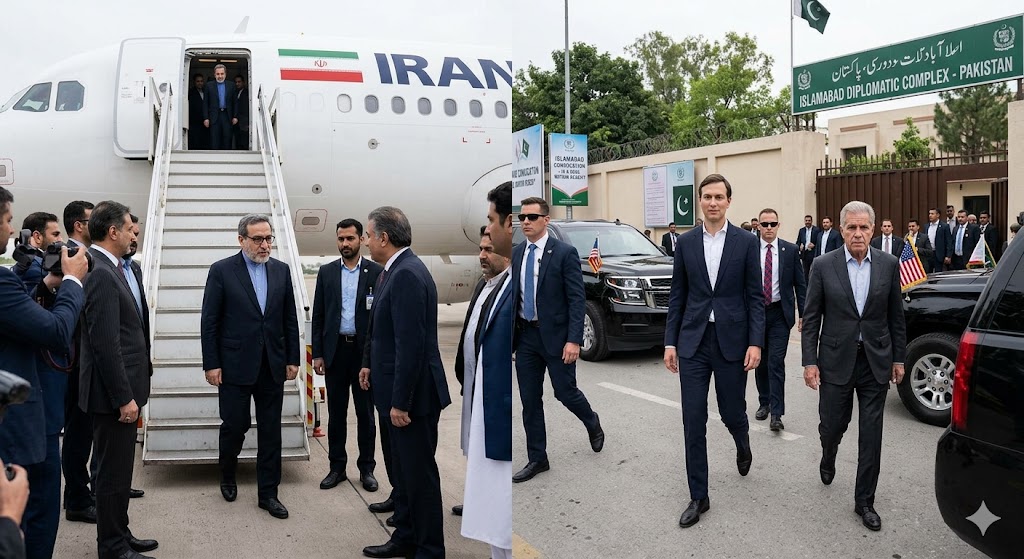
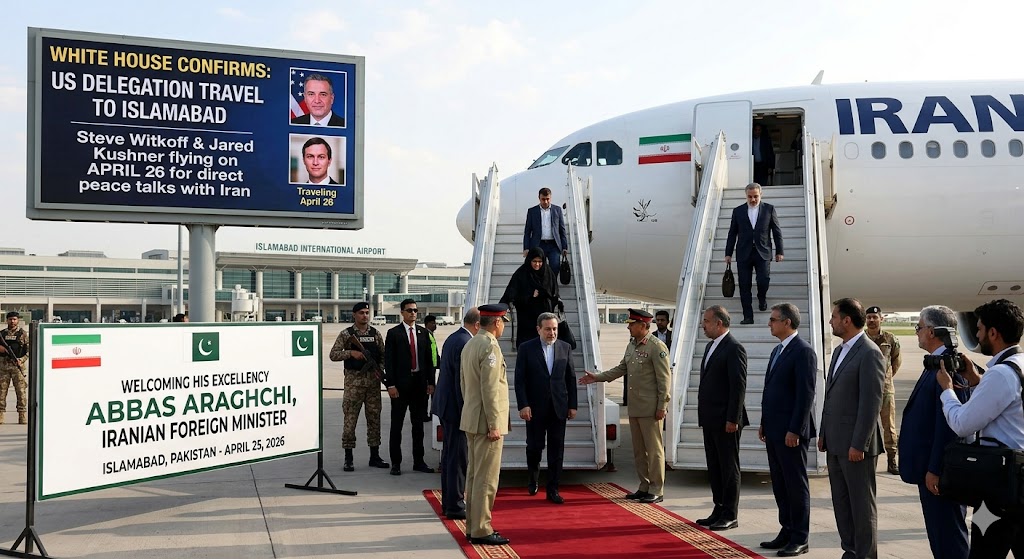
- Iranian Foreign Minister Abbas Araghchi arrived in Islamabad, Pakistan on April 25, 2026 for a diplomatic tour that includes stops in Muscat and Moscow.
- The White House confirmed Steve Witkoff and Jared Kushner are flying to Pakistan on April 26 for direct peace talks with Iran.
- Iran’s foreign ministry and semi-official news agencies denied any direct meeting with US officials is planned — creating a tense standoff of mixed signals.
- Iran insists its visit is bilateral — to meet Pakistani mediators only, not US negotiators.
- Vice President JD Vance is on standby to fly to Islamabad if talks progress significantly.
- Pakistan says there is now a “high likelihood of a breakthrough” after days of escalating tensions in the Strait of Hormuz.
- Iran’s previous delegation was led by Parliamentary Speaker Ghalibaf, not Araghchi — signaling a possible shift in Iran’s negotiating posture.
- The US naval blockade of Iranian ports remains in place and was Iran’s stated reason for refusing to return to the table earlier this week.
- Trump said Friday that Iran “will be making an offer” — but admitted he doesn’t yet know the details.
On Saturday morning, two of America’s most powerful backroom diplomats are wheels-up to Pakistan. In Islamabad, Iran’s top diplomat is already there. And yet — Tehran is insisting the two sides won’t even sit in the same room.
Welcome to the most confusing peace process in the world.
The White House said Friday that US envoys Steve Witkoff and Jared Kushner are headed to Pakistan to participate in direct peace talks with Iran. While Iran’s Foreign Minister Abbas Araghchi is indeed in Islamabad for talks about regional peace, Iranian semi-official news agency Tasnim has reported that he would not speak with US officials.
Why Araghchi Is in Islamabad — Iran’s Version
Iranian state news agency IRNA said Araghchi’s visit to Pakistan was bilateral in nature — to speak with Pakistani officials, rather than for talks with the US. Araghchi, IRNA said, would travel to Moscow and Muscat after Islamabad.
Writing on X on Friday, Iran’s top diplomat had said he was off on a “timely tour of Islamabad, Muscat, and Moscow” to coordinate on “bilateral matters,” with no specific mention of any intention to meet with US negotiators.
Reports in Iranian state media made no mention of Mohammad Baqer Ghalibaf — the speaker of Iran’s parliament who led the delegation at the April 11 talks — raising speculation about a possible shift in Tehran’s negotiating team and posture.

Why the US Is Flying There Anyway
White House press secretary Karoline Leavitt said US envoys would sit down with Araghchi, expressing hope that parties would “move the ball forward to a deal.” She noted: “We’ve certainly seen some progress from the Iranian side in the last couple of days.”
Leavitt told Fox News: “I can confirm special envoy Witkoff and Jared Kushner will be off to Pakistan again tomorrow morning to engage in talks — direct talks — intermediated by the Pakistanis, who have been incredible friends and mediators throughout this entire process.”
Vice President JD Vance is not currently planning to attend, given Iran’s Speaker Ghalibaf — viewed as Vance’s counterpart — is not participating. However, Vance will be on standby and members of his staff will be in Pakistan attending negotiations.
The Blockade Standoff — The Wall Between the Two Sides
Iran had initially refused to return for a second round of talks, citing the naval blockade of its ports that Trump enforced on April 13 — two days after the first Islamabad talks ended inconclusively. Iran insisted the US needed to lift the blockade before it would return. Trump so far refused to lift it.
Against the backdrop of that standoff, tensions soared in the Strait, where the US first captured an Iranian-flagged ship, only for Iran to capture two ships and fire at a third.
Trump said Friday that Iran will be making an offer to the US — but he did not yet know the details. Just a day earlier, Trump had suggested uncertainty surrounding Iran’s leadership was complicating negotiations.
What Changed — Why This Moment Feels Different
Pakistani mediators are now “cautiously optimistic” regarding Iran-US talks following Araghchi’s arrival, with one Pakistani official saying there was now a “high likelihood of a breakthrough” between the US and Iran after days of escalating brinkmanship.
The April 11 talks in Islamabad lasted 21 hours across three rounds — two direct and one indirect — but ended without a deal. Iran’s Araghchi himself said the two sides were “inches away from an MoU” but accused the US delegation of moving the goalposts at the last moment.
At least nine US aircraft have arrived in Islamabad this week carrying communications equipment, vehicles, security staff, and technical personnel — suggesting Washington is not flying to Pakistan empty-handed or unprepared.
What Both Sides Actually Need From These Talks
The gap remains wide. The US demands an end to Iran’s nuclear enrichment, limits on its missiles, and a fully open Strait of Hormuz. Iran wants the blockade lifted, sanctions removed, frozen assets released, and security guarantees against future US-Israeli strikes.
This uncertainty around the exact status of negotiations is nothing new — and it doesn’t necessarily mean dialogue between the two sides won’t happen, in some form or another. In late March, there were also conflicting accounts about whether the US and Iran were even talking, before the April 7 ceasefire was announced.
Islamabad has become the world’s most watched diplomatic waiting room. The question isn’t whether both sides are there — they are. The question is whether anyone is willing to finally walk through the same door.
Disclaimer: This article is for general informational and news reporting purposes only. All quotes, diplomatic positions, and developments referenced are based on publicly available and credible news sources as of April 25, 2026. The status of US-Iran talks is rapidly evolving — information may have changed since publication. TrenBuzz.com does not represent any government or diplomatic body. Readers are encouraged to follow credible international news sources for real-time updates.