


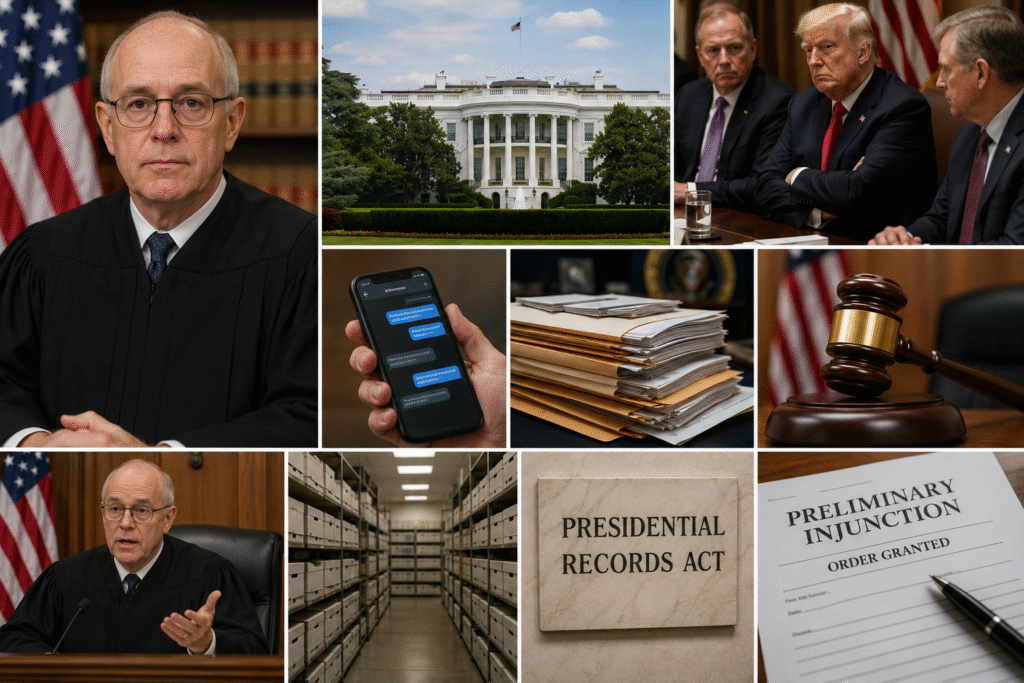
Published by TrenBuzz.com | May 20, 2026 | BREAKING
Key Points at a Glance – Judge Bates Orders White House to Preserve Signal Messages and All Records
- Federal Judge John D. Bates granted a preliminary injunction on May 20, 2026 — ordering White House staff to comply with the Presidential Records Act (PRA).
- The ruling voids a DOJ Office of Legal Counsel memo from April 1 that claimed the PRA was unconstitutional.
- All text messages — including Signal messages — sent from private devices about government business must now be preserved.
- Susie Wiles, Stephen Miller, the NSC, and CEA are all covered by the order. Trump and Vance are not — courts cannot enjoin the president’s official duties.
- The injunction takes effect May 26, 2026 — giving the White House less than a week to appeal or comply.
- The ruling came in response to lawsuits by the American Historical Association, American Oversight, CREW, and the Freedom of the Press Foundation.
- Judge Bates wrote a 54-page opinion — calling the DOJ’s OLC memo a “stark misreading of Supreme Court precedent.”
- The 1978 PRA was passed after Watergate — it establishes that presidential records are public property, not personal property.
- Plaintiffs warned the administration believed Trump was “legally free to destroy records” of his official conduct.
- The White House Counsel had issued a memo on April 2 — the day after the OLC memo — telling staff they no longer had to comply with the PRA.
One day after April Fools’ Day 2026, the Trump administration’s legal counsel told White House staff they could effectively ignore a federal law that has protected presidential records since Watergate. On Wednesday May 20, a federal judge said: not on my watch.
A federal judge on Wednesday ordered White House personnel to continue complying with the decades-old Presidential Records Act after the Justice Department argued in a legal opinion last month that the law was “unconstitutional” and that President Donald Trump has the authority to destroy presidential records from his term. U.S. District Judge John Bates found the 1978 law is likely constitutional and issued a preliminary injunction effectively blocking the legal opinion.
How the White House Tried to Kill the Law — The April 1 Timeline
On April 1, the Justice Department Office of Legal Counsel issued a memorandum finding the law unconstitutional, arguing it exceeded Congress’ powers and intruded on the powers of the president. The day after that, White House Counsel David Warrington issued a memorandum to White House staff laying out that they no longer had to comply with the law. Shortly after that, the American Historical Association, Citizens for Responsibility and Ethics in Washington and others filed lawsuits seeking to block the change.
What Judge Bates Actually Ruled — The Legal Core
“On the merits, the Records Act is likely constitutional. It was validly enacted by Congress under the Property Clause because Congress may prospectively designate presidential records as federal property and then regulate that property,” Bates wrote in the 54-page ruling.
Bates noted that the Justice Department’s Office of Legal Counsel’s opinion relied on a “stark misreading” of Supreme Court precedent and rejected the DOJ’s argument that the Presidential Records Act is unconstitutional because presidential papers were considered personal property of the president until the 1970s.

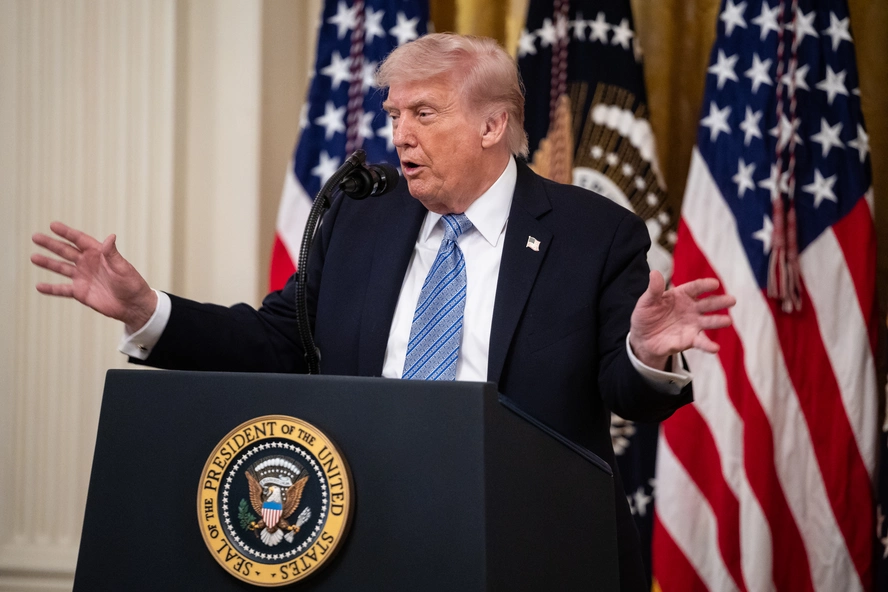
Signal Messages Are Officially Covered — A Major Win for Transparency
The order, from Judge John D. Bates of the U.S. District Court for the District of Columbia, directed White House staff to comply with the law, which requires the preservation of all presidential documents, even those on personal devices.
Judge Bates said the White House also seemed to free the president and vice president to dispose of their records in defiance of the law. He said that while messages sent on official White House devices may automatically be stored, those sent from private devices are not covered by that — and under the law can still be considered official records if they deal with government business or decision-making.
Who Must Comply — And Who Gets a Pass
Among those who must comply with Bates’ order are White House chief of staff Susie Wiles, deputy chief of staff Stephen Miller, the National Security Council, Council of Economic Advisers and employees working within the Executive Office of the President. Mr. Trump and Vice President JD Vance are not covered by the judge’s directive.
Though Bates ordered White House personnel to comply with the law, the judge stopped short of directly ordering Trump and Vice President JD Vance to do so. Bates noted that courts generally may not “enjoin the President in the performance of his official duties.”
The Warning Behind the Ruling — Mar-a-Lago History Cited
In their lawsuit, the American Historical Association, the largest membership association of historians in the world, and American Oversight, a nonprofit government watchdog group, warned there was “strong reason” to believe Mr. Trump would attempt to keep presidential records when his term ends in January 2029. The groups pointed to his decision at the end of his first term in early 2021 to hold onto 15 boxes of records, which the Archives fought for months to get back.
Citizens for Responsibility and Ethics in Washington stated: “A federal judge granted a preliminary injunction today requiring Trump administration officials to follow the Presidential Records Act and preserve text messages, including Signal messages, pertaining to its work — in response to a motion filed and argued by CREW on behalf of the Freedom of the Press Foundation.”
The White House has until May 26 to comply — or appeal. The injunction doesn’t bind the president himself. But for the staffers who run America’s government day to day, the judge’s message was unambiguous: the history of this presidency belongs to the American people, and you do not get to delete it.
Disclaimer: This article is for general informational and news reporting purposes only. All legal details, judge quotes, and procedural facts are sourced from CBS News, Roll Call, The Washington Times, The Washington Post, Just The News, and CREW as of May 20, 2026. The preliminary injunction takes effect May 26 — the Trump administration may appeal before that date. TrenBuzz.com does not provide legal advice and makes no independent legal assessments. Readers are encouraged to follow official court records and credible news sources for real-time updates on this case.