


Key points — quick take
- U.S. strikes hit military targets on the island; oil terminals were reported spared.
- Iranian state and semi-official outlets confirm explosions and damage to defenses.
- Large U.S. Marine forces are moving into the region, raising invasion concerns.
- Conflicting reports of aircraft losses and a U.S. refuelling plane crash in Iraq add fog to the picture
- Global oil markets and shipping through the Strait of Hormuz are now highly unstable.
What happened, simply and fast (Kharg Island)
President Trump announced U.S. strikes that he said destroyed “every military target” on the island while deliberately avoiding oil infrastructure.
Iranian outlets reported multiple explosions and damage to air-defence and naval facilities, noting thick smoke seen across the island.
Why this island matters
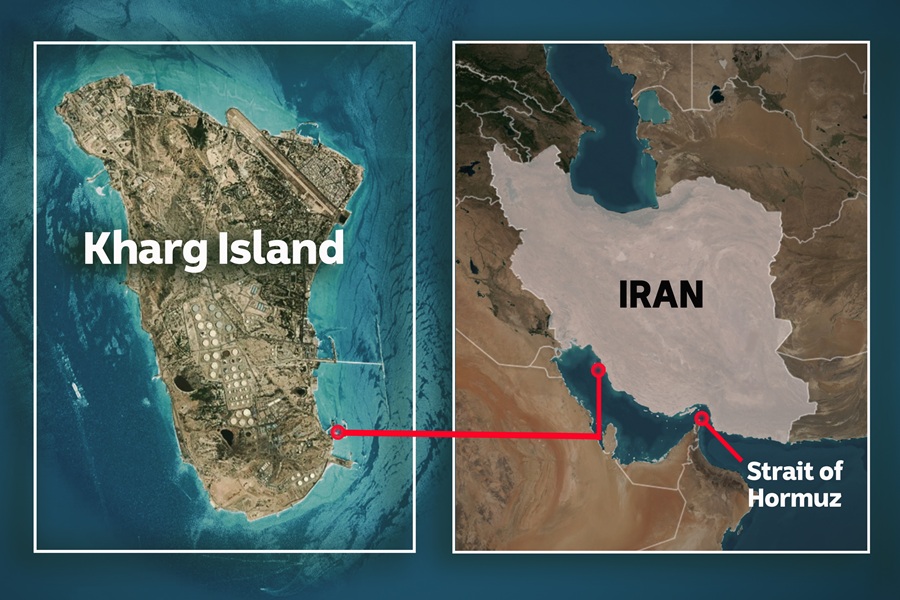
Kharg handles the vast majority of Iran’s crude exports and contains large jetties, terminals and an airstrip. Disrupting those facilities directly pressures Tehran’s economy and the global oil supply.
Because the island sits near the Strait of Hormuz, any escalation risks choking a corridor that carries a large share of traded oil.
Step-by-step: how the events reached this point
- A fortnight of strikes and counterstrikes across the region raised tensions and halted normal shipping routines.
- U.S. planners targeted radar, missile batteries and IRGC facilities to reduce the island’s defensive capability.
- The White House released statements emphasizing restraint toward oil facilities while warning that blocking shipping could change that calculus.

The military picture: troops and hardware on the move
U.S. amphibious forces and a Marine expeditionary unit have been ordered toward the Gulf, a deployment that analysts say could enable a limited ground operation if ordered.
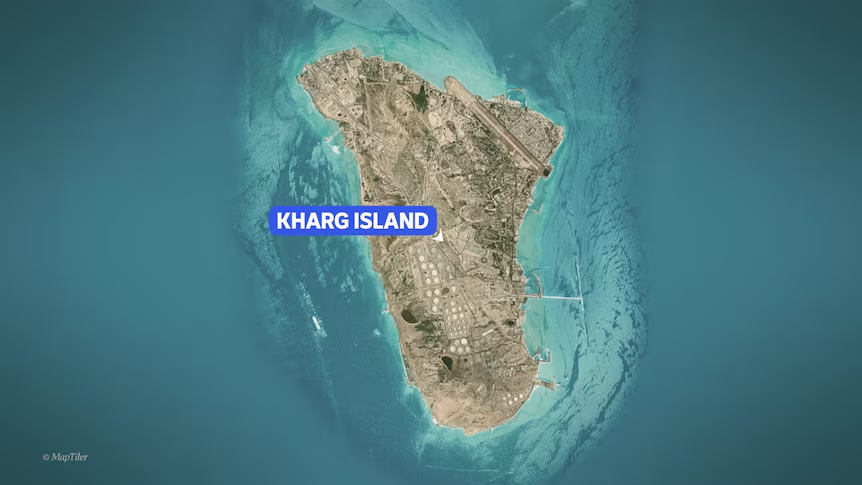
Reports describe strikes concentrated on defensive sites in the island’s north while terminals in the south were left standing — an operational choice with clear strategic aims.
Confusing signals: crashes, claims and counterclaims
Multiple parties have released competing accounts of what was hit and by whom. Public reporting also notes a separate U.S. military refuelling-plane crash in Iraq with crew casualties, which has added to the uncertainty and urgency in the region.
Civilian and economic fallout — what ordinary people should expect
Global fuel prices jumped as markets priced in potential supply interruptions and insurance costs for tankers rose. Short-term fuel shocks and higher transport costs are likely if export flows from the Gulf are disrupted.
Local civilian populations near the impact zone face displacement, power outages and damage to ports and support facilities; humanitarian needs can escalate quickly after attacks on strategic infrastructure.
The narrative in the press — who’s saying what
Major international outlets and regional state media differ on emphasis: some focus on U.S. military messaging of “limited” strikes, while others foreground Iranian warnings of retaliation and the risk to Gulf energy.
What to watch next (practical signals to monitor)
- Movement of amphibious ships and Marine units into the Gulf region.
- Satellite and independent imagery of the island for signs of damage beyond military sites.
- Notices to mariners and whether commercial insurers raise premiums or shipping lanes are rerouted.
Quick glossary (plain definitions)
The island — Iran’s main crude-export hub with terminals and an airstrip that sits off the southern Iranian coast.
The Strait — the sea lane adjacent to the island that links the Persian Gulf with the Gulf of Oman, a global oil chokepoint.
Do you think strikes on the island will stabilise or escalate the region?
What this means for regional diplomacy
The strikes raise the political stakes for Gulf states and global powers trying to mediate. If oil infrastructure is attacked next, the crisis could widen rapidly and force neutral states to take clearer stances or steps to protect shipping.
Bottom line (for readers who need a single sentence)
A carefully limited strike on military targets has dramatically increased the risk profile in a region that handles a huge share of the world’s oil — the next actions by Tehran, Washington and regional navies will determine whether this stays contained.
Disclaimer: The information above reflects reporting and official statements. This article summarizes fast-moving events and is intended for informational purposes; follow official channels for any urgent safety guidance.