


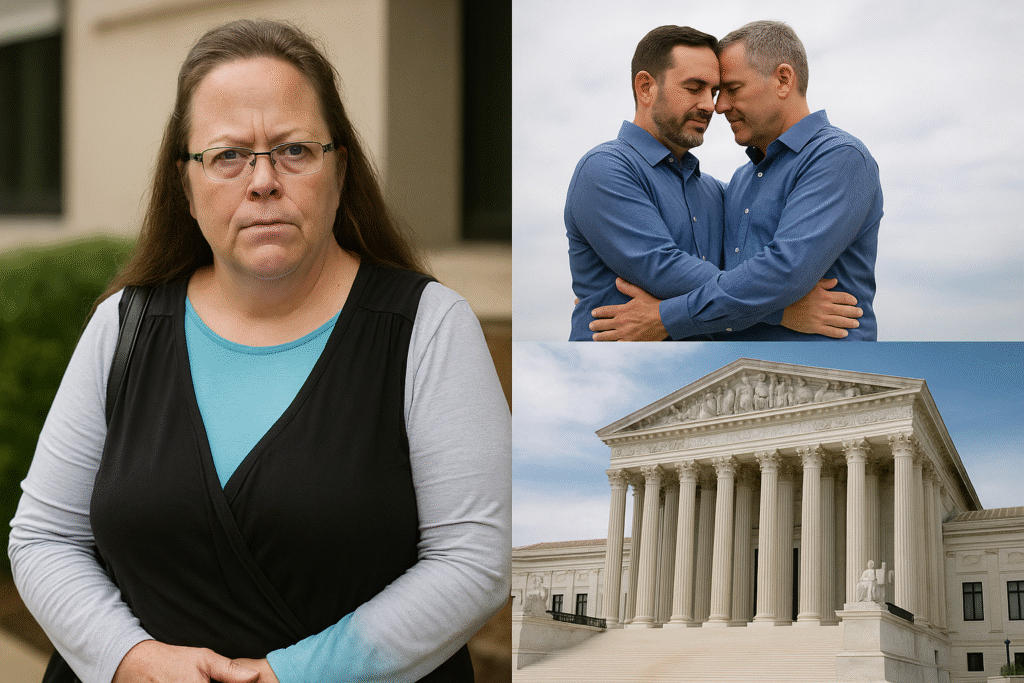
Kim Davis, Obergefell, and the Supreme Court — this TrenBuzz explainer walks readers through today’s Supreme Court action on Kim Davis’s petition, the legal background in Obergefell v. Hodges, what the court’s denial means now for same-sex marriage in the U.S., and the practical, political, and legal implications going forward.
Quick headlines first
The U.S. Supreme Court on Nov. 10, 2025 declined to revisit or overturn Obergefell v. Hodges after a petition from Kim Davis — the Kentucky county clerk who famously refused to issue marriage licenses to same-sex couples in 2015.
1) What the Court actually did today — plain language
The justices denied Kim Davis’s petition to have the Court rehear the 2015 Obergefell decision that legalized same-sex marriage nationwide.
The denial was a routine order without a published opinion; the Court left the 2015 precedent intact.
2) Who is Kim Davis and why she is back in headlines
Kim Davis was a county clerk in Rowan County, Kentucky who refused in 2015 to issue marriage licenses to same-sex couples after the Supreme Court’s Obergefell ruling.
She briefly jailed for contempt of a federal order in 2015, later lost election for her office, and has since continued to litigate and publicize her objections.
3) A short primer on Obergefell v. Hodges (the 2015 ruling)
In Obergefell v. Hodges (2015) the Supreme Court held, 5–4, that the Fourteenth Amendment requires states to license and recognize same-sex marriages.
The decision relied on due-process and equal-protection principles and remains the controlling precedent on same-sex marriage nationwide.
4) Why Kim Davis tried to reopen Obergefell now
Davis’s legal team asked the Court to revisit Obergefell as part of a bid to avoid paying damages and fees ordered against her after she denied licenses to a same-sex couple.
Her petition framed the matter in religious-freedom terms and asked the Court to reconsider the scope of federal constitutional mandates about marriage. The Court declined to take the case.

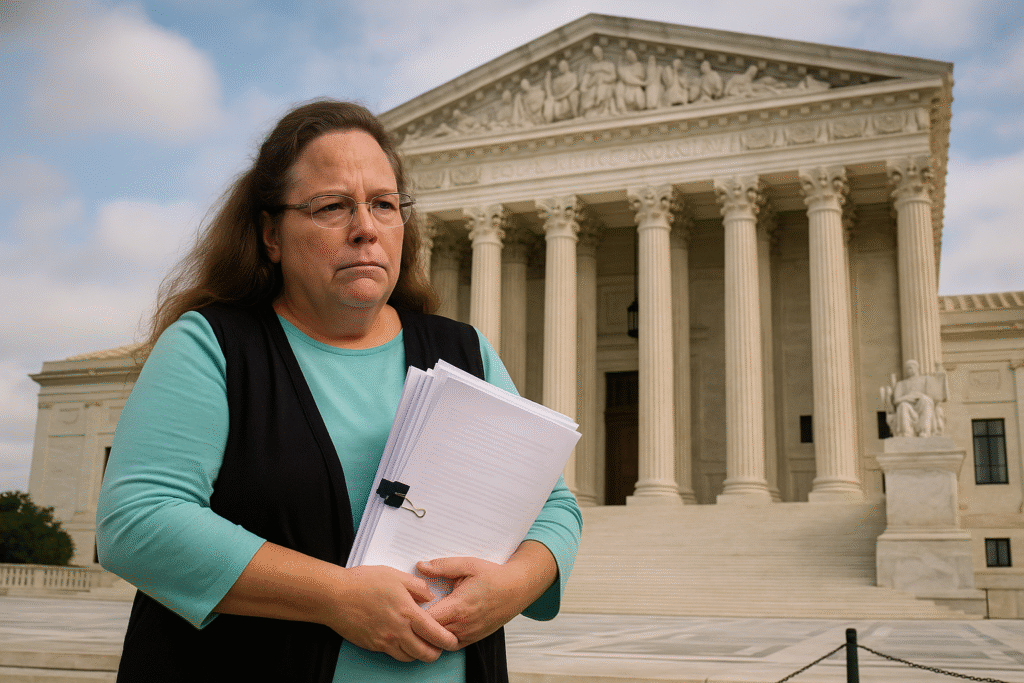
5) Did the justices give reasons? What a denial means legally
A denial of certiorari (the order refusing to hear the case) is not a merits ruling. The Court typically provides no explanation when it denies review.
Legally, denying review leaves lower-court judgments — and the Obergefell precedent — in place. It is not a pronouncement that the Court has reaffirmed the merits; it simply leaves the current legal landscape intact.
6) How this fits the Court’s recent pattern on precedents
Since the 2022 Dobbs decision (overturning Roe v. Wade), observers have watched the Court for signs it will revisit other major precedents.
Today’s denial signals that, at least for Obergefell, the justices were unwilling to reopen the question now — even with a conservative majority on the bench. Analysts note the difference between the Court’s handling of abortion and how it treats marriage-rights precedent.
7) Practical effect for same-sex couples and county clerks
For same-sex couples the practical effect is straightforward: Obergefell remains binding. States must license and recognize same-sex marriages.
For county clerks who object on religious grounds, the denial means the federal statutory and constitutional requirements still control; lower courts’ remedies against noncompliant officials also remain in place.
8) The Kim Davis damages fight — why that mattered to her petition
Davis was ordered by a lower court to pay damages and attorneys’ fees to couples she refused; part of her petition aimed to avoid that financial liability by attacking the underlying precedent.
Because the Supreme Court refused review, those lower-court rulings that assessed damages remain on the books. Davis’s legal options are now limited.
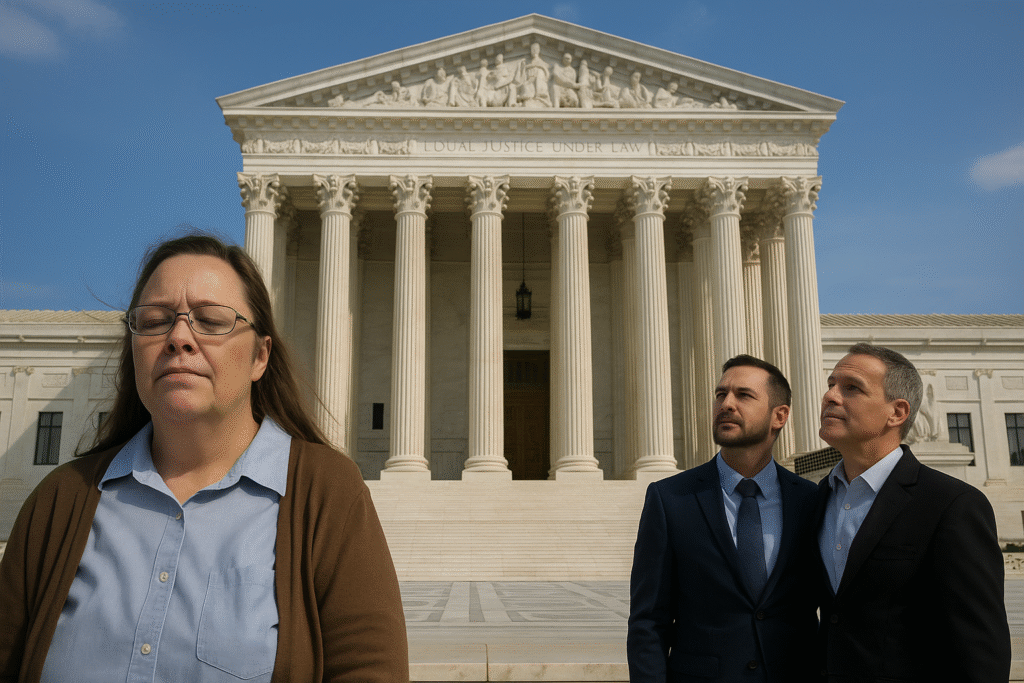
9) Why some Justices and commentators treated Obergefell differently from Roe
Some conservative justices have signaled in past writings that they view marriage precedents as woven into reliance interests (families, benefits, contracts) differently than abortion precedents.
That juridical nuance — balancing reliance and social disruption — was discussed in earlier opinions and helps explain why Obergefell was less likely to be targeted for wholesale reversal.
10) What to watch next — potential legal or legislative moves
Even with the Supreme Court denial, litigants and state lawmakers can pursue new tests: incremental limits, narrow carve-outs, or statutory exemptions (religious-celebrant protections, for example).
Congress could also act — either to strengthen nationwide protections or to create carve-outs. Those political and legislative debates are likely to continue.
11) How the media and activists are responding (short snapshot)
Civil-rights groups hailed the Court’s decision to leave Obergefell intact and stressed the importance of accountability for officials who refuse to comply with constitutional rulings.
Some conservative advocacy groups expressed disappointment and signaled ongoing political and legal campaigns to protect religious liberty claims. Expect continued engagement on both sides.
12) How readers should think about this ruling and what to do
If you’re an LGBTQ+ person or an ally: this denial preserves current marriage rights, but vigilance matters — follow legislative actions in your state and federal litigation developments.
If you’re a public official with conscience objections: consult legal counsel — the constitutional landscape requires compliance with federal court orders and risk of legal liability for refusing duties. Monitor official guidance from state legal advisers and the courts.
Short FAQ (fast answers)
Q: Does the Court’s denial mean same-sex marriage is safe forever?
A: No. Denial preserves Obergefell now, but future cases, congressional action, or narrow statutory changes could create new legal fights.
Q: Can a county clerk still refuse to issue licenses?
A: No — state and federal courts require compliance; individual refusals can trigger injunctive relief and damages.
Q: What did Obergefell actually hold?
A: Obergefell held that the Fourteenth Amendment requires states to license and recognize same-sex marriages.
Sources & verification (major, authoritative reporting used)
Key reporting and primary sources used to prepare this explainer: Associated Press, Reuters, Politico, People, Justia (Obergefell opinion), Britannica and national outlets that covered the Court’s Nov. 10, 2025 order.
TrenBuzz disclaimer
This article is an informational summary of the Supreme Court’s Nov. 10, 2025 order and the background legal context. It does not provide legal advice. For legal questions about obligations or litigation risks consult a licensed attorney or official court records.