


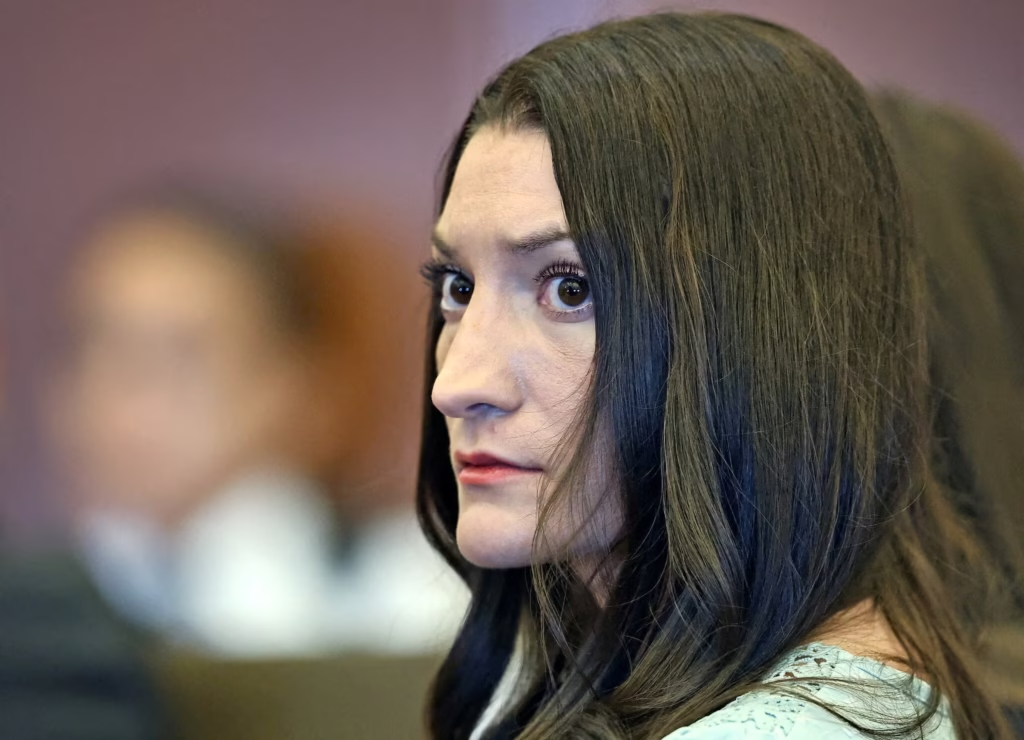
Key Points: Lindsay Clancy Retrial
- Lindsay Clancy will be tried again in March 2027 on first-degree murder charges, according to reports from the November 16 hearing in Plymouth Superior Court.
- Her first trial ended in a mistrial on September 4 after the jury split 11 to 1.
- Eleven jurors reportedly wanted a verdict of not guilty by reason of lack of criminal responsibility. One would not agree.
- Judge William Sullivan rejected the defense bid to dismiss the case on double jeopardy grounds.
- Clancy has been held at Tewksbury Hospital since shortly after the January 2023 deaths of her three children.
Some court cases end with an answer. This one ended with a split, and now it starts over.
The Lindsay Clancy case has held Massachusetts for nearly four years. On Monday, it gained a new chapter and a new date.
Lindsay Clancy Trial: What Happened in the First Round
On January 24, 2023, three children died at their home in Duxbury. They were 5 year old Cora, 3 year old Dawson and 8 month old Callan.
Their mother, Lindsay Clancy, now 36, was charged. She pleaded not guilty.
Her defense never argued that the killings did not happen. It argued that she was in the grip of postpartum psychosis and bipolar disorder and could not be held criminally responsible.
The first trial ran through the summer, with about five weeks of testimony. Jurors then deliberated for seven days.
In the end they could not agree. Reports say 11 of the 12 backed a not guilty by reason of insanity verdict, and one juror held out.
Judge Sullivan declared a mistrial on September 4. In Massachusetts, a verdict must be unanimous.
Why the Lindsay Clancy Retrial Is Moving Ahead
A mistrial is not an acquittal. That single fact explains almost everything that has happened since.
The defense asked the judge to dismiss the charges. It argued a second trial would violate the ban on double jeopardy.
It also argued the judge should have questioned the holdout juror more closely before ending the first trial. Judge Sullivan said no, and called the deadlock a “manifest necessity” for a mistrial.
He also turned down a request from prosecutors for a gag order. He left the door open to renew that request later.
Plymouth County District Attorney Tim Cruz spent weeks reviewing the case before the Monday hearing. Reports from court say prosecutors will retry the first-degree murder charges, and the judge is aiming for March.
Defense lawyers say they plan to appeal the ruling on double jeopardy. They have also said they do not want that appeal to slow down a new trial.
The Three Clocks Nobody Is Talking About
Most coverage asks one question: will a new jury convict or acquit? Here is a different way to read the calendar.
There are three clocks running in this case, and they do not agree with each other.
The first is the judge’s clock. Defense attorney Kevin Reddington has said he wants this trial held in the spring in front of Judge Sullivan, who faces mandatory retirement. A new judge would mean a new person learning a very long record.
The second is Clancy’s own clock. She has been held at a state hospital for almost four years and remains partly paralyzed after a suicide attempt. A longer wait means a longer time in custody before any final answer.
The third is the clock of memory. By the time the next jury is seated, more than four years will have passed since that January night. Witnesses forget, details blur, and the same evidence can sound very different.
This is analysis, not reporting. But it shows why a date on a calendar matters as much as the ruling that produced it.
What a Second Jury Will Be Asked to Decide
Retrials are not copies of the first trial. Both sides now know what worked and what did not.
Prosecutors argued that her actions were calculated. The defense said illness took away her ability to understand or control what she did.
A new jury will hear the same central question. Was she criminally responsible when it happened?
Jurors from the first trial said they felt the weight of the decision. Some also said they were hit by online trolls afterward, and one reportedly got death threats.
That is a quiet warning for anyone following along online. Strong feelings are normal, but threats against jurors are not.
A Note for Readers Who Need Support
This case has also raised public awareness of postpartum mental health. Postpartum psychosis is rare, but it is serious and treatable.
Warning signs can include severe confusion, extreme agitation, paranoia or hearing things that are not there. Anyone who sees these signs in a new parent should seek medical help right away.
In the United States, you can call or text 988 at any hour if you or someone you know is in crisis. Postpartum Support International also runs a free helpline for new and expecting parents.
What to Watch Next
- The appeal: Whether a higher court takes up the double jeopardy question, and whether it affects the March timeline.
- The charges: Prosecutors could still adjust the charges before trial, so watch the formal filings.
- The gag order: The judge denied it for now, but it can come back if public comments get out of hand.
- Jury selection: Finding twelve people who have not formed a view of this widely covered case will be a challenge of its own.
For the Clancy family and the community of Duxbury, the case continues. For everyone else, it is a lasting lesson in how slowly the law can move.