


By TrenBuzz — Special report
Key points
- New York City Mayor Zohran Mamdani signed Executive Order No. 13 — “Protecting New Yorkers from Abusive Immigration Enforcement”, which sharply limits when federal immigration agents may access City property and tightens city privacy safeguards.
- The order bars Immigration and Customs Enforcement (ICE) from entering city-owned facilities (schools, shelters, hospitals, parking lots and other city property) without a judicial warrant, and it requires city agencies to install privacy officers and stop routine data-sharing with federal immigration authorities except where required by law.
- Mamdani introduced the measure as a reaffirmation of New York’s sanctuary protections and said it is intended to ensure immigrants can safely access city services without fear of arrest or surveillance.
- The order drew swift support from immigrant-rights groups and progressive advocates — and it is likely to provoke scrutiny from federal officials and legal challenges over preemption and public-safety exceptions.
Mamdani signs executive order to protect New Yorkers — what happened and why readers should care
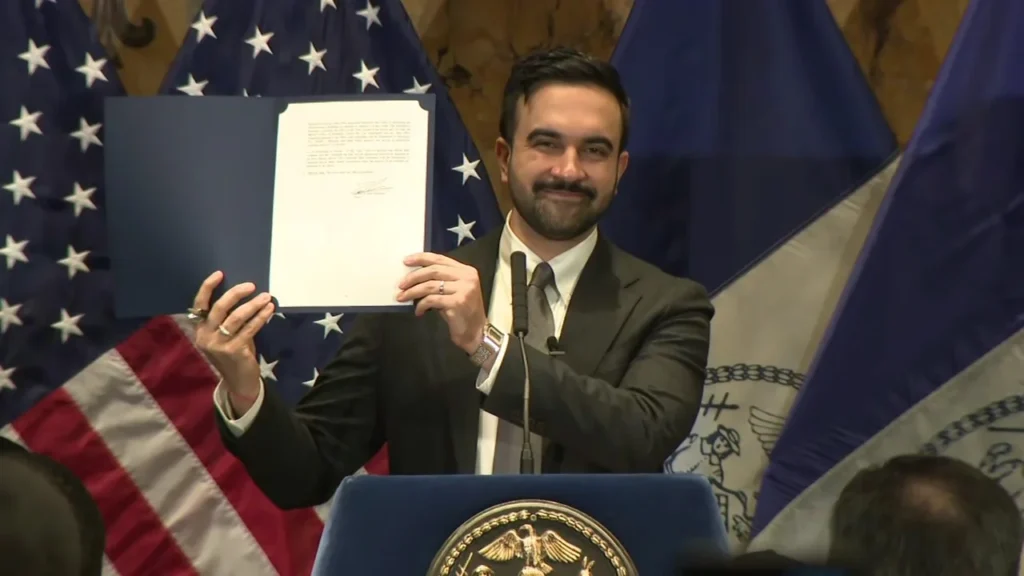
On Friday at an interfaith breakfast in Bryant Park, Mayor Zohran Mamdani signed Executive Order No. 13, a wide-ranging municipal directive he framed as protection against what he called “abusive immigration enforcement.” The order limits ICE access to city property without a judge-issued warrant, tightens data-privacy obligations for city agencies, and requires agencies to appoint privacy officers and audit their information-sharing practices. For millions of New Yorkers — students, patients, shelter residents and municipal employees — the order aims to reduce the risk that routine civic life will trigger immigration enforcement.
What the executive order does — plain English summary
- No ICE on City property without a warrant. ICE and similar federal agents are barred from entering schools, MOCS shelters, hospitals, day-care centers and other city-run facilities unless they produce a judicial warrant that expressly authorizes the entry.
- Privacy officers & audits. Each city agency has 14 days to appoint a privacy officer and begin audits to ensure the agency’s records and collection practices comply with the new rules and preserve personally identifying information from improper disclosure to federal immigration authorities.
- Limits on data-sharing. The order forbids routine or voluntary transfer of City-collected information to federal immigration authorities unless compelled by law or a valid warrant. That includes databases used for health, housing, education, and other City services.
Why the mayor acted now
Mamdani framed the order as both a moral obligation and a pragmatic public-safety step: when immigrants fear accessing schools, hospitals or benefits, communities become less safe (people avoid reporting crimes, skip medical care, or keep children home). He positioned the order as a pro-public-safety, pro-inclusion policy that preserves access to essential services while asserting municipal control over local operations.

Reactions — who supports it and who will oppose it
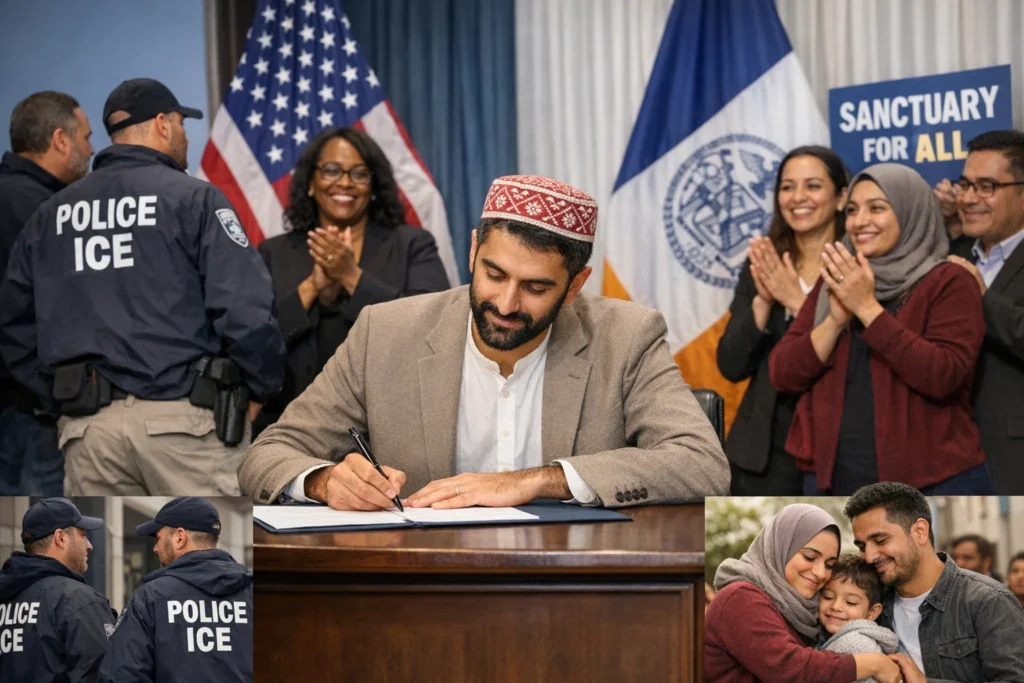
- Supporters: Immigration-rights groups, local advocates and progressive coalitions praised the move as a necessary reinforcement of sanctuary principles; the New York Immigration Coalition welcomed the order and pledged to collaborate on implementation.
- Critics & federal authorities: Federal officials (including ICE and DOJ spokespeople) historically argue that local protective measures can impede removal operations and national-security investigations; legal pushback — alleging preemption by federal immigration law or exceptions for national security — is likely. Some city watchdogs and moderate critics may also raise questions about operational tradeoffs and emergency exceptions. (See legal analysis section.)
Legal and practical issues to watch
- Preemption and federal supremacy. Immigration enforcement is predominantly a federal function. Courts will test whether a city may categorically restrict federal agents’ access to municipal property absent a clear statutory obligation. Several prior cases have balanced sanctuary-style local policies against federal enforcement needs; this order may prompt fast litigation.
- Warrant exceptions. The order preserves law-enforcement exceptions tied to judicial warrants, but disputes may arise over what constitutes a valid warrant for entry (e.g., scope, form, exigent circumstances). Expect debates over “exigent-circumstance” entries and whether the City must cooperate in certain criminal or counter-terror investigations.
- Implementation logistics. Agencies must rapidly appoint privacy officers, run audits and change IT/data-request protocols — an administrative lift that requires training, new processes and possible budget allocations. Watch city agency guidance memos and trainings in the coming weeks.
Interactive checklist — what different audiences should do next
For immigrant New Yorkers
- Know your rights: if ICE approaches, ask for a warrant, record the agent’s name and contact your legal rep. The city’s order strengthens the expectation that warrants will be required for City property.
For city employees & agency leaders
- Appoint your privacy officer within 14 days, complete the mandated audits, and freeze voluntary data-sharing with ICE unless counsel says otherwise. Expect new internal guidance and training.
For legal observers & civil-liberties groups
- Review the executive order for constitutional challenges (preemption, Supremacy Clause) and prepare to support municipal defenses or bring test cases if federal compliance questions arise.
For federal and state officials
- Coordinate: if legitimate criminal or national-security concerns exist, officials should seek judicial warrants or negotiate formal MOUs to ensure lawful cooperation while respecting New York’s policies.
What this means in practice — likely short- and medium-term effects
- Short term: Greater clarity and comfort for immigrants using City services; a spike in legal questions and requests for interpretive guidance from agencies and courts. Civil-liberties groups will use the order as a model for other sanctuary cities.
- Medium term: Anticipate at least one legal challenge from federal entities or coalition plaintiffs seeking injunctive relief, especially if ICE files a warrantless entry or if the City refuses to comply with a federal subpoena in a high-profile case. The litigation outcome will set a precedent for municipal limits on federal enforcement activity.
Quick FAQ
Q: Does the order mean ICE can never operate in NYC?
A: No. The order bars warrantless entry to City property but does not eliminate federal power; ICE may still act with valid judicial warrants or under narrowly defined legal exceptions.
Q: Can the federal government override the order?
A: The federal government can seek a court order or argue preemption; past cases are mixed, and courts will weigh the City’s public-safety interest against federal enforcement prerogatives. Expect litigation.
What to watch next (timeline)
- This week: City agencies publish internal implementation memos and begin appointing privacy officers. Community groups host info sessions for residents.
- 30–60 days: Expect legal filings or federal communications if a disputed enforcement action occurs on City property; watch for any federal civil-rights or DOJ responses.
- 3–6 months: Possible court rulings on preliminary injunctions or declaratory relief that will shape how far cities may restrict federal immigration access.
Bottom line
Mayor Mamdani’s Executive Order No. 13 is a forceful municipal statement of sanctuary-city values: it seeks to protect access to schools, hospitals and other services by making warrantless immigration enforcement on City property much harder. It’s designed to reassure immigrant New Yorkers and reassert municipal control over local operations — but it also sets up a likely legal confrontation over how far city governments can limit federal immigration actions. Whether the order becomes a durable model or a temporary political shield will depend largely on how courts interpret federal supremacy and on whether the City and federal government can fashion narrow, practical exceptions that preserve both safety and civil liberties.