


Key Points
- U.S. robotics companies have urged the White House to develop a national robotics strategy to counter China, but they do not expect major action until a Trump-Xi meeting happens.
- The Trump-Xi summit was delayed by about a month after Trump said the Iran war had upended his schedule.
- U.S. lawmakers have already introduced a bill to block the government from buying or using Chinese-made humanoid robots.
- The White House has also used a recent AI education event to showcase humanoid robots, signaling how central robotics has become in Washington’s tech agenda.
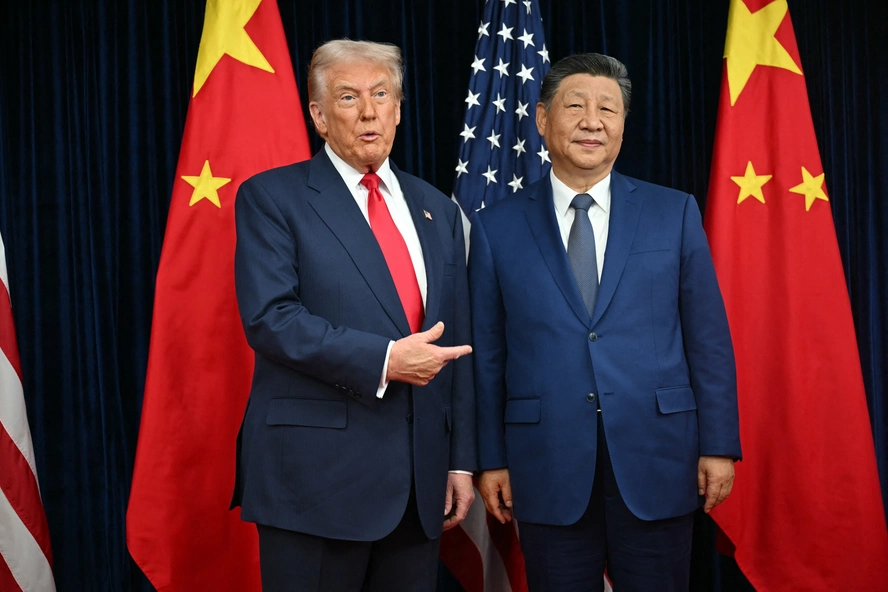
The U.S. robotics industry is pushing hard for a national strategy, but the political calendar may be moving too slowly for the sector’s liking. According to Semafor, robotics firms have asked the White House to draft a clear national robotics plan aimed at countering China, yet executives say they do not expect major policy movement until President Donald Trump meets Chinese President Xi Jinping. That summit, however, has already been pushed back amid the Iran war.
That delay matters because robotics is no longer a niche conversation in Washington. It sits at the intersection of manufacturing, national security, labor, and artificial intelligence. Reuters reported that Trump requested the China trip be delayed by about a month, saying the Iran conflict had taken priority and disrupted his foreign policy agenda. The postponement also adds uncertainty to a broader U.S.-China reset that had been expected to touch trade, Taiwan, and technology controls.
For the robotics sector, the timing is frustrating. Industry leaders want federal direction now, not after another round of summit diplomacy. Their concern is straightforward: China is moving quickly in humanoid robotics, and U.S. firms want policy support that can help them scale, compete, and secure domestic supply chains before the gap widens. Semafor’s reporting shows executives believe the White House is unlikely to advance big China-related robotics proposals until the Trump-Xi talks are back on the calendar.

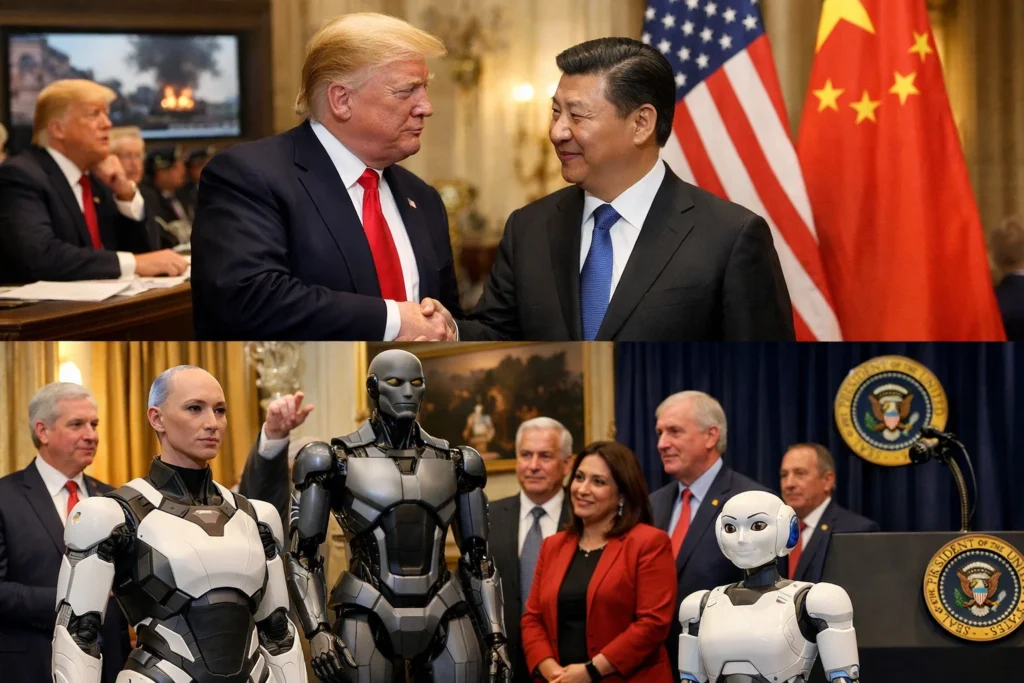
At the same time, the national-security debate around robotics is getting sharper. Reuters reported that two U.S. senators planned legislation to ban the federal government from buying or operating humanoid robots made by Chinese firms. The proposed bill would also bar federal funds from being used in connection with those robots, while carving out limited exceptions for military and law-enforcement research under strict data restrictions. That is a strong sign that robotics is now being treated less like a consumer-tech story and more like a strategic asset.
The political symbolism is hard to miss. Just days earlier, Reuters reported that a humanoid robot joined Melania Trump at a White House event promoting AI in education. The first lady framed AI and humanoids as part of a future in which technology helps expand learning, while Trump later appointed major tech leaders to advise on AI policy. Reuters also noted that China has been showcasing its own advanced humanoid robots as it pushes to dominate the field.
National Robotics Push: Taken together, the message from Washington is clear: robotics is now part of the U.S.-China competition, but progress is being slowed by geopolitics. A delayed summit can delay policy. A delayed policy can delay investment. And for companies racing to build the next wave of robots, that time lag can be costly. The real question for readers is this: will the U.S. move fast enough to set its robotics roadmap before China sets the pace?