


Key points
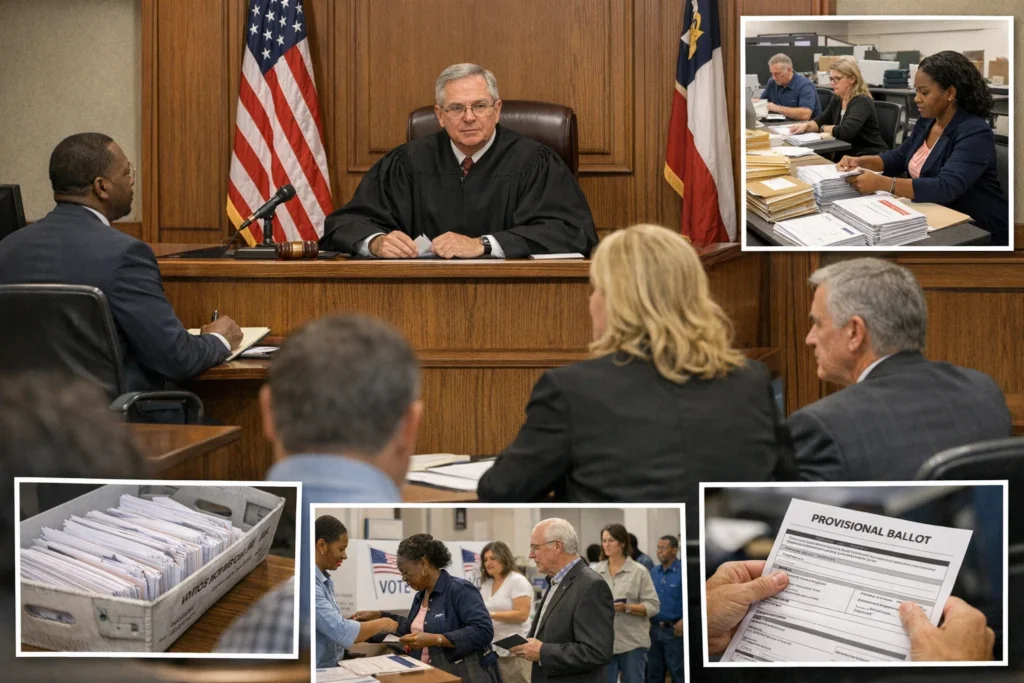
- A federal judge approved a consent agreement that requires the state to keep thousands of registrations on the rolls while the elections office tries to fill missing ID information — more than 70,000 people remain in the “incomplete” pool and will be allowed to stay on the rolls for now.
- The settlement resolves a lawsuit brought by the U.S. Department of Justice that argued North Carolina’s voter records lacked required numerical identifiers for many registrants; the agreement imposes outreach and reporting steps through 2027.
- The board’s earlier review flagged hundreds of thousands of registrations for follow-up; roughly 241,000 letters went to voters whose numbers didn’t validate in government databases — but a large subset will not be removed and will be allowed to vote provisionally if they don’t respond.
- Election officials say federal ballots will still be counted for eligible voters who remain in the incomplete records pool, but the administration of provisional ballots for state and local contests could create confusion at the polls.
- Civil-rights groups and national parties have pushed and sued over the issue; the consent order is intended to avoid a costly trial while requiring the State Board to report progress.
What happened (North Carolina Voter Rolls)
A federal judge signed a consent order resolving litigation between the U.S. Department of Justice and North Carolina election officials over incomplete voter-registration records. The 2025 lawsuit argued that for years the state’s registration form and data maintenance practices left many records without a driver’s license number or the last four digits of a Social Security number — fields the Help America Vote Act expects states to collect and to validate. The settlement requires the state to continue outreach, search internal records, and file periodic updates with the Department of Justice through 2027.
Because tens of thousands of people have already provided the missing identifiers, the list of incomplete records has shrunk; but more than 70,000 registrants remain in the pool and will stay on the rolls under the agreement. Those voters will generally be allowed to cast provisional ballots (and federal ballots still must be counted for otherwise-eligible voters), unless they provide valid ID numbers before Election Day.
The numbers and who’s affected
- Initially the state identified roughly 103,000 registrations missing ID numbers after launching a “Registration Repair Project” in mid-2025; outreach and database checks have reduced that pool but a substantial remainder persists.
- Separately, election officials flagged about 241,000 registrations whose ID numbers did not validate against government databases (name changes, typos, or data-entry errors are common causes). The board has taken different approaches for validation and provisional-ballot administration on that group.
- The full universe of registered voters in North Carolina is roughly 7.6 million — so while the affected group is a minority, in a closely contested state even small administrative changes can affect local races.

Why this settlement matters
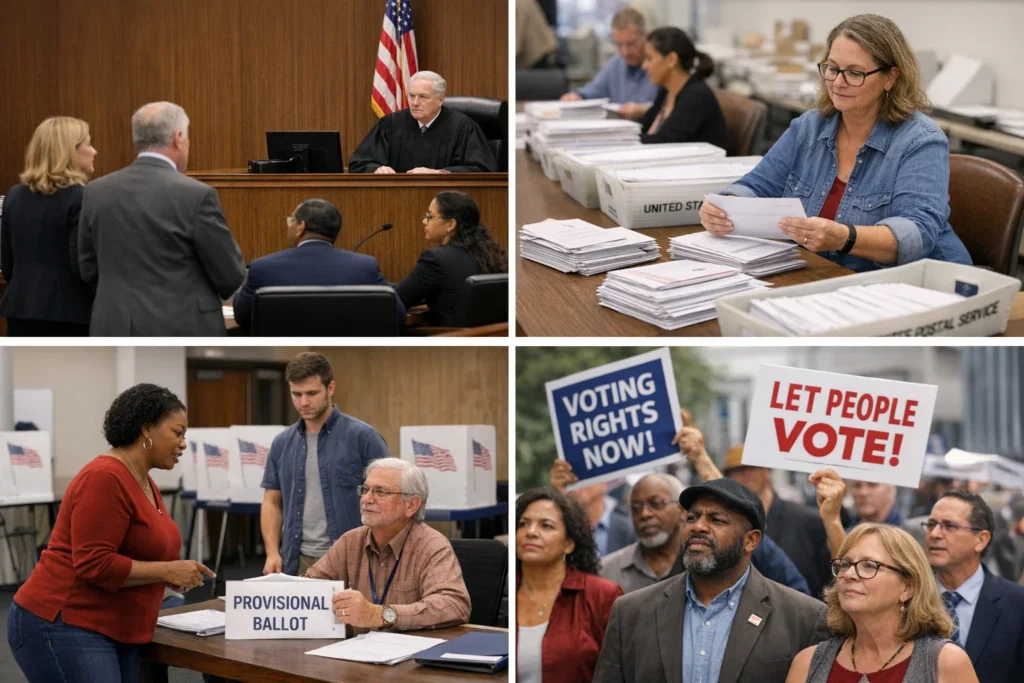
- Protects voters from immediate removal. The consent order prevents large-scale purges while giving the state time and specific steps to find missing numbers. That reduces the risk of inadvertent disenfranchisement in federal contests.
- Creates administrative — not just political — consequences. Voters left on the incomplete list will often cast provisional ballots; county boards must sort and validate those ballots after the fact, which raises logistical burdens and possible delays in certification.
- Keeps oversight in place. The DOJ will receive regular updates, and civil-rights groups are watching to ensure outreach is robust and non-discriminatory.
What voters in North Carolina should do now (practical checklist)
If you live in North Carolina or are helping someone who does, follow these steps to avoid problems at the polls:
- ✅ Check your registration status now. Visit your county board of elections website or the statewide portal and confirm that your record includes a driver’s license number or the last four digits of your Social Security number. (If either field is blank, you’re at risk of being placed on the incomplete list.)
- ✅ Update online or in person. Most counties allow an online update; you can also visit a county elections office or the DMV to provide the missing number and supporting ID.
- ✅ If you must cast a provisional ballot, bring ID. Even if you’re on the incomplete list, presenting an ID at the polling place increases the chance your ballot will be counted for state and local contests. Federal ballots for otherwise-eligible voters must be counted per the consent agreement.
- ✅ Save evidence of outreach. If you receive letters from the State Board, follow the instructions and keep copies; if you contact the board or DMV, keep confirmation emails or written receipts. These help if a provisional ballot situation arises.
Political and legal context — short primer
The case arose after a change in the State Board’s composition and a push by the Department of Justice to enforce the Help America Vote Act’s requirements for accurate registration databases. National parties and civil-rights groups have sparred over whether the outreach program and provisional-ballot rules are fair in practice. The consent order is a middle path: it avoids a drawn-out trial while obligating the state to perform specific remediation steps and to report progress publicly.
Quick Q&A
Q: Will my federal vote count if I’m on the incomplete list?
A: Yes — under the consent order the state must count federal ballots for otherwise-eligible voters even if their ID number is missing. But to be safe, update your record or bring ID to the polls.
Q: Could these provisional-ballot procedures change who wins close races?
A: In theory, yes — provisional ballots require post-election validation and can be decisive in tight local contests. That’s why outreach and accurate databases matter.
Q: Who’s monitoring the settlement?
A: The Justice Department’s Civil Rights Division will receive updates; civil-rights groups and national parties have also publicly tracked the case and its implementation.
Bottom line
The court-approved settlement protects more than 70,000 North Carolinians from immediate removal while putting a structure in place to fix incomplete records. For voters, the immediate priority is practical: check your registration, update any missing ID numbers, and bring ID to the polls if you’re unsure. Administratively, the deal buys time and oversight; politically, it keeps a close eye on how election rules are applied in a battleground state.