


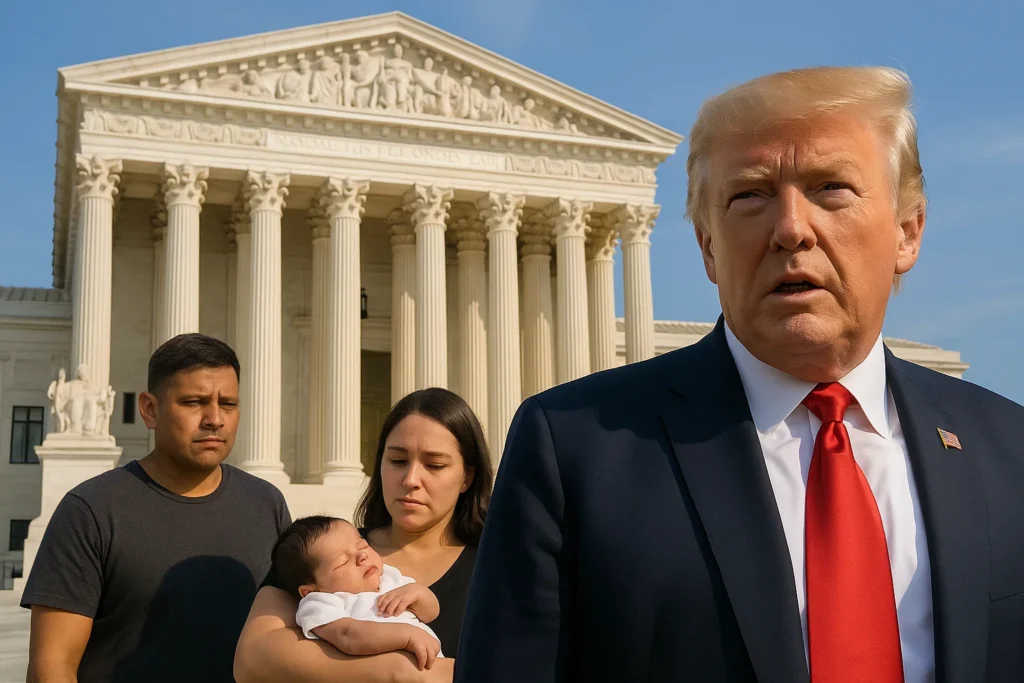
The U.S. Supreme Court this term has agreed to take up high-stakes immigration fights tied directly to President Trump’s agenda: a challenge to his attempt to curtail birthright citizenship and a separate fight over the administration’s authority to limit asylum processing at the border.
Both cases ask the justices to decide how far the executive can push: whether the President can narrow who is a U.S. citizen by executive act, and whether the government may lawfully “meter” or otherwise restrict asylum claims at ports of entry.
Below is a clear, step-by-step explainer of what the court is being asked, the legal tests judges will use, possible outcomes, and what each result would mean practically for immigration, policy and politics.
The two headline cases the court agreed to hear
First: the Court accepted review of the administration’s effort to end automatic citizenship for some children born on U.S. soil — a direct challenge to longstanding interpretations of the 14th Amendment’s Citizenship Clause.
Second: the Court will decide whether the federal government can limit processing of asylum seekers at ports of entry — a key piece of policies the administration says are needed to control irregular migration.
Both decisions are likely to be announced during the Supreme Court’s next calendar cycle, with major rulings expected around the end of the Court’s term next June.
Case 1 — Birthright citizenship: what’s the legal question?
At issue is the meaning of the 14th Amendment phrase: “All persons born or naturalized in the United States, and subject to the jurisdiction thereof, are citizens of the United States.”
The government argues the President can limit the scope of birthright citizenship for children of noncitizen parents; critics say that power lies only with Congress or is foreclosed by the Constitution.
Lower courts blocked the President’s order, and now the Supreme Court must decide whether a unilateral executive action can override longstanding constitutional and statutory readings.
A ruling for the administration would be historic — narrowing a principle that has stood in place for more than a century — while a ruling against it would reinforce existing constitutional understandings.

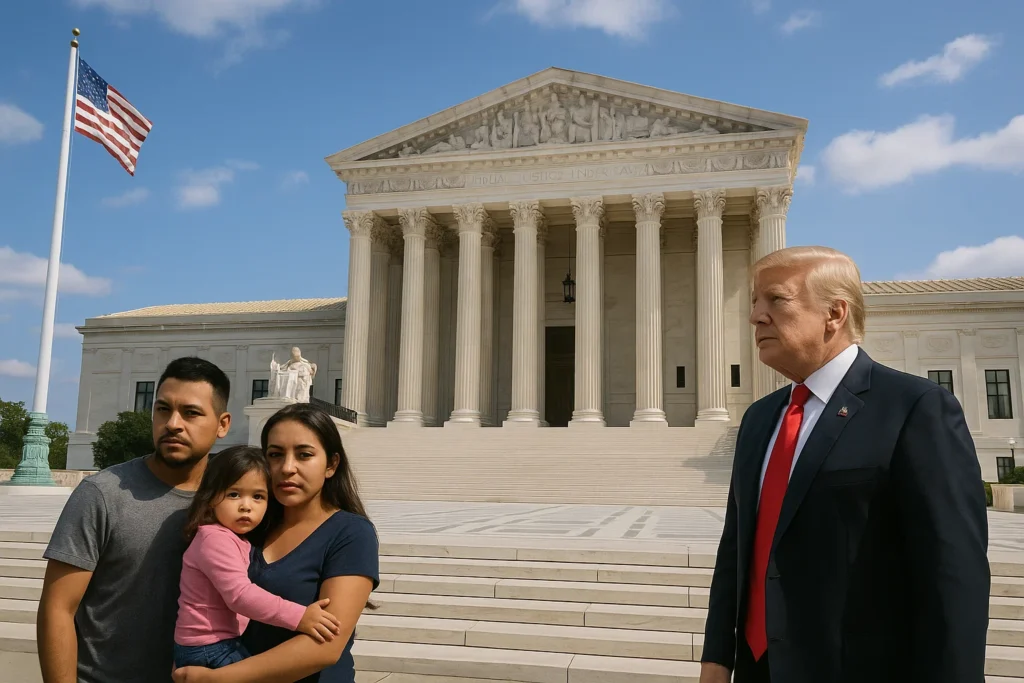
Case 2 — Asylum processing limits: what’s the legal question?
The question is whether federal agencies have statutory authority to restrict when and how noncitizens may file asylum claims at ports of entry and to “meter” claims so only limited numbers are processed.
The administration says these tools are lawful exercises of immigration and national-security authority; opponents argue they unlawfully deny asylum access and flout immigration statutes protecting those who seek refuge.
How the Court frames the statutory language and the deference it gives to agencies (for example, under doctrines like Chevron) will be decisive in resolving that dispute.
A ruling that backs the administration would make it easier for future executives to restrict asylum access through policy; a ruling against would constrain such unilateral curbs.
What legal standards the Court will likely weigh
For birthright citizenship, the justices will parse constitutional history, statutory context and the original meaning of the Citizenship Clause — especially who counts as “subject to the jurisdiction” of the United States.
For asylum limits, the Court will examine statutory text (immigration laws that guarantee asylum procedures), administrative-law doctrines about agency authority, and precedents on executive discretion at the border.
In both matters, the ideological balance on the Court and the way individual justices frame separation-of-powers questions are pivotal; narrow or technical rulings are possible if the Court wants to avoid sweeping constitutional change.
Practical outcomes: three plausible rulings for each case
Birthright citizenship
• Narrow ruling for the government: the Court finds a limited path for executive limits, perhaps allowing tighter regulation for certain narrow categories of noncitizen parents.
• Broad affirmation for the traditional reading: the Court rejects the executive order and confirms near-automatic citizenship for persons born here.
• Technical, avoidant opinion: the Court decides on standing, procedural issues, or limits its holding so the core doctrine remains mostly intact.
Asylum processing
• Pro-administration: the Court upholds wide agency discretion to limit processing and to “meter” arrivals.
• Pro-claimant: the Court finds statutory protections require more open access and limits the administration’s unilateral tools.
• Mixed or narrow: the Court permits some operational measures but requires procedural safeguards and oversight.
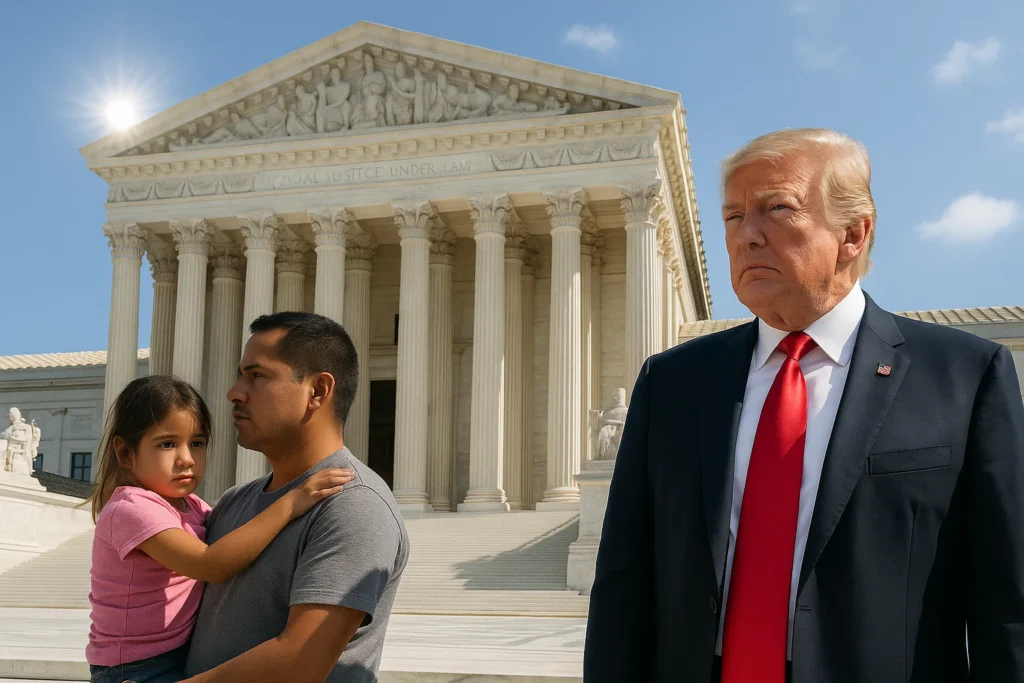
What a pro-Trump outcome would change on the ground
A favorable ruling on birthright citizenship would allow the administration to narrow who automatically receives citizenship at birth, reshaping family law, immigration filings, and potentially creating immediate legal uncertainty for impacted children.
A wins on asylum limits would give the executive more leeway to turn away, delay, or process fewer asylum seekers at ports of entry — changing border operations and humanitarian access.
Both outcomes would strengthen the President’s ability to set immigration policy rapidly, with fewer statutory or constitutional limits, but would also almost certainly spur further litigation and political backlash.
State law, consular practice and foreign-policy partners could all feel secondary effects if millions of people face new legal limbo.
Political and practical constraints even if the Court sides with the administration
Even a sympathetic Supreme Court ruling won’t erase administrative costs, international obligations, or Congressional interest in legislating long-term fixes.
Congress retains power to pass statutes that clarify immigration rules; but if Congress fails to act, a pro-administration Court ruling gives the White House a substantial head start in shaping policy.
Courts, states, and civil-society groups will continue to use litigation, oversight and public pressure as countervailing tools — meaning policy fights will likely move across multiple arenas.
Practical implementation would still require rulemaking, agency infrastructure, and procedural guardrails that themselves could be litigated.
What to watch next — practical checklist
- The Court’s docket entries and argument calendar for both cases.
- Key amicus briefs (civil-rights groups, immigration scholars, states) which signal how broad or narrow the Court’s ruling may be.
- Immediate agency guidance or interim rules the administration issues in response to litigation dynamics.
Which outcome do you think is most likely from the Supreme Court on these Trump immigration cases?
Bottom line — cautious prediction, big stakes
The Supreme Court’s review places two of the Trump administration’s most consequential immigration ambitions before the nation’s highest justices.
Outcomes could either reinforce long-standing constitutional and statutory protections or open the door for sweeping executive action — and either path will reshape policy, litigation and politics for years.
Disclaimer: This article summarises reporting and expert commentary as of the update date and is for informational purposes only.
It does not predict outcomes—only explains legal questions and plausible effects—so consult official court filings and expert legal analysis as the cases progress.