


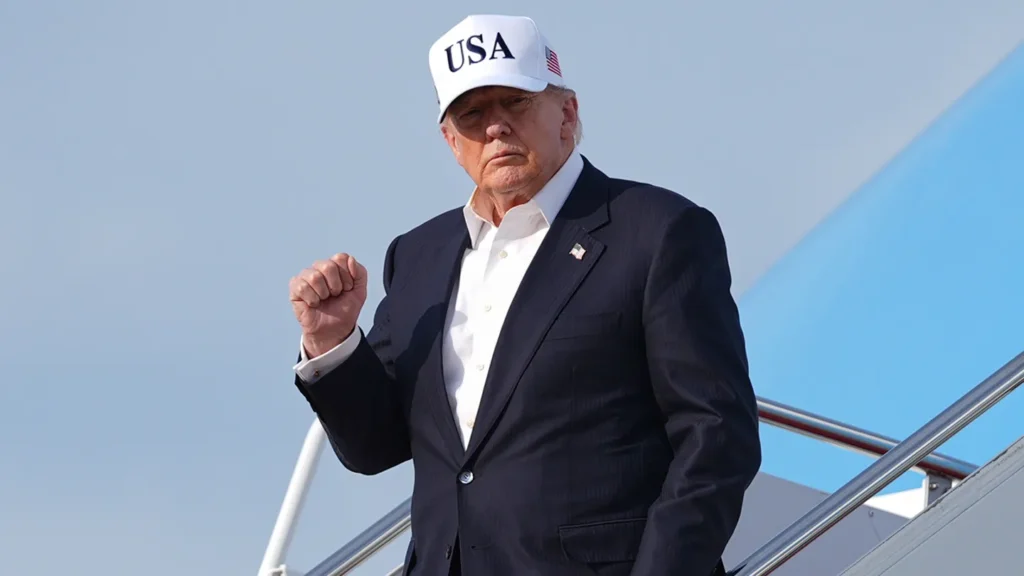
► Key Points – Senate Republicans Detonate the Nuclear Option Again
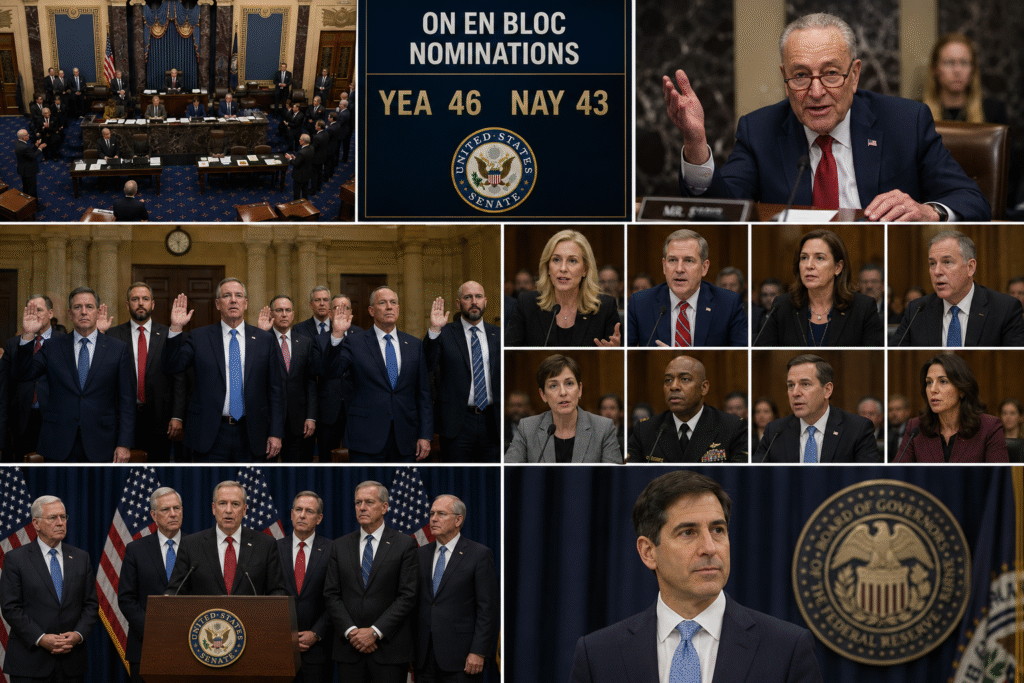
- Senate Republicans confirm 49 Trump nominees in a single en bloc vote on May 18, 2026 — the largest single-vote confirmation batch in recent memory
- The vote passed 46-43, using the “nuclear option” that dropped the confirmation threshold from 60 votes to a simple majority
- Nominees include 13 U.S. Attorneys, 8 U.S. Marshals, ambassadors, and senior officials across Defense, State, Energy, Transportation, and Commerce
- The Senate has now confirmed more than 60% of Trump’s civilian nominees — over 400 total since the rule change in 2025
- This is the fourth time Republicans have used the new en bloc rules to fast-track Trump’s picks
- Senate Democrats, led by Minority Leader Chuck Schumer, oppose every en bloc resolution — but lack the votes to stop them
- Kevin Warsh was also confirmed as Federal Reserve Chair on May 15, 2026
By TrenBuzz Staff · May 18, 2026 · 5 min read
It was Monday evening on the Senate floor, and in the span of a single recorded vote, 49 of President Donald Trump’s picks moved one giant step closer to confirmation. The Senate Republican Trump nominees vote on May 18 wasn’t just a procedural win — it was a declaration that the GOP’s confirmation machine is operating at full speed, and Democrats are powerless to slow it down.
The 46-43 vote, carried out under the en bloc resolution S.Res. 690, confirmed nominees spanning more than a dozen federal agencies — from U.S. Attorneys across the country to ambassadors, marshals, and agency directors. It is the fourth time Senate Republicans have deployed the so-called “nuclear option” to bypass the traditional filibuster threshold and confirm nominees by simple majority.
The milestone means the Senate has now confirmed more than 60% of Trump’s civilian nominees — a tally that already surpasses Biden’s confirmation pace at the same stage of his presidency, and has blown past Trump’s own first-term numbers.
How Republicans Built a Confirmation Machine — And Why They Had To
The road to Monday’s mass confirmation vote starts more than a year ago. When Trump began his second term in January 2025, Senate Democrats — led by Minority Leader Chuck Schumer — made a calculated decision to slow-walk or block virtually every nominee, forcing time-consuming individual floor votes that turned routine confirmations into a slow-motion siege.
Typically, lower-level civilian nominees sail through on unanimous consent — no real debate, no drama. But during this term, Republicans had not confirmed a single nominee via unanimous consent or voice vote. Zero. That kind of blanket obstruction was unprecedented in modern Senate history.
Frustrated by the bottleneck, Republicans went nuclear in September 2025, changing Senate rules to allow executive-branch nominees to be confirmed by a simple majority instead of the 60-vote supermajority previously required to overcome a filibuster. Monday’s vote was the fourth major deployment of that rule change.

“Democrat obstruction ends today. Democrats failed to defeat President Trump at the ballot box — so instead they’re trying to sabotage his team right here on the Senate floor.”
— Senate Majority Whip John Barrasso (R-WY)
Who Are the 49? A Closer Look at What Just Got Confirmed
The package under S.Res. 690 was not a list of obscure bureaucrats. It included 13 U.S. Attorneys for districts across the country — from Maine and Wyoming to Texas, Alabama, and Utah — positions that directly shape federal law enforcement priorities at the ground level. Eight U.S. Marshals were also confirmed, officials who oversee federal prisoner transport, courthouse security, and fugitive operations.
Beyond law enforcement, the package included ambassadors for key diplomatic posts and senior agency officials across the Departments of Defense, State, Transportation, Commerce, and Energy. Former New Mexico Republican Party chairman Steve Pearce was confirmed as Director of the Bureau of Land Management — a consequential pick for western states, where the BLM oversees nearly 30% of Wyoming’s land alone.
Sen. Chuck Grassley (R-IA) put it plainly: “These top law enforcement officials will provide safer streets for communities across America.” Democrats countered that the bundled process denied the Senate its constitutional role of individually reviewing each nomination.
🔗 Also Read:Kevin Warsh Confirmed as Federal Reserve Chair — What It Means for Interest Rates
Democrats: Opposed, Outvoted, and Running Out of Options
Senate Democrats voted unanimously against S.Res. 690 — every single one who cast a ballot. But with Republicans holding the majority and the filibuster rule already changed, unanimous opposition is a protest, not a veto. Sen. Dick Durbin (D-IL) called out one specific nominee — Darin Smith for U.S. Attorney for Wyoming — alleging serious misconduct allegations involving a compromised grand jury and jeopardized violent crime prosecutions.
Smith was confirmed anyway. That outcome encapsulates the broader Democratic frustration: they can flag concerns, hold press conferences, and cast protest votes, but the rules have been rewritten and the math is against them. Their leverage on nominees, for now, is effectively gone.
Schumer’s office did not issue a formal floor statement before the vote. The minority leader’s silence — where months ago there would have been a floor speech and a press conference — suggests even Democrats are quietly recalibrating what battles are worth fighting in this new confirmation landscape.
The Bigger Picture: More Than 400 Confirmed, With More Coming
Monday’s vote pushed Trump’s total confirmed civilian nominees past 400 since the start of his second term — a pace that has already outrun Joe Biden’s comparable numbers and surpassed Trump’s own first-term tally. The Republican strategy of using en bloc resolutions as the primary confirmation vehicle has proven, in the words of one Senate analysis, to be “a repeatable machine.”
Senators Cornyn and Lankford have even proposed making the approach permanent — introducing resolutions that would allow the Majority Leader to bundle up to 10 or 15 nominees per vote as a standing Senate rule, not just a one-time workaround. Neither proposal has passed yet, but their existence signals that Republicans see the en bloc approach as the future of Senate confirmations — not just a tool for this administration.
With the Senate now crossing the 60% threshold on Trump’s civilian nominees and another Memorial Day recess approaching, Republican leadership is eyeing a final sprint to confirm the remaining 40% before the midterm campaign season shifts the political calculus entirely.
🔗 Also Read: A Texas Senate race is testing Democrats’ stomach for race and gender fights
Disclaimer: This article is intended for informational and news reporting purposes only. The views and analysis expressed are based on publicly available information sourced from credible news agencies and do not constitute political, legal, or financial advice. TrenBuzz.com does not endorse any political party, legislative agenda, or government policy. All trademarks and names belong to their respective owners. Content is produced in compliance with Google AdSense publisher policies.