


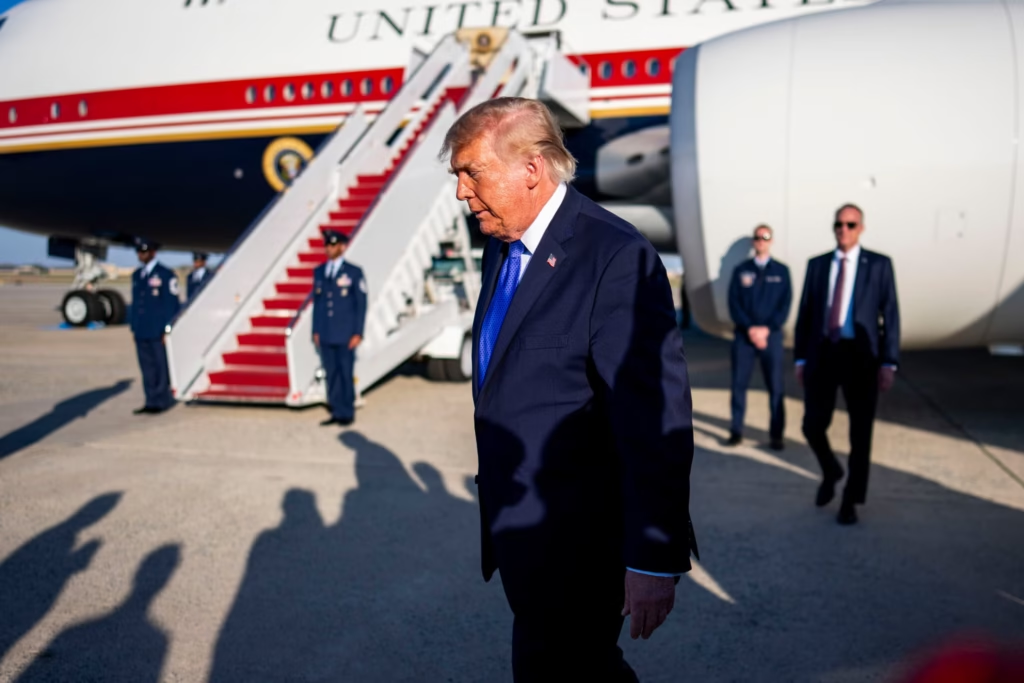
Key Points: Trump Cancels Rallies
- President Trump canceled weekend rallies in Salina, Kansas and Dubuque, Iowa, the RNC announced Thursday, October 29.
- In their place is a “72-hour sprint” of phone rallies reaching about 20 states.
- A Friday rally in Daytona Beach, Florida is still on.
- Trump held 25 rallies in October, short of a goal that once topped 30.
- He rejected suggestions of fatigue and said, “I feel perfect.”
Why Trump Cancels Rallies Days Before the Midterms
With the midterms just days away, the schedule change caught many people off guard. The Republican National Committee said Trump will swap two in-person events for a wave of telephone rallies.
Chairman Joe Gruters called it a 72-hour sprint that will boost Republicans in the closing days. The calls are planned for nearly 20 states, including Michigan, Alaska, Texas, and Iowa.
A White House official said Trump will keep connecting directly with Americans through more than 20 tele-rallies.
What Exactly Was Canceled
Trump was set to speak in Salina, Kansas on Saturday and in Dubuque, Iowa on Sunday. Both states have close races this fall.
His Daytona Beach rally on Friday goes ahead. It is about 200 miles up the coast from his Mar-a-Lago home.
The RNC added that more events could be announced in the coming days.
What Trump and His Team Are Saying
Trump said he does not feel he has to go to Kansas. A Reuters reporter asked if travel fatigue played a role, and he pushed back sharply.
At a Monday rally in Corinth, Mississippi, he had joked that vocal cords were not made for a rally every day. His voice has sounded raspy lately.
The White House says the change simply lets him reach more voters in less time.
The Pressure Behind the Scenes
News outlets report that Republicans are facing headwinds this fall. Voters are unhappy about rising costs and about the war in Iran, according to Bloomberg.
Presidents also tend to lose seats in midterms. Trump told House Republicans earlier this year that they had to win or face the chance of impeachment.
So every stop on the calendar matters, which is why a change like this gets so much attention.
The Angle Few People Are Weighing: What a Rally Really Buys
Here is the part most reports skip. A rally is not only a speech, because it buys things a phone call cannot.
An in-person event brings local TV coverage in a specific media market. It also collects volunteer sign-ups and small donations, and it energizes the local party workers who knock on doors.
A tele-rally, by contrast, can reach thousands of households at once for very little cost. But it usually earns less news coverage and less of that local excitement.
A Quick Look at the Math
Trump held 25 rallies in October. That is about one every 1.2 days, a hard pace for an 80-year-old.
A phone sprint can cover 19 or 20 states in one weekend. A plane can only reach two or three.
So the trade is simple. The RNC picks breadth over depth, and the real test will be whether turnout in places like Dubuque and Salina holds up without him.
Not the First Time
This is not a first for Trump. In January 2024, he canceled several events before the Iowa caucuses because of extreme weather and replaced them with tele-rallies.
That time, the reason was a snowstorm. This time, no weather excuse exists, which is why more people are asking questions.
Context matters here, because a phone rally has been part of his playbook before.
What Democrats and Analysts May Say
Democrats will likely point to the cancellations as a sign of strain. Some commentators have already raised health questions, though Trump has strongly denied any problem.
Supporters will argue that a flurry of calls is smart and cheap. They say it puts him in front of more voters than any single rally could.
Both readings are possible, and the November 3 results will give the best answer.
What to Watch Before Election Day
Watch the Daytona Beach rally for attendance and tone. See whether the RNC adds new in-person stops or sticks with calls.
Also check turnout in Kansas and Iowa, where Trump will only appear by phone. Early voting numbers may show whether his absence matters.
For now, the facts are clear. Trump cancels rallies, trades crowds for calls, and bets that 72 hours of phone time will help hold Congress.