


Key points
- President Trump reposted a video on Truth Social that briefly shows Barack and Michelle Obama with their faces superimposed on apes, then deleted it after widespread outrage.
- The clip drew bipartisan condemnation — Democrats called it racist, and some Republicans, including Sen. Tim Scott, publicly criticized the post.
- The White House initially defended the clip as a meme referencing “The Lion King,” but later said a staffer erred; Trump says he did not see the full clip and refuses to apologize.
- Civil-rights groups and historians warned the imagery echoes a long, dehumanizing racist trope — a context many commentators said made the timing (Black History Month) especially inflammatory.
What exactly happened — short timeline
Late Thursday night a video was posted from the president’s Truth Social account; near the end a one-second frame shows the Obamas’ heads on primate bodies.
The post was rapidly shared, condemned across the political spectrum, then removed roughly 12 hours later.
How the White House explained it
Press aides described the clip as an internet meme that cast Trump as a “King of the Jungle” figure and called the outrage “fake.”
After the backlash the White House said the post resulted from an error by a staffer; the president said he hadn’t viewed the full clip and declined to apologize.
Political reaction — not just Democrats
House and Senate Democrats denounced the post as racist and called for an apology; the NAACP and other civil-rights groups demanded accountability.
Some Republicans, including Sen. Tim Scott, also publicly criticised the post — reflecting how the imagery crossed a partisan line that usually shields presidential social media.

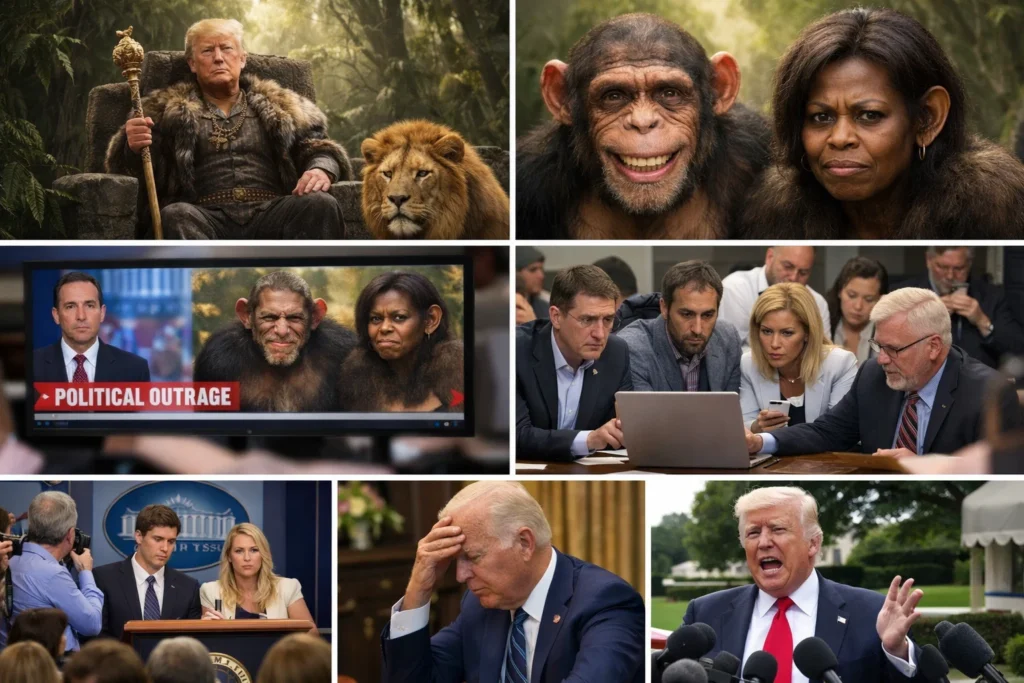
Why the image is so inflammatory (briefly)
Depicting Black public figures as apes taps a racist visual trope with roots in slavery and segregation; historians say it’s been used to dehumanize people of African descent.
Because of that history, many observers argued the clip could not be read as neutral political satire and instead carried an unmistakable racial sting.
Media and cultural fallout — singers, actors and civic leaders weigh in
Celebrities and cultural figures condemned the post on social platforms, amplifying the backlash and turning a one-second frame into a national story.
The episode added to debates about presidential social-media oversight, the boundary between satire and hate, and whether staffers should be disciplined.
Legal, diplomatic and electoral implications to watch
There are no immediate legal consequences for reposting a meme, but the political cost can be high — especially during party-building and outreach to Black voters.
Expect statements from civil-rights groups, possible congressional calls for briefings, and heightened scrutiny of the White House’s social-media practices in coming days.
Was the Trump video of the Obamas racist?
Final take — why this moment matters
A fleeting image became a major story because it touched historical wounds and arrived amid already intense political polarization.
How the White House responds — and whether Republicans hold the president to account — will shape whether the episode is an isolated scandal or a lasting political liability.
Disclaimer: This article summarizes contemporaneous reporting and public statements as of February 2026. It is informational and does not ascribe intent beyond the available record; readers should consult primary statements and recordings for complete context.