


Key Points
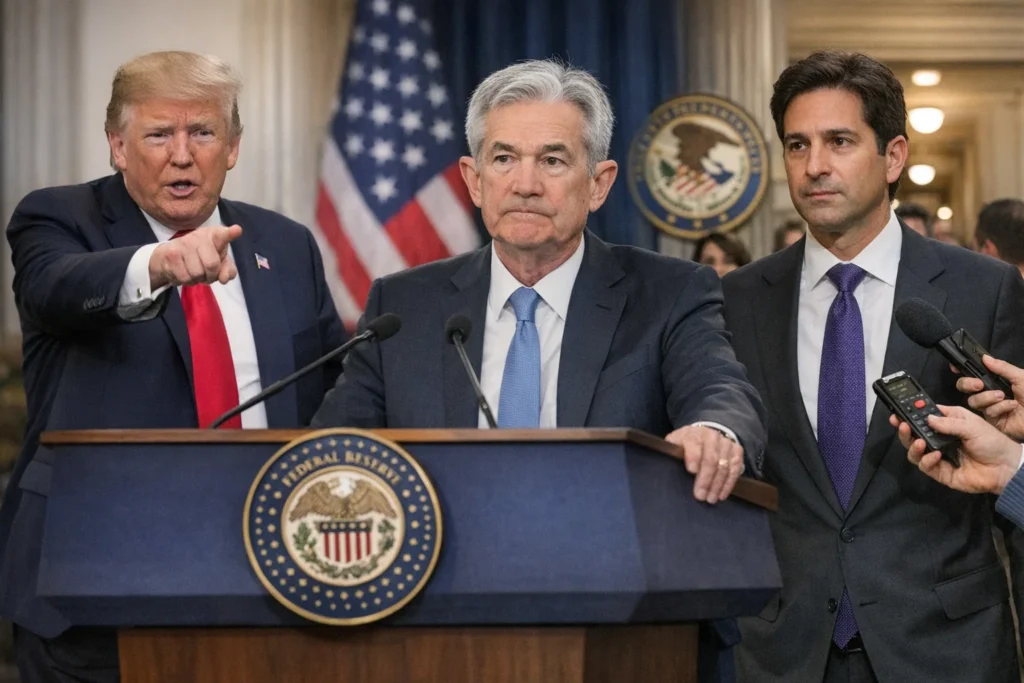
- Trump said he will fire Federal Reserve Chair Jerome Powell if Powell does not step aside when his chair term ends on May 15, 2026.
- Powell’s chair term ends next month, but his broader Fed board term runs through 2028, which is why the question is not fully settled.
- Trump has nominated former Fed governor Kevin Warsh to replace Powell, but his Senate confirmation is facing delays tied to a Justice Department probe.
- The standoff is becoming a test of the Federal Reserve’s independence and the White House’s power over monetary policy.
President Donald Trump has escalated his confrontation with Federal Reserve Chair Jerome Powell, saying he will fire Powell next month if he stays on at the central bank after his chairmanship ends. Trump’s comments, reported in Fox Business remarks and confirmed by multiple outlets, add fresh pressure to an already tense fight over the future leadership of the Fed.
At the center of the dispute is a technical but highly consequential question: Powell’s term as Fed chair ends on May 15, 2026, but his seat on the Federal Reserve Board of Governors runs until 2028. That means Powell could, in theory, remain inside the Fed even after stepping down as chair. Reuters reports that Powell has indicated he plans to stay on the board until a Justice Department investigation tied to a Fed building renovation is resolved.
Trump’s warning is therefore about more than one person. It is about control, succession, and the rules that govern one of the most important economic institutions in the country. Reuters says Trump’s nominee to replace Powell, former Fed governor Kevin Warsh, is scheduled for a Senate hearing on April 21, but the confirmation process is already tangled in the ongoing probe and political resistance.

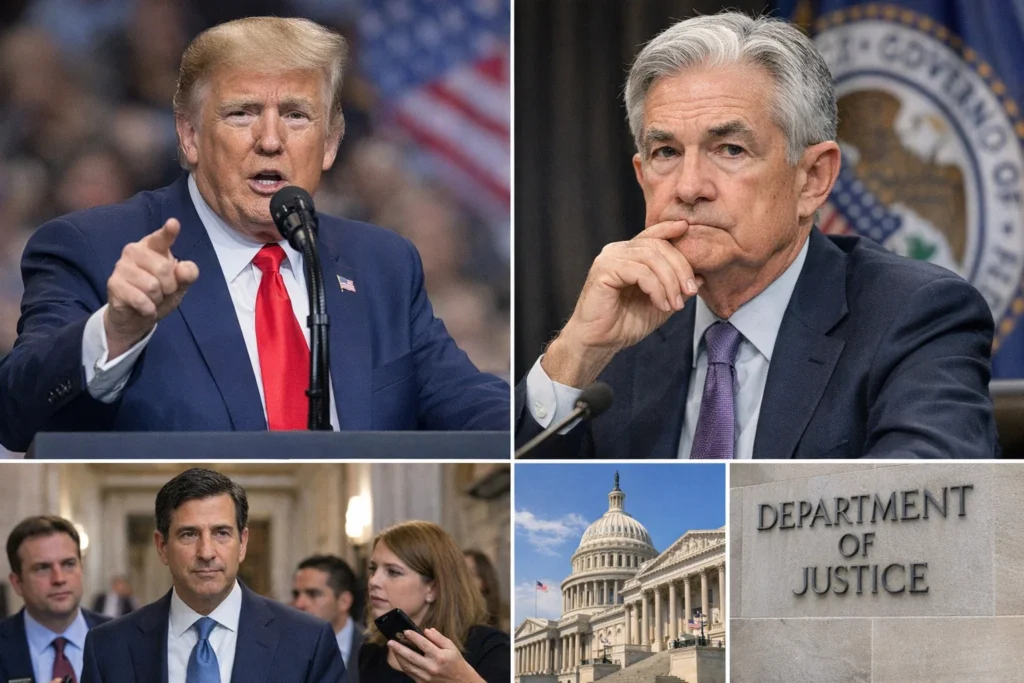
The backdrop is a wider battle over the Federal Reserve’s independence. Reuters reports that recent moves by Trump to challenge Fed officials have sparked legal and constitutional debate, while AP notes that federal prosecutors have continued pressing the investigation into the Fed’s renovation project even after a court found the probe had no clear evidence of a crime so far.
That matters because the Fed is supposed to make interest-rate decisions without political pressure. When a president publicly threatens to remove the central bank chair, markets can start to wonder whether rate policy is being driven by inflation data or by the White House. Reuters has described the current standoff as a direct test of central bank autonomy.
For everyday readers, the practical issue is simple: this is not just Washington drama. The Fed’s leadership shapes borrowing costs for mortgages, auto loans, credit cards, and business financing. Any perception that the central bank is losing its independence can ripple into markets and consumer confidence. That is why Wall Street, lawmakers, and economists are watching the May deadline so closely.
Trump Says He Will Fire Powell Next Month If He Stays in His Role at the Fed:What happens next depends on three moving parts: whether Powell leaves the chairmanship on schedule, whether he remains on the board, and whether Warsh gets confirmed in time. Until then, the Fed is headed for a transition that looks less like a routine handoff and more like a constitutional stress test.
Trenbuzz Reader check: Should the Fed’s top job be insulated from political pressure, or should presidents have more direct control when they believe policy is off track? That question is now at the heart of this story.