


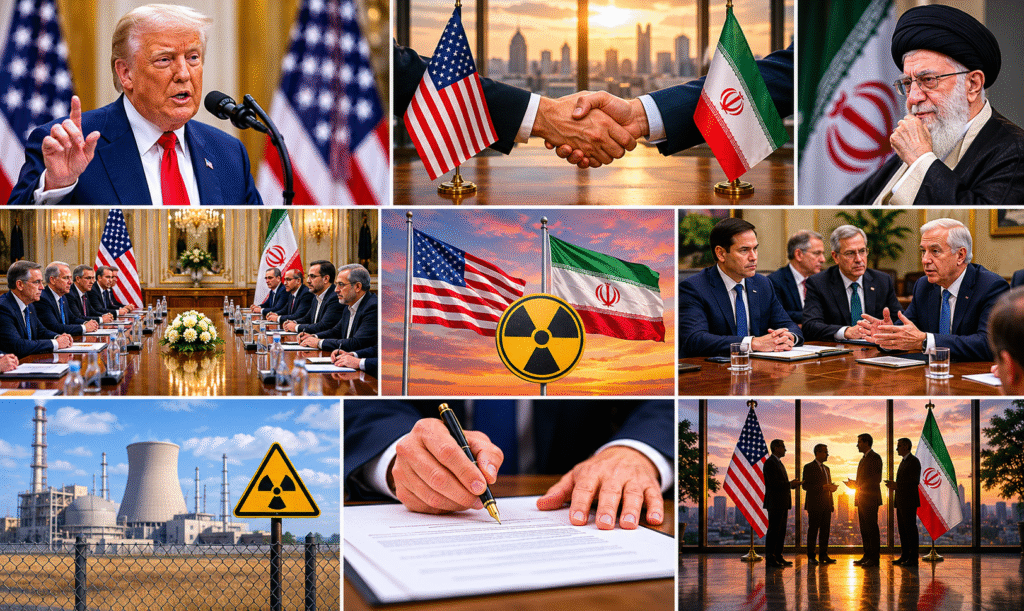
► Key Points — Iran Deal News Today – Trump Says the Iran Peace Deal Is Largely Done
- Trump posted on Truth Social on May 23, 2026 that the Iran peace deal is “largely negotiated” and will be announced “shortly”
- The deal includes a Memorandum of Understanding as Phase 1 — ending the war and reopening the Strait of Hormuz — followed by nuclear talks within 30–60 days
- Trump called leaders of Saudi Arabia, UAE, Qatar, Pakistan, Turkey, Egypt, Jordan, Bahrain and Israeli PM Netanyahu to finalize terms
- Pakistan’s Army Chief Field Marshal Asim Munir flew to Tehran on May 23, departed with word of “encouraging progress toward a final understanding”
- Secretary of State Rubio said in New Delhi there “may be news later Saturday” — signaling an announcement was close
- Iran’s state media pushed back on parts of Trump’s claim — Tehran confirmed only that it was “considering” the proposal
- Trump warned he would resume the war if negotiations fail, saying he’d only sign if “we get everything we want”
By TrenBuzz Staff · May 23, 2026 · 5 min read
It is Saturday, May 23, 2026 — and the world woke up to what could be the most consequential social media post of the year. President Donald Trump announced this morning that a Trump Iran peace deal is “largely negotiated” and that final details are being worked out as you read this, with an announcement coming “shortly.” Global oil markets immediately moved. Newsrooms went to breaking-news mode. And the phrase “Iran deal news today” exploded across every search engine simultaneously.
This is the story — told clearly, in real time, as it develops — of how the world’s most dangerous conflict of 2026 may be lurching toward its first real off-ramp. From the war’s origins in February to today’s frantic Saturday diplomacy, here is everything that matters right now.
Don’t just scan the headlines. Read this. Because the details of the Trump Iran deal 2026 are not what many people expect — and the gaps that remain could still blow it up before the ink dries.
How the Iran War Started — and Why the World Needs This Deal So Badly
The war between the United States, Israel, and Iran began on February 28, 2026, when a coordinated U.S.-Israeli strike campaign targeted Iran’s nuclear infrastructure, ballistic missile sites, and IRGC command facilities. Iran responded within hours — launching retaliatory drone and missile strikes at U.S. bases in the region and moving swiftly to shut down the Strait of Hormuz, the narrow chokepoint through which roughly one-fifth of the world’s oil and liquefied natural gas passes every single day.
The economic damage was almost immediate. Global oil prices surged past $109 per barrel. U.S. inflation hit its highest level in years. Shipping companies rerouted at enormous cost. Gulf Arab states — America’s closest regional allies — absorbed drone and missile strikes on their territory and watched their economies take serious hits from the disrupted energy flows.
A fragile, U.S.-Iran ceasefire brokered by Pakistan took hold on April 8, 2026 — but it has been punctuated by skirmishes ever since. Iran even set up a new “Persian Gulf Strait Authority” on May 20, claiming authority over a “controlled maritime zone” in the Strait of Hormuz — a move Washington called illegal and provocative. The ceasefire is holding, barely. The deal everyone needs hasn’t arrived — until today’s post suggested it might finally be close.

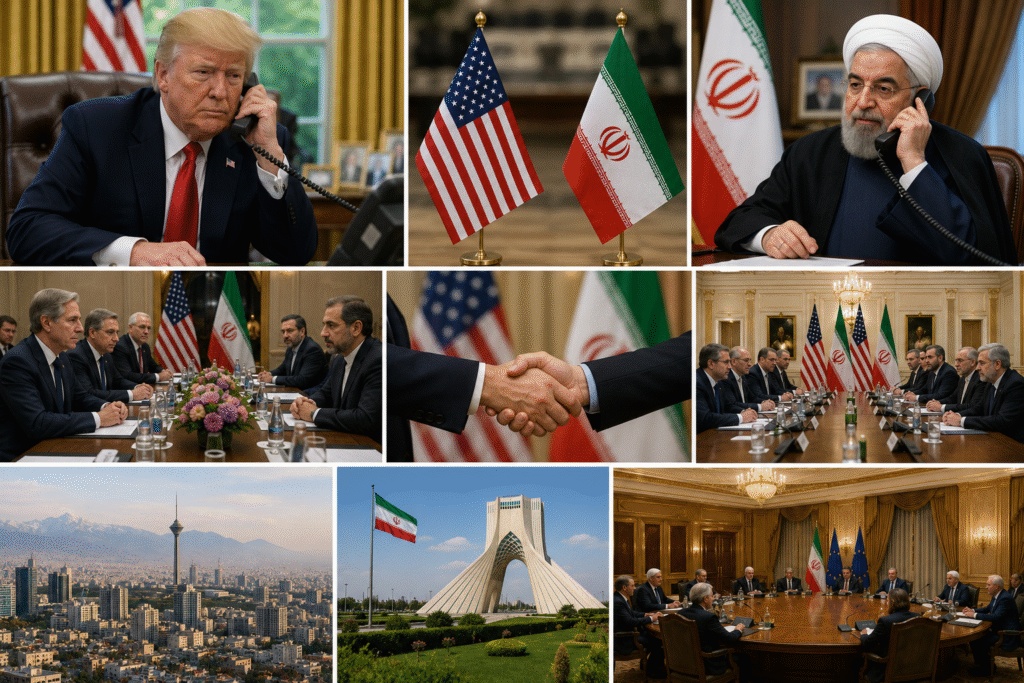
“A deal with Iran has largely been negotiated. Final aspects and details of the Deal are currently being discussed and will be announced shortly.”
— President Donald Trump, Truth Social, May 23, 2026
What’s Actually in the Iran Peace Deal — Phase 1 and Phase 2 Explained
According to reporting from the Associated Press, citing a regional official with direct knowledge of the deal structure, the agreement being finalized is a two-phase framework. Phase 1 is a Memorandum of Understanding covering the immediate military and maritime crisis: an end to active hostilities and a reopening of the Strait of Hormuz to international shipping — without any tolls or Iranian “transit fees,” which Washington had flatly rejected.
Phase 2 — the harder part — kicks in within 30 to 60 days. That phase covers Iran’s nuclear program: specifically, the requirement that Tehran halt all uranium enrichment, transfer its stockpile of highly enriched uranium to a third country, and reduce its nuclear facilities to a single site operating under strict international inspection. Trump told CBS News on Saturday that he would only sign a deal where “we get everything we want” — and the nuclear requirements are non-negotiable from Washington’s perspective.
Iran’s Foreign Ministry confirmed Thursday that it was “considering” the latest U.S. proposal — conveyed through Pakistani mediators. But Iranian state media on Saturday pushed back on portions of Trump’s announcement, and Tehran has not officially confirmed the deal’s terms. The gap between Trump’s “largely negotiated” and Tehran’s “still considering” is the space in which this deal could still collapse.
🔗 Also Read: Iran’s Revised Peace Proposal Lands in Washington Through Pakistan — Full Breakdown
Pakistan’s Field Marshal and the Most Important Plane Ride of 2026
The man carrying the most diplomatic weight on Saturday wasn’t American or Iranian. It was Pakistani Army Chief Field Marshal Asim Munir — who flew directly to Tehran on Saturday morning, met with Iranian President Masoud Pezeshkian and top IRGC leadership, and departed with a statement from Pakistan’s army that talks had resulted in “encouraging progress toward a final understanding.”
Munir’s role in this crisis has been extraordinary. He has functioned as the de facto bridge between Washington and Tehran since the ceasefire — shuttling proposals back and forth, managing fragile trust between two governments that have no direct communication channel. Trump explicitly acknowledged calling Pakistan’s army chief directly on Saturday, listing him alongside the leaders of eight Arab and Muslim nations as part of the final push to close the deal.
Secretary of State Rubio, speaking from New Delhi on Saturday after his NATO meetings in Sweden, told reporters there “may be news later today” on the Iran talks. “There’s been some slight progress — I don’t want to exaggerate it, but there’s been a little bit of movement, and that’s good,” Rubio said. The careful language from a man not known for understatement suggested the administration was within reach — but hadn’t yet crossed the line.
Trump’s Warning: No Deal Means the War Resumes
Trump’s Truth Social post wasn’t only optimistic. He included a clear threat alongside the peace signal: if negotiations fail, the United States will resume the war. “There are two steps to doing this — a very, very nice step and the violent step,” Trump told reporters during his May 15 Gulf tour, language he has repeated consistently throughout the negotiations.
On Saturday, Trump reiterated to CBS News that he would “only sign a deal where we get everything we want” — including Iran permanently abandoning its nuclear weapons ambitions and its enriched uranium stockpile being transferred out of the country “satisfactorily.” He did not specify what “satisfactorily” means in practice, leaving deliberate ambiguity.
Oil markets didn’t wait for clarification. Prices dropped sharply on Saturday on expectations that a deal was imminent — the clearest real-world signal that traders believe Trump’s post is credible. Every dollar drop in oil prices per barrel is effectively a vote of confidence from global markets that the Iran war news today is pointing toward peace, not resumed conflict.
🔗 Also Read:Trump-Xi Summit 2026: How Xi Offered to Help Reopen the Strait of Hormuz in Beijing
What Happens Next — and Why the Next 24 Hours Are Everything
As of Saturday evening, the world is in a diplomatic holding pattern. Rubio hinted at news “later today.” Munir has left Tehran with “encouraging” signals. Trump has told the world the deal is “largely done.” Iran has confirmed only that it is “considering” the terms. The gap between those positions is small — but in geopolitics, small gaps have a way of becoming chasms overnight.
The stakes of the next 24 hours extend well beyond two nations at war. A successful Trump Iran deal 2026 would reopen the Strait of Hormuz, ease global energy prices, reduce U.S. inflation, stabilize Gulf Arab economies, and potentially shift the balance of Middle Eastern politics for a generation. A failed announcement — or worse, an Iranian rejection after Trump’s post — would almost certainly restart active hostilities, push oil back above $110 per barrel, and deepen a conflict that has already cost thousands of lives and trillions in global economic damage.
Stay with TrenBuzz.com for live updates. This story is still breaking — and the next development could come in hours, not days.
Disclaimer: This article is intended for informational and news reporting purposes only. The views and analysis expressed are based on publicly available information sourced from credible news agencies including AP, NPR, CBS News, CNBC, Reuters, and TIME as of May 23, 2026, and do not constitute financial, political, legal, or investment advice. TrenBuzz.com does not endorse any government, political figure, military action, or geopolitical position. All trademarks and names belong to their respective owners. Content is produced in compliance with Google AdSense publisher policies.