


Trump Snapped at Reporters —
This long-form, reader-friendly guide explains the Air Force One gaggle and Oval Office exchanges in which President Trump insulted female reporters, who the reporters are (Catherine Lucey and Mary Bruce), how CBS’s Jennifer Jacobs helped break the moment, and what the press, newsrooms and the public are saying now. Every major claim below is supported by contemporaneous reporting and attributed where appropriate.
Trump Snapped at Reporters — the headline in one line
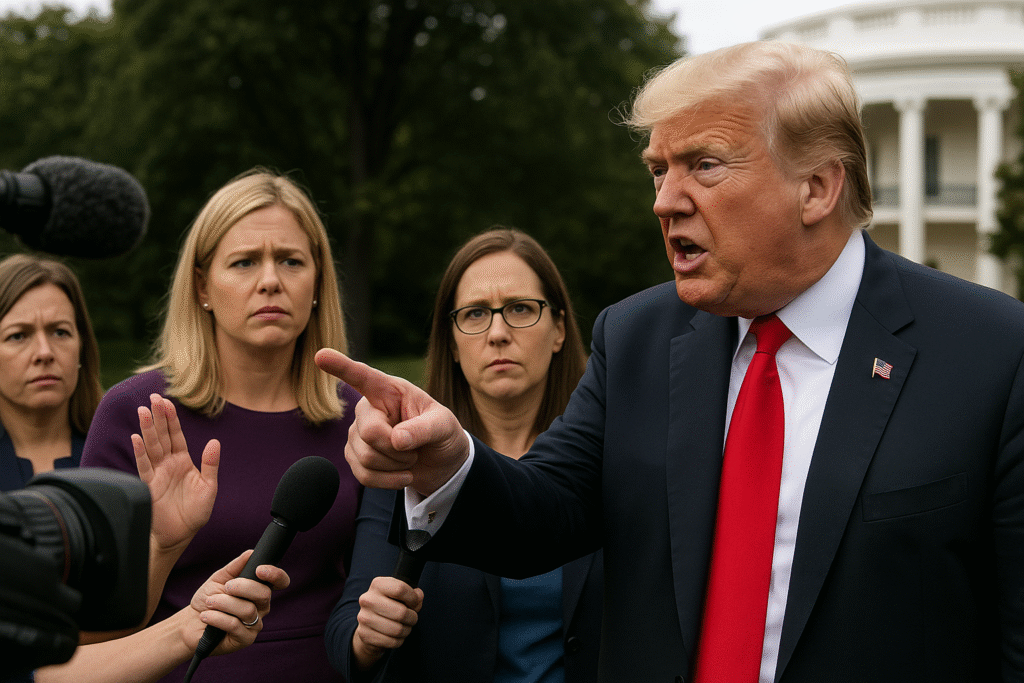
On a recent trip, President Trump told a Bloomberg White House correspondent to be “quiet, piggy” during a press gaggle about the Jeffrey Epstein files; he separately derided ABC’s Mary Bruce as a “terrible reporter” during questions about the killing of Jamal Khashoggi. The exchanges were widely reported, condemned by many journalists, and defended by the White House in follow-up comments.
Why this matters
The incidents are important because they involve a sitting U.S. president publicly insulting accredited journalists on the record.
That pattern touches on free-press norms, workplace safety for reporters, and broader debates about gendered language from powerful public figures.
The scene: where and how it happened
The “quiet, piggy” exchange occurred aboard Air Force One during a short gaggle (an informal pool press session) as reporters pressed Trump about newly surfaced Jeffrey Epstein-related documents.
Video from the gaggle and contemporaneous on-site reporting captured the moment and made it available for outlets and social platforms.
Who first reported it (Jennifer Jacobs’ role)
CBS News White House reporter Jennifer Jacobs posted about the episode on social media and is credited in several outlets as the first journalist in the press pool to flag that the president had used the demeaning term toward “a Bloomberg reporter.”
Her on-the-ground reporting — and her presence in the pool — helped bring attention to the exchange quickly.

Who was targeted: Catherine Lucey (Bloomberg)
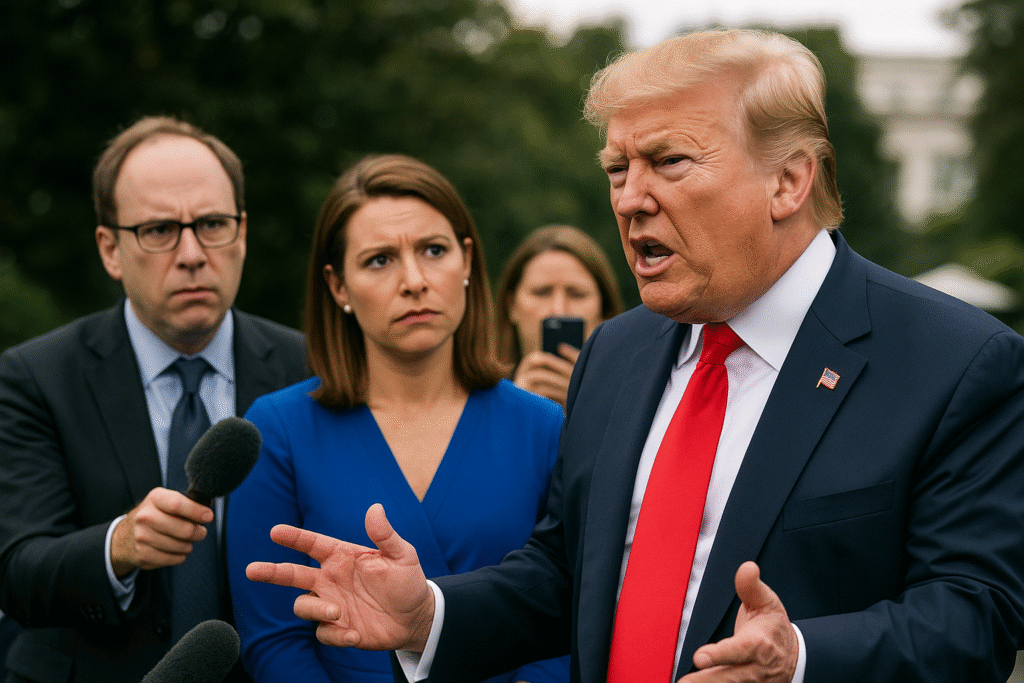
Multiple outlets later identified the targeted reporter as Catherine Lucey, Bloomberg’s White House correspondent, who had been asking about the Epstein files and whether Trump would support releasing them.
Bloomberg’s spokesperson defended Lucey’s reporting and stressed the newsroom’s role in asking tough questions in the public interest.
The Oval Office exchange: Mary Bruce (ABC) also criticized
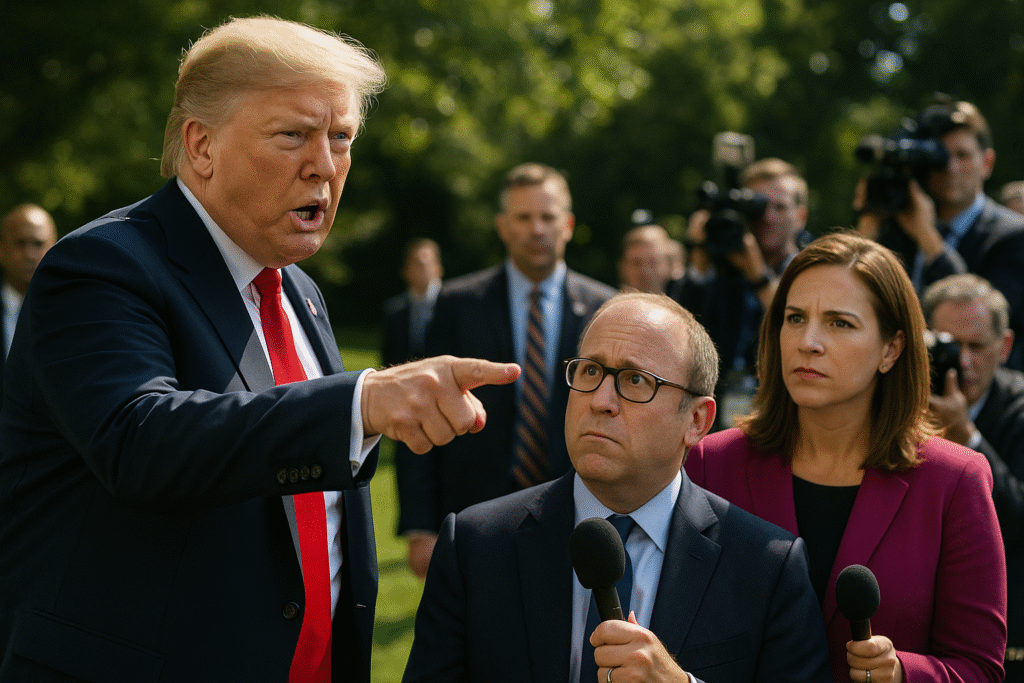
In a separate exchange in the Oval Office with the visiting Saudi crown prince, Trump had a sharp back-and-forth with Mary Bruce, ABC News’ White House correspondent, about Saudi-related questions and the murder of Jamal Khashoggi.
Trump publicly called Bruce a “terrible reporter” and went further — in public remarks — to question her network’s credibility and suggest regulatory scrutiny. Those comments were reported and summarized by major wire services.
The words and tone — what the video shows
Footage of the Air Force One gaggle shows Lucey asking a follow-up about why the president would resist releasing Epstein-related material “if there’s nothing incriminating,” and Trump abruptly cutting her off, pointing, and saying, “Quiet. Quiet, piggy.”
Observers noted the infantilizing tone — it’s a dismissive phrase that many journalists and commentators called sexist and demeaning.
Immediate reactions inside the press community
Journalists and advocacy groups responded within hours: anchors and reporters called the remark “disgusting” and “unacceptable,” while advocacy groups for newsrooms and press freedom emphasized the chilling effect of presidential insults aimed at individual reporters.
Veteran correspondents and press-rights organizations contrasted today’s language with professional norms and urged editorial boards to defend reporters’ right to ask tough questions.
White House and network responses
The White House responded defensively, accusing the named reporter of behaving “inappropriately and unprofessionally” toward colleagues on the plane — a line the administration used to justify the president’s sharp rebuke.
Bloomberg released a statement defending Lucey’s work and stressing that White House journalists “ask questions without fear or favor.” Some journalistic organizations withheld comment or urged calm verification.
Historical context — not an isolated pattern
Commentators quickly placed this incident in the context of a long history of the president (and others in his orbit) using personal, often gendered insults against women in public life — from Rosie’s public disputes to past “Miss Piggy” taunts.
That pattern is why many responses framed the exchange as more than a single off-the-cuff rebuke and as part of a recurring rhetorical pattern with a gendered valence.
Law, libel and newsroom policy — what reporters can (and can’t) do
A few readers wonder whether the journalists could sue or level formal complaints. In practice, editorial responses, news organization support, and public condemnation are the immediate remedies; defamation suits over an on-the-record insult are rare and rarely succeed given the high bar for public-figure libel claims and the political-speech context.
More tangible are newsroom protections: reassignment of pools, security measures, legal support for reporters, and WHCA statements when warranted.
Why the substance of the question matters (Epstein files)
The question that triggered the exchange concerned the Jeffrey Epstein documents and a contentious internal debate about whether more files should be released publicly by the Department of Justice or Congress.
Reporters were pressing for clarity on whether the president’s name appeared in the documents and what that might mean — a straightforward accountability question that reporters regularly raise. That’s why colleagues and editors defended the legitimacy of the line of questioning.
How platforms and social media amplified the moment
Video clips, short-form reposts and hot takes spread within minutes across X, TikTok, Instagram and newsroom Slack channels.
That rapid spread turned what might have been a pool-video anecdote into a national story and intensified comments from politicians and civic leaders. The viral path also prompted many outlets to re-run the footage with careful context and verification.
What journalists say about covering powerful people — professional risk
Veteran White House reporters note that press work often requires persistence, follow-ups and occasionally repeating questions — especially when answers are evasive.
When the president uses personal insults in response, the risk is not just reputational for the reporter — it’s also practical: bullying can deter follow-up, chill sources and change pool behavior. That’s why press shops and unions watch these incidents closely.
Public and political reactions — some flashpoints
Political figures and commentators reacted in predictable partisan lines: critics of the president condemned the phrase as sexist and beneath the office; some allies downplayed it or pointed to earlier incidents where reporters were criticized for tone.
A few prominent public figures used satire and memes to call attention to the insult, while civil-society groups urged renewed attention to safety for female journalists.
How this may change press access or pool behavior
Practically, the pool system — the small group of reporters who travel with the president and share footage — could see more friction. Some outlets may press for different pool arrangements or additional rules to protect reporters’ ability to ask follow-ups without intimidation.
Historically, when tensions rise, outlets sometimes change how they credential or pool reporters at travel events; similar conversations happen now among editorial leadership.
Two crucial facts to keep in mind as this story develops
- Primary-source video matters. The pool video and on-the-ground reporting are the best evidence of what was said and how it was said — and newsrooms rely on that footage.
- Attribution is important. Jennifer Jacobs’ early on-site reporting helped identify the incident; Bloomberg’s own confirmation named Catherine Lucey as the reporter involved. That chain of reporting is how authoritative outlets piece together events.
What readers should watch for next
• Any formal statement or complaint by the White House Correspondents’ Association.
• Follow-up interviews or statements from Catherine Lucey and Mary Bruce (or their newsrooms).
• Political responses from Congressional figures or press-ethics organizations.
• Whether the White House changes pool procedures or issues an apology (unlikely in the short term).
TrenBuzz disclaimer
This article summarizes contemporaneous reporting and pool video material current as of Nov. 19, 2025. It is informational and not legal advice. For official transcripts, pool raw footage and network statements, consult the original video and newsroom releases cited above.