


Published by TrenBuzz.com | April 24, 2026
Key Points at a Glance
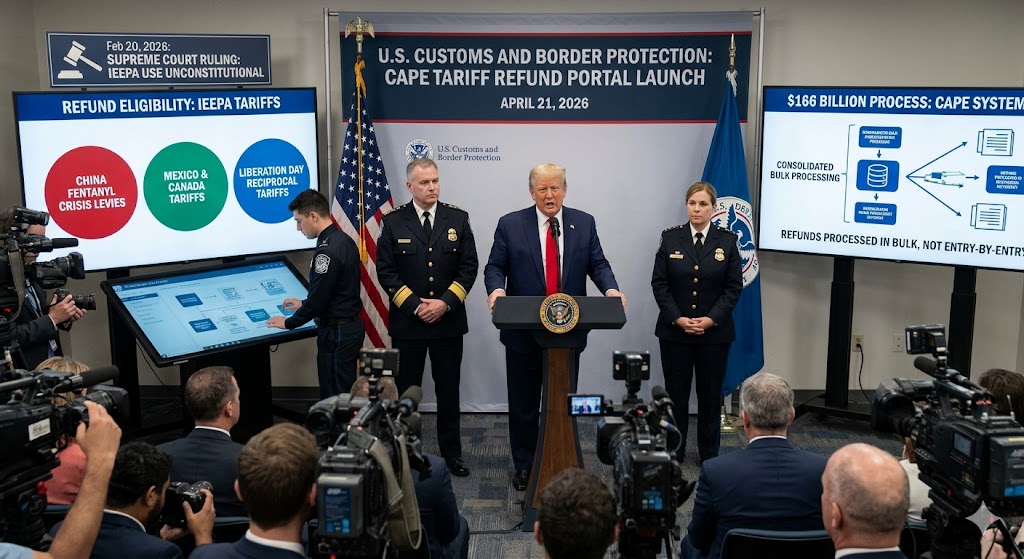
- The US Customs and Border Protection (CBP) launched its CAPE tariff refund portal on April 21, 2026 — officially starting the $166 billion refund process.
- The Supreme Court ruled on February 20, 2026 that Trump’s use of the International Emergency Economic Powers Act (IEEPA) to impose tariffs was unconstitutional.
- Refunds apply only to IEEPA-based tariffs — including “Liberation Day” reciprocal tariffs, and levies tied to China, Mexico, and Canada linked to the fentanyl crisis.
- The CAPE (Consolidated Administration and Processing of Entries) system processes refunds in bulk — not entry-by-entry.
- Refunds are not automatic — businesses must file claims through the CBP portal.
- Once approved, refunds are expected within 60 to 90 days, though some cases may take 12 to 18 months.
- Companies including Costco, FedEx, and Toyota have confirmed they will file for refunds.
- Trump warned he will “remember” companies that choose NOT to seek refunds — raising eyebrows about political pressure.
- American families paid an estimated $1,700 each due to tariff-driven price increases.
- Regular consumers face a much trickier path to getting their money back — retailers absorbed and diluted costs across supply chains.
For over a year, American businesses absorbed one of the most sweeping tariff regimes in modern US history. Now, the refund window is finally open — and the numbers are staggering.
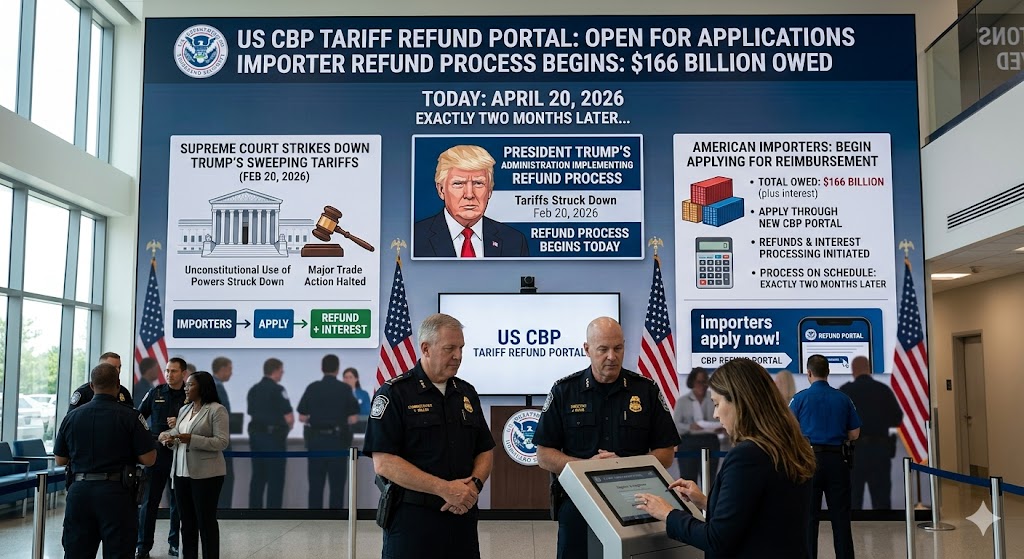
Exactly two months after the Supreme Court struck down President Donald Trump’s most sweeping tariffs, American importers — who are owed $166 billion in refunds plus interest — can begin applying for reimbursement through a new US Customs and Border Protection portal.
How the Refund Portal Works — Step by Step
The system, known as CAPE, allows US Customs and Border Protection to issue consolidated electronic payments to importers, streamlining what would otherwise be a complex, entry-by-entry refund process.
Tariff refunds are not automatic. Businesses and importers must submit a claim request through the portal for processing. One business owner involved in the group “We Pay the Tariffs” described the process as “extremely easy,” requiring only a simple spreadsheet with one column containing the import entry numbers that had an IEEPA tariff applied.
The refund system will initially focus on the first phase of payouts, limited to “certain unliquidated entries and certain entries within 80 days of liquidation.” Eventually, the CAPE system will be able to refund older, finalized tariff payments.
Which Tariffs Are Being Refunded?
Tariffs justified under IEEPA — including the “reciprocal” tariffs imposed last April and levies on China, Mexico, and Canada tied to the flow of fentanyl into the US — are the only ones impacted by the Supreme Court ruling and eligible for refund.
Tariffs imposed under separate laws — such as those tied to national security under Section 232 — remain in place and are not covered by this refund process.

Who Qualifies — And Who Gets Paid First?
Only parties known formally as importers of record who made tariff payments, or authorized customs brokers acting on their behalf, can file for the duty refunds.
Companies that have publicly confirmed they will file for refunds include Costco, FedEx, and Toyota. The CAPE system is reported to currently be capable of handling about 63% of affected import filings.
CBP estimates that refunds will be issued within 60 to 90 days after approval — but it could take longer depending on whether additional reviews are merited. International trade lawyers warn the actual timeline could stretch to 12 to 18 months given the sheer volume of potential filings.
Trump’s Ominous Warning to Companies Skipping Refunds
Just one day after the portal launched, Trump told CNBC he would “remember” businesses that decide not to seek refunds. When asked whether large companies like Amazon and Apple chose not to apply because they were worried about “offending” him, Trump appeared to confirm the dynamic, calling it “brilliant.”
That comment raised immediate concerns among legal observers about political pressure being used to influence whether companies exercise a court-ordered legal right.
What About Regular Consumers?
According to the Congressional Joint Economic Committee, American families paid more than $1,700 in tariff costs each — passed through as higher prices on imported goods, higher prices on domestically produced goods using imported inputs, or reduced availability of products.
For regular consumers, the situation is far more complicated. A product like a TV often has parts from multiple countries, each hit with different tariff rates that changed over time. “By the time it gets down to the consumers, the whole tariff has been diluted,” said international trade lawyer Robert Shapiro.
Costco’s CFO Gary Millerchip signaled the company could pass along refunded tariff dollars as lower prices. Meanwhile, class action lawsuits have been filed against large companies arguing that since they shared tariff costs with consumers, they should share the tariff relief as well.
The Bottom Line for Businesses
Legal advisors are urging companies to act now. One trade attorney advised: “We are advising companies to deal with the issues up front in their contracts — have very explicit terms around who’s responsible for the tariff and how refunds will be processed if we continue to see tariffs that are invalidated.”
Trump Tariff Refund Has Officially Begun: The portal is live. The clock is ticking. And $166 billion — plus interest — is waiting to be claimed.
Disclaimer: This article is for general informational and news reporting purposes only. All figures, legal interpretations, and policy details referenced are based on publicly available and credible news sources as of April 24, 2026. TrenBuzz.com does not provide legal, tax, or financial advice. Businesses seeking tariff refunds should consult a licensed customs attorney or broker and visit the official CBP website for the most current guidance.