


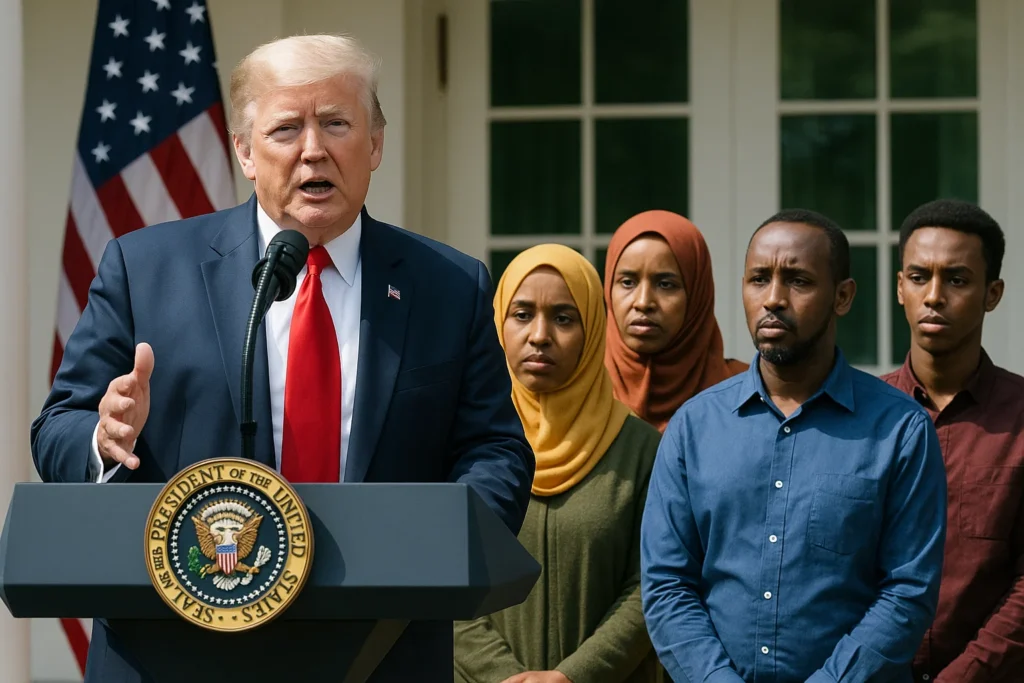
Trump Terminates Deportation Protections for Somali Nationals in Minnesota: By TrenBuzz — a clear, compassionate explainer for Somali families, Minnesotans, policymakers and anyone tracking U.S. immigration policy.
What did the president announce — the basic fact (Trump Terminates Deportation Protections for Somali Nationals in Minnesota)
Donald Trump posted that he was terminating Temporary Protected Status for Somali nationals in Minnesota, citing concerns about crime and alleged fraud.
Major outlets — Reuters, the Associated Press, CBS and local Minnesota outlets — reported the announcement and the administration’s characterization of the action.
The President’s statement framed the move as a law-and-order action and tied it to broader immigration policy goals his administration has pursued.
What is Temporary Protected Status (TPS)? A quick explainer
TPS is a humanitarian immigration program created by Congress that shields nationals of designated countries from removal when returning home is unsafe because of conflict, disaster, or other extraordinary conditions.
People with TPS may receive work authorization and protection from deportation while the designation is in effect; TPS is a temporary remedy tied to conditions in the home country, not a path to permanent residency.
Historically, TPS designations have been used for countries facing civil war, earthquakes, or politically unstable conditions that make safe return impossible.
The designation can be redesignated, extended, or terminated by the federal government based on assessments about country conditions.
Who exactly is affected by this move? (Numbers and geography)
Reporting indicates the formal number of Somali nationals holding TPS status is small — Reuters referenced about 705 beneficiaries nationwide — and most Somali Americans in Minnesota are U.S. citizens or lawful permanent residents and are not affected.
Still, the termination directly places TPS holders at risk of losing work authorization and being subject to removal proceedings unless relief is found.
Local officials and community groups in Minnesota stressed that the state hosts one of the largest Somali communities in the U.S., though the vast majority are citizens or otherwise unaffected by TPS-specific actions.


How is TPS normally ended — legal and administrative steps
Under federal law, TPS designations are made and ended pursuant to the Immigration and Nationality Act (INA), and the Secretary of Homeland Security typically publishes Federal Register notices to change a country’s TPS status.
The statute and regulatory practice require notice and normally set an effective date (often at least 60 days after publication) for a termination to allow people time to adjust — though litigation can affect those timelines.
In practice, DHS termination notices have repeatedly been the subject of lawsuits and injunctions, and courts have sometimes paused or reversed administrative actions pending review.
Does the president have unilateral power to end TPS? — short legal reality check
Practically, DHS authority and procedural requirements matter: TPS designations and terminations are administered through DHS rulemaking and Federal Register notices, and courts review whether the agency followed law.
A presidential tweet or post can signal an administration’s intent, but the legal effect depends on subsequent Federal Register notices, DHS actions, and likely legal challenges.
Historically, attempts to end TPS for groups (e.g., Venezuela, Afghanistan, Central America) have led to litigation and mixed outcomes in federal courts. Expect similar legal contests here.
What Trump’s announcement said — key claims and the immediate reactions
The President’s message accused “Somali gangs” of harming Minnesotans and alleged large-scale fraud and money-laundering connected to the community; those claims were published on his platform and repeated in some statements.
Civil-rights organizations, Somali-American leaders and Democratic officials quickly condemned the move as politically motivated and warned of family separation, economic harm and stigmatization.
Some local voices — including immigrant-advocacy groups — highlighted that the action singles out a community with deep local ties and many lawful residents, and they signaled plans for legal challenges.

What happens to a TPS holder the day after termination is announced? — immediate practical impacts
If TPS protections are terminated and not extended by DHS or saved by a court order, beneficiaries can lose work authorization and become subject to immigration enforcement.
People with TPS often have long-term ties to their communities, jobs and families, so a termination can trigger immediate humanitarian and economic stress even if removal actions take time.
Work permits and other administrative benefits may expire according to the effective date in any DHS termination notice; beneficiaries should urgently consult legal counsel about status and options.
What legal options and likely challenges are next
Expect litigation: past DHS termination decisions have been challenged in federal court and sometimes paused while the courts review the procedural and substantive basis for termination.
Lawyers typically argue that the agency failed to properly assess country conditions, violated administrative procedure requirements, or acted in a discriminatory manner; courts then weigh procedural regularity and evidence.
Congressional action (emergency legislation) or administrative stays are also possible but politically uncertain. Community organizations often mount rapid advocacy campaigns to press for legislative relief.
What Minnesota officials and community leaders are saying (summary of reaction)
Local reporting shows Minnesota leaders and Somali-American advocates expressed shock and anger, and they warned of harm to families, businesses and social services.
Some elected officials pledged to coordinate legal and social-service responses, while faith groups and nonprofits prepared to provide emergency support to affected households.
At the same time, some national political supporters of stricter immigration enforcement framed the move as a necessary public-safety step. The reaction is sharply divided along political lines.

The human side — stories you should know (why numbers don’t tell the whole picture)
Many TPS holders have lived in the U.S. for decades, raised children here, and worked in essential jobs that local communities rely on.
Losing legal protections threatens employment, housing stability and family unity — outcomes that ripple through neighborhoods and schools.
Even if the total number affected is small, the practical consequences — lost wages, deportation risk, withdrawal from jobs and school disruption — are outsized for the families involved.
That’s why community organizations emphasize both legal defense and immediate social-service support in response planning.
What to watch in the coming days (timeline and triggers)
- Federal Register & DHS notices: Watch for any official DHS termination notice, which would include an effective date and administrative details.
- Court filings: Expect emergency lawsuits and requests for injunctions from advocacy coalitions and state governments.
- Local responses: Minnesota agencies, schools and employers will announce contingency plans for affected workers and clients.
- Congressional action: Some members may introduce emergency legislation to protect beneficiaries or to require procedural safeguards.
Each of these steps will determine how fast and how far the policy change takes effect.
Practical steps for Somali-American families and allies (what to do now)
- Seek legal counsel immediately — immigration clinics, legal aid groups and local bar associations often offer expedited help.
- Gather documents — passports, TPS notices, employment records and proof of family relationships will be vital if the case moves to removal proceedings.
- Contact community organizations — faith groups, immigrant-serving nonprofits and local officials can help with emergency financial and housing assistance.
- Follow official channels — DHS, USCIS and reputable news outlets will post authoritative updates about effective dates and procedural guidance.
Acting quickly preserves options and reduces panic in the worst-case scenarios.
Policy implications and the national debate — broader context
This action is part of a wider Trump administration effort to curtail or roll back temporary-status protections for several nationalities since 2025.
Advocates argue the moves damage U.S. humanitarian commitments and local economies; supporters say they restore immigration control and reduce fraud.
How courts and Congress respond will shape TPS’s future as a tool for humanitarian relief and will test statutory limits on executive discretion.
The Somali-Minnesota case may become a focal point for national litigation and legislative debate about the purpose and scope of TPS.
Do you support the administration’s decision to end TPS protections for Somali nationals in Minnesota?
Bottom line — what to expect now
The President’s announcement signals immediate policy intent but the legal and administrative machinery — and likely court challenges — will shape whether the termination takes full effect.
Families, employers and community groups should prepare now, seek trusted legal help, and watch Federal Register notices and court dockets for the definitive next steps.
Disclaimer (Google AdSense compliant)
This TrenBuzz article is informational and based on reporting and public documents available as of November 2025. It does not constitute legal advice. Readers directly affected should consult qualified immigration attorneys and official DHS/USCIS guidance for individual legal counsel.