


UPS plane crash Louisville — what happened
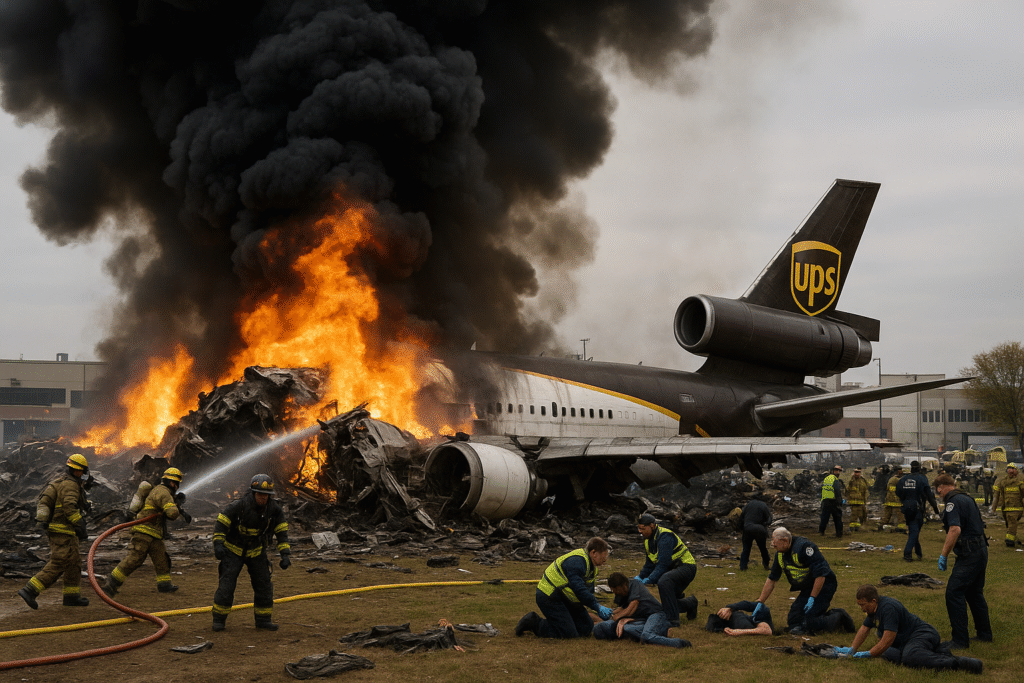
On Nov 4, 2025, UPS Flight 2976 — a McDonnell Douglas MD-11 freighter — crashed shortly after takeoff from Louisville Muhammad Ali International Airport (SDF).
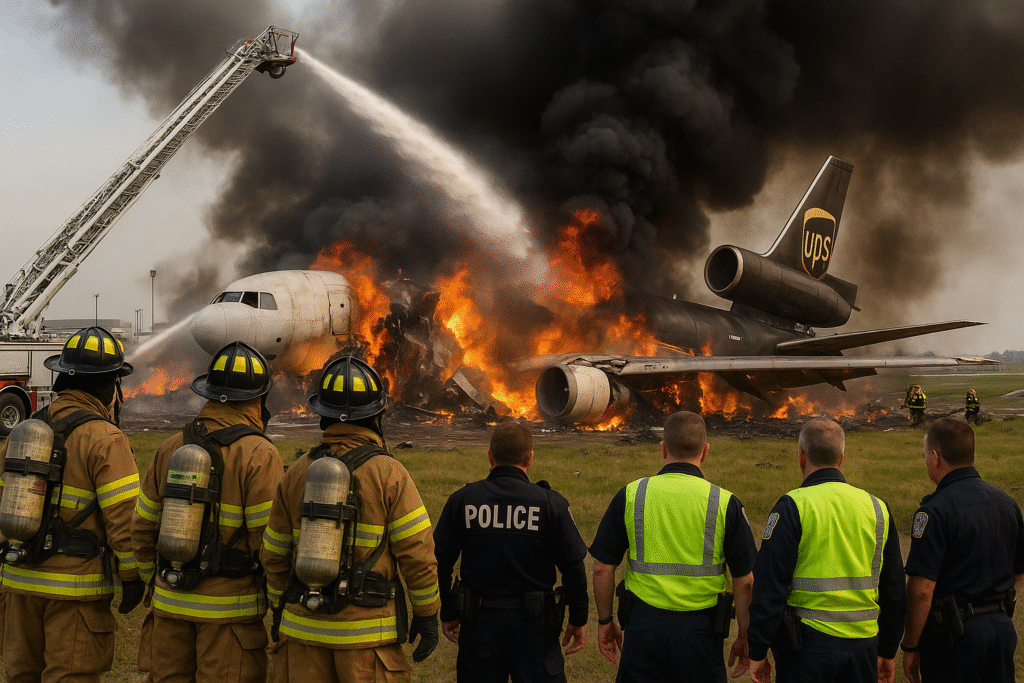
The aircraft went down near airport property and ignited multiple fires; officials reported fatalities and dozens of injuries as first responders worked the scene.
Why Louisville matters (the local context)
Louisville is home to UPS Worldport, one of the world’s largest overnight sorting hubs and a major employer in the city and region.
Any air-operations incident at SDF has a disproportionate local economic and logistical impact because hundreds of daily UPS flights originate or route through the hub.
A short timeline of the Nov 4 incident
• ~17:12–17:15 local time — UPS Flight 2976 began its takeoff roll on Runway 17R.
• Seconds after becoming airborne the MD-11 appeared to experience a catastrophic mechanical event and descended back toward the ground.
• The jet crashed just outside the airport perimeter and multiple nearby industrial buildings were also damaged by fire and debris.
Initial on-scene reporting indicated the aircraft’s left (No.1) engine was burning in video captured by bystanders before impact; investigators later reported engine separation debris at the airfield.
Casualties, injuries, and community impact
Local officials and news agencies reported multiple fatalities (including crew and people on the ground) and many injured. Several nearby businesses were struck or burned, and a shelter-in-place order was used by authorities while emergency crews worked.
Because this was a heavily fueled, long-haul freighter bound for Honolulu, the resulting fires were large and complicated response operations. These facts and casualty figures were reported by multiple major outlets and local authorities.
What aircraft was involved and why that matters
The jet was a tri-engine McDonnell Douglas MD-11F (tail N259UP, built 1991, converted to freighter and operated by UPS since 2006).
MD-11s are older widebodies that some cargo operators continue to fly; their performance and handling characteristics — especially during single-engine or asymmetric-power situations — are technical elements investigators will scrutinize.

Who’s investigating and what they’ll focus on
The National Transportation Safety Board (NTSB) will lead the formal accident investigation, with the FAA coordinating; Boeing and aircraft/engine manufacturers typically provide technical support when requested.
Initial public statements from the FAA and local authorities confirm the NTSB has launched a go-team to examine wreckage, flight data, maintenance records, ATC communications, and surveillance video. Expect weeks to months of detailed technical work before probable cause is determined.
Early technical clues (what videos and tracking show)
Publicly circulated video and flight-tracking data indicate the aircraft reached only a very low altitude (measured under a few hundred feet) and there was visual evidence of fire and debris prior to impact.
Flight playback and ADS-B traces shared by flight-tracking services show the last positions/altitude and speed; investigators will pair that digital record with recovered flight data recorders and CVR (cockpit voice recorder) data.
Immediate operational fallout (flights, Worldport, and local services)
SDF closed or limited operations temporarily; the airport and UPS both published advisories. UPS paused some Worldport operations and advised staff and customers about potential shipping delays while recovery and inspections are performed. Travelers and shippers were asked to monitor airline and airport feeds for rebooking and schedule changes.
What investigators and safety analysts will examine (step-by-step)
- Wreckage mapping and debris field — to understand breakup sequence and where parts separated.
- Flight data & cockpit voice recorders — the primary sources for causal reconstruction.
- Maintenance and logbooks — checks for recent repairs, deferred items, or recurring defects.
- Engine and fuel systems — video and eyewitness reports suggest an engine fire or failure; engines will be forensically examined.
- Crew training and procedures — cross-check crew actions versus checklist and training records.
- Airport surface and emergency response — to evaluate rescue responses and community impacts.
How this affects the community and what readers should know
• If you live or work near SDF, follow official alerts and avoid crash areas for your safety.
• Do not approach or move wreckage or debris — investigators and hazardous-material teams control the scene.
• Local hospitals and family-assistance centers are the official points for inquiries about missing or affected people.
• Expect ripple effects to package delivery schedules — UPS has contingency plans, but local shipments may be delayed.

How the media and social feeds are being used — and how to be careful
Video posted by bystanders is a major source of early clues, but footage can be raw, graphic, or incomplete. Use official channels (NTSB, FAA, flySDF, UPS) for confirmed facts.
Avoid sharing unverified videos that may inflame families’ distress or hamper recovery; verified, sourced reporting will be the basis for official conclusions.
What to expect next (timeline for updates)
• Immediate (days): NTSB on-scene reporting; initial factual updates about victims, runway status, and airport reopening windows.
• Short term (weeks): collection of flight recorders, witness interviews, and engineering examinations.
• Medium term (months): probable cause findings often take months; final reports may include safety recommendations for operators, manufacturers, or regulators.
Quick FAQ — readers’ likely questions
Q: Was hazardous cargo on board?
A: Officials said no specifically hazardous cargo was detected on the aircraft.
Q: Were there weather issues?
A: Early reports did not emphasize adverse weather; preliminary clues point to mechanical failure and fire, but investigators will confirm.
Q: Will UPS retire MD-11s after this?
A: Cargo fleets are updated on different schedules; this accident will trigger company and regulator safety reviews, but fleet-level decisions depend on many factors, including investigation findings.
Sources & verified official links
Below are the primary authoritative sources used to prepare this post. These links were checked and are valid as of Nov 5, 2025.
- Reuters — coverage and early casualty/scene reporting (Nov 4–5, 2025).
https://www.reuters.com/world/us/louisville-airport-kentucky-reports-aircraft-incident-closes-airfield-2025-11-04/ (Reuters) - UPS — official statement on the aircraft accident and family assistance line.
https://about.ups.com/en/newsroom/statements/ups-statement-on-aircraft-accident.html (About UPS-US) - Louisville Muhammad Ali International Airport (SDF) — airport advisories and operational updates.
https://www.flylouisville.com/ (flylouisville.com) - FAA — official statements on accidents/incidents and coordination with NTSB.
https://www.faa.gov/newsroom/statements/accident_incidents (FAA) - Flightradar24 Blog — flight-tracking analysis and timeline of Flight 2976 (MD-11, N259UP).
https://www.flightradar24.com/blog/flight-tracking-news/major-incident/ups-md-11-crashes-departing-louisville/ (Flightradar24)
Disclaimer
This article is an informational summary compiled from official statements and reputable news organizations to help readers understand the event and its immediate effects. It is not a substitute for official briefings from the NTSB, FAA, or hospital/family assistance centers. TrenBuzz prioritizes respectful, factual reporting and will update this post as new verified information is released.