


Key points
- The U.S. administration has directed a pause in routine visa processing for 75 countries, a move reported to take effect January 21, 2026, and described in media reports as indefinite while procedures are reviewed.
- The reported list includes countries with already-high barriers to U.S. travel (for example, Somalia, Iran, Russia, Afghanistan), and also names with large commercial and educational ties to the U.S. (including Brazil, Nigeria, Thailand). The State Department had not immediately published a formal list at the time of reporting.
- Officials and sources framed the measure as part of a broader tightening of immigration and visa policy; legal experts warn it raises major questions about implementation, diplomatic fallout, and humanitarian impacts.
US freezes all visa processing for 75 countries — what’s happened and why it matters
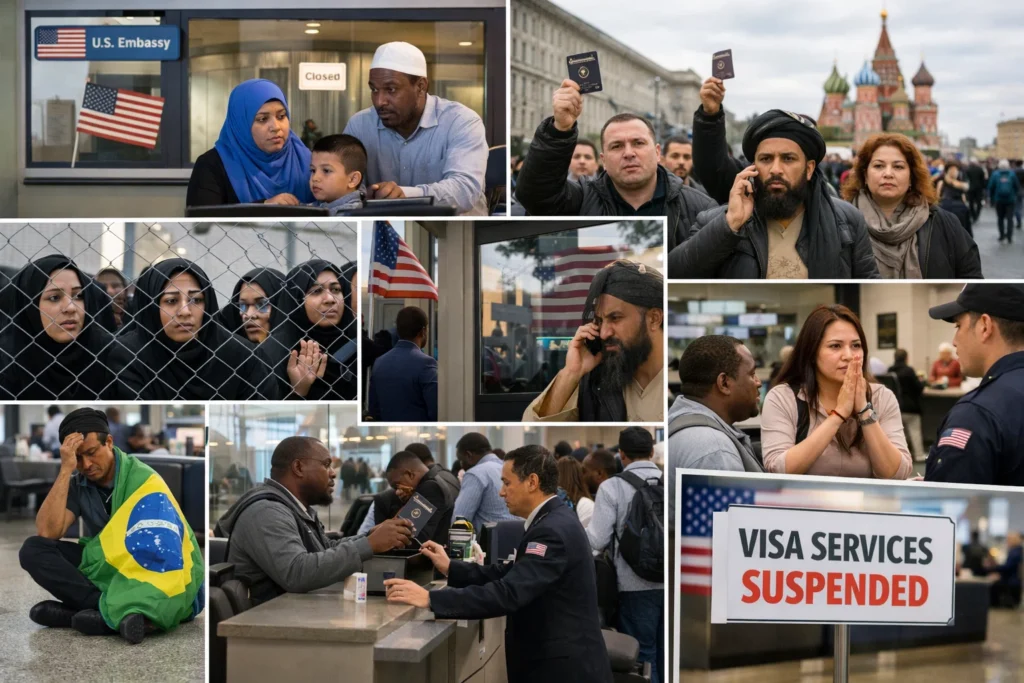
U.S. officials have reportedly instructed embassies to pause routine visa processing for nationals of 75 countries starting January 21, 2026, as part of a wider review of visa procedures. The move—reported by major news outlets from an internal memo—would dramatically expand the number of people who cannot obtain U.S. visas in the near term, affecting tourism, study, business travel and family visits, and raising immediate diplomatic, legal and commercial implications.
What the reported directive says (clarified)
Reporting so far is based on an internal State Department memo cited by U.S. media; the agency had not posted a public list or formal guidance at press time. According to those reports, embassies were directed to deny routine immigrant and nonimmigrant visa issuance for nationals of the affected states while the State Department reassesses procedures and eligibility standards. The duration of the pause—described in some reports as indefinite—will depend on the agency’s review.
Who is on the list (examples and caveats)
Media accounts and people familiar with the memo have named a subset of affected countries: Somalia, Russia, Iran, Afghanistan, Brazil, Nigeria, Thailand and others. These names reflect a mix of countries that already face strict U.S. controls and others whose inclusion would mark a substantial broadening of restrictions. Because no formal State Department publication was available at the time of reporting, any public lists should be treated as provisional until official guidance appears.
Why the administration is moving now
The change follows a string of policy actions in recent months that tighten immigration and visa rules—ranging from expanded travel bans and higher bond requirements to pauses on adjudications for certain countries. Officials framed the current step as an administrative measure to strengthen vetting and reduce perceived national-security risks, though critics argue the approach disproportionately burdens ordinary travelers, students and businesspeople rather than genuine security threats.
Immediate diplomatic and legal implications
- Diplomatic fallout: Countries named on the list—especially major trading partners or regional powers—are likely to press for clarification and could lodge formal protests or seek reciprocal measures. That risk is higher where nations named are important energy, trade or security partners.
- Legal questions: Administrative pauses based on internal memos face legal scrutiny. Courts have in past years reviewed whether similar broad immigration measures comply with statute and constitutional process; any formal policy announcement will probably attract litigation and congressional oversight.
- Humanitarian effects: A pause on visa processing can trap students, separate families, delay medical travel and stall legal migration pathways—effects advocates say require mitigation plans and clear waiver mechanisms.

Practical guidance — what travelers and institutions should do now
(Use this short checklist immediately.)
- Don’t book nonrefundable travel to the U.S. if your nationality is mentioned in media lists; wait for official State Department guidance.
- Universities and employers: Notify affected students and staff; postpone onboarding dates if visas are required, and prepare to offer remote or deferred options.
- Visa applicants: Monitor the U.S. embassy or consulate website in your country and sign up for official email alerts—avoid relying on social media lists.
- Legal counsel: If you or a client face urgent travel needs (medical care, family emergency), consult an immigration attorney about emergency humanitarian or diplomatic exceptions.
- Businesses and trade teams: Re-check international travel plans, client meetings, and employee mobility programs; update contingency plans for remote engagements.
These steps will help individuals and organizations limit disruption while awaiting formal guidance.
How this could affect business, education and migration
- Business travel and investment: Companies that rely on cross-border dealmaking or short-term specialist visits may face direct delays and costs; firms should review project timelines and visa-dependent contracts.
- Higher education: U.S. universities could see deferrals or losses of international students from affected countries—an outcome with both academic and financial consequences. Institutions should prepare admissions and enrollment contingencies.
- Migration pathways: Family-based and employment-based visa pipelines will slow or halt for affected nationalities, amplifying backlogs and humanitarian pressures that can take months or years to resolve.
What to watch next
- Official State Department publishing: The single most important signal will be the agency’s public notice (on state.gov and embassy websites) that lists affected categories, exact countries and any exceptions.
- Congressional action: Expect hearings and letters from lawmakers seeking the memo, legal rationale, and timelines for review.
- Legal filings: Watch for preemptive litigation by advocacy groups or industry associations seeking injunctive relief if the pause is formalized without adequate procedures.
Bottom line
If confirmed in formal guidance, a U.S. pause on visa processing for 75 countries would be a major escalation in immigration policy with broad human, diplomatic and commercial consequences. For now, the public record is media reports citing an internal memo; travelers, employers, universities and service providers should treat those reports as a trigger to prepare contingency plans—but depend on official State Department notices before taking irreversible action.
Disclaimer: This article summarizes contemporary media reporting and public documents available at the time of publication. It does not constitute legal advice. Individuals with urgent travel or immigration needs should consult licensed immigration counsel and the official U.S. embassy or consulate website for authoritative guidance.