


Key points
- The U.S. government completed its first round of Venezuelan oil sales, valued at approximately $500 million, under a broader $2 billion arrangement announced earlier this month.
- Proceeds from the initial sales are being held in U.S.-controlled bank accounts (reports say the main account is in Qatar) while authorities manage distribution and oversight.
- Trading houses — not U.S. oil majors — landed the earliest deals, undercutting some expectations that the likes of Chevron would move first. Global traders beat U.S. refiners to the market.
- The move follows a months-long U.S. interdiction campaign targeting Venezuela-linked tankers; seized cargoes and sanctioned vessels have been central to the assets made available for sale.
- U.S. regulators are simultaneously discussing expanded commercial licenses for major oil companies to resume larger-scale activity in Venezuela — a development that could reshape supply flows if it proceeds.
The US has officially started selling Venezuelan oil — what happened (in one paragraph)
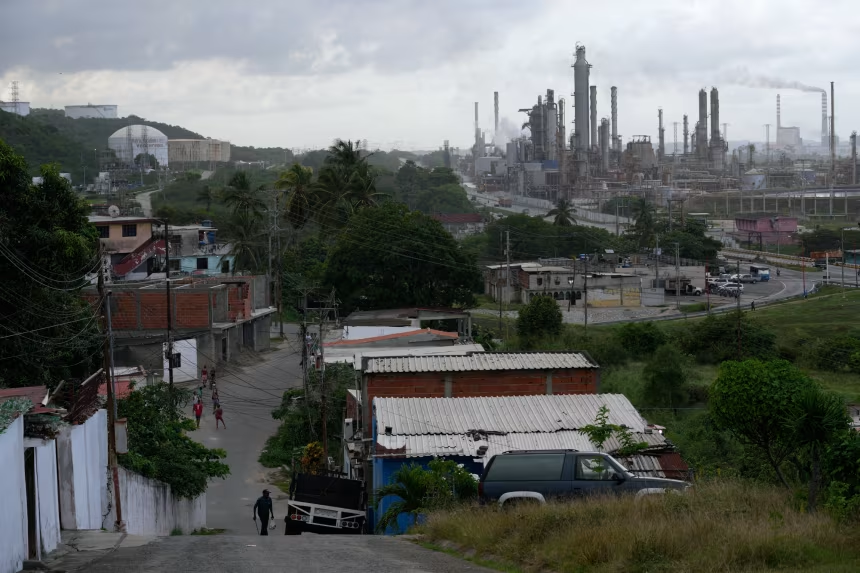
U.S. authorities have begun selling Venezuelan crude that became available after a recent enforcement campaign and diplomatic agreement, completing an initial sale worth about $500 million as part of a roughly $2 billion program. The sales mark the first time Washington has overseen the disposition of Venezuelan oil at this scale and represent a significant shift in how Venezuelan energy assets are being handled on the global market.
What the government says — the facts
Officials told reporters the first tranche of sales has closed and that the funds are being held in accounts under U.S. control to ensure proceeds are managed according to the agreement’s terms. The U.S. characterizes the operation as legal execution of sanctions and forfeiture authorities tied to interdictions of vessels suspected of sanction-evasion. Those interdictions — which included high-profile boardings and seizures of tankers — created the inventory and legal basis for disposal.
Who bought the oil (so far)
The earliest buyers were trading houses and commodity traders — not U.S. supermajors — according to market reporting. Trading firms often have the speed and operational flexibility to move quickly on opaque or time-sensitive cargoes; in this case, Reuters and other outlets reported that traders beat major U.S. refiners to the initial lots. That dynamic can change as licensing and commercial arrangements evolve.
The commercial context — licenses and majors
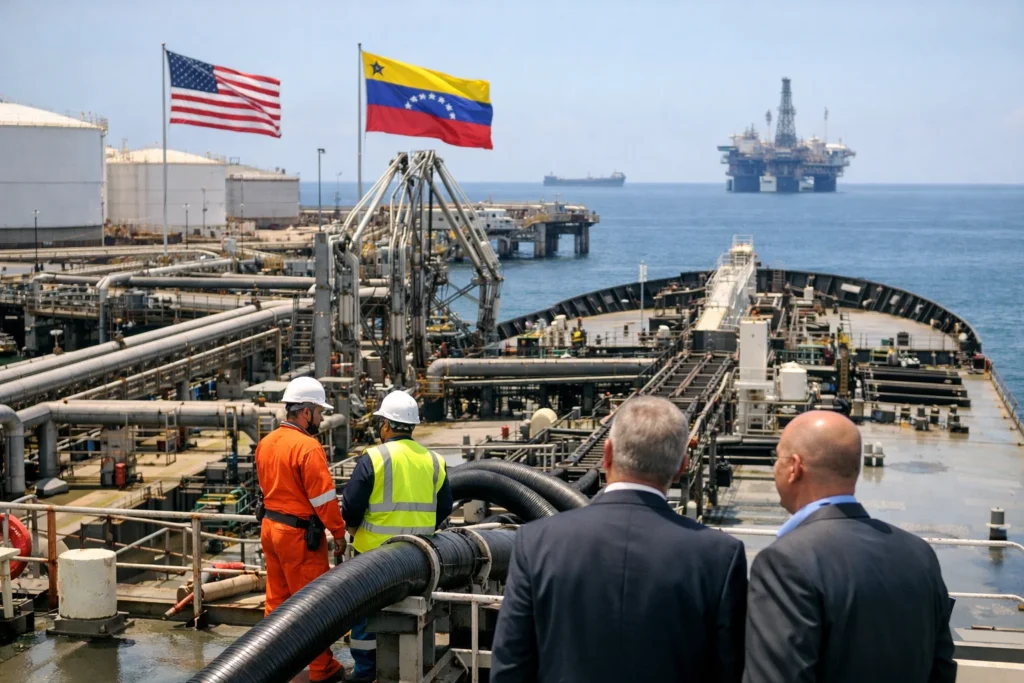
Separately, the U.S. is reported to be preparing expanded licenses for some U.S. oil companies to increase production and exports from Venezuela. Chevron, which has long-running operations and limited permissions in Venezuela, was singled out in reporting as a likely candidate to receive broader authorization if the administration formalizes the terms — a step that would encourage larger, longer-term commercial re-engagement. Expanded licensing would be distinct from one-off sales of seized cargo, but both moves point toward greater U.S. commercial involvement in Venezuelan crude markets.
Legal and diplomatic implications
- Legal chain-of-title: Sales of seized or forfeited cargo require careful legal documentation so buyers receive clear title without exposure to downstream litigation. Holding proceeds in neutral, U.S.-controlled accounts (reports name Qatar) is intended to insulate funds while legal and diplomatic questions are resolved.
- Diplomatic friction: Venezuela’s government and allied states have condemned U.S. interdictions and seizures, calling some actions unlawful. Those diplomatic protests could complicate future transactions, depending on how other governments and commercial counterparties view the legitimacy of U.S. control.
- Precedent setting: The U.S. sale program sets a precedent for how interdicted state assets may be monetized under U.S. authority — a model that could have geopolitical knock-on effects if replicated elsewhere.

Market impact — what traders and refiners should expect
- Short-term supply shock absorption: The immediate effect is modest — trading houses bought the first tranches — but additional sales or expanded licenses could channel Venezuelan barrels back into global markets more systematically. That would increase available heavy crude grades for Gulf Coast and Atlantic Basin refineries that are configured to process them.
- Price and refining spreads: Venezuelan heavy crude typically trades at a discount to lighter barrels. If large volumes re-enter U.S. refining channels, refiners configured for heavy grades could see improved margins; market reaction will depend on scale and predictability of flows.
- Insurance and shipping: Insurers and shipowners will watch the legal protections offered to buyers and carriers; cargoes tied to interdictions often demand enhanced documentation and political-risk mitigation.
Practical checklist — for market participants and buyers
- Verify title and documentation: Demand clear custody and forfeiture paperwork showing that the seller (U.S. authorities or a designated agent) has legal authority to sell the cargo.
- Confirm escrow/receipts: Understand where proceeds are held and what conditions attach to release (reports note a Qatar account was chosen as a neutral site).
- Assess sanction/risk exposure: Even if cargo is sold by U.S. authorities, buyers should run full sanctions and legal reviews to ensure no downstream exposures.
- Plan logistics and insurance: Expect higher due diligence, potential re-flagging scrutiny, and insurance riders for voyages moving ambiguous or contested cargoes.
What to watch next
- Additional sale rounds: Reuters and other outlets reported more sales are expected in the coming days and weeks; track announcements for volume and buyer details.
- Licensing decisions for majors: Watch for official U.S. license announcements (e.g., Chevron) that could enable more systematic production and exports.
- Legal filings and asset-forfeiture notices: DOJ or Treasury filings will clarify legal bases and conditions for sale proceeds — essential reading for buyers and insurers.
- Diplomatic statements from Caracas, Moscow and regional capitals: These will indicate whether the sales process will face sustained political pushback or legal challenge.
Bottom line
The U.S. selling Venezuelan oil is a consequential and unusual development: it deploys law-enforcement and forfeiture tools to monetize a country’s energy assets while the broader political and legal questions are still playing out. Early trades went to nimble trading houses, and proceeds are being safeguarded in U.S.-controlled accounts. How (and whether) major oil companies re-enter Venezuela commercially will determine if this becomes a one-off monetization of interdicted cargo or the start of a longer reintroduction of Venezuelan crude into western markets.