


Published by TrenBuzz.com | May 4, 2026
Key Points at a Glance – Why the US Navy’s Project Freedom Won’t Actually Escort Ships
- Trump announced “Project Freedom” on May 3 — a US operation to “guide” ships through the Strait of Hormuz using destroyers, 100+ aircraft, and 15,000 service members.
- But a US official confirmed to CNN that Project Freedom is NOT an escort mission — ships will be “guided,” not physically accompanied.
- US Navy destroyers will be “in the vicinity” — not steaming alongside tankers through the strait’s narrowest 21-mile chokepoint.
- The fundamental danger: Iran has shore-based anti-ship missiles, IRGC speedboats, drones, and sea mines within range of any vessel near Iranian shores.
- A basic naval escort operation needs 8–10 destroyers per convoy of 5–10 ships — the US has only 12 destroyers in the Middle East total.
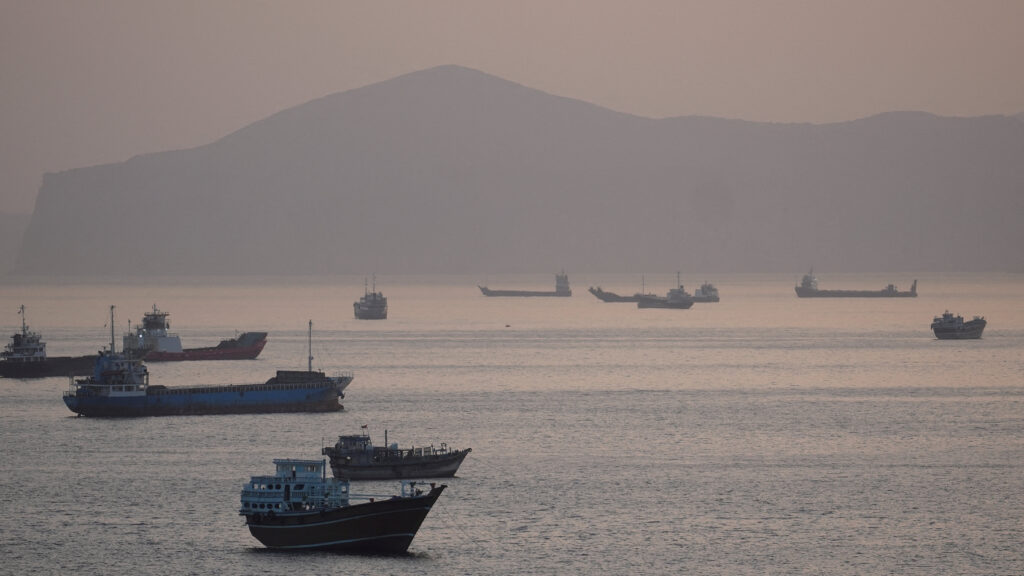
- 500–700 ships over 10,000 DWT are currently trapped in the Persian Gulf — unable to exit.
- Current Hormuz transits are at less than 10% of pre-war levels — around 6–8 ships per day, down from 80+.
- Iran’s parliament speaker warned Project Freedom “violates the ceasefire” effective since April 8.
- US gas prices soared to $4.45 per gallon — nearly 50% higher since the war began February 28.
- Treasury Sec. Scott Bessent says escorts will begin “as soon as it is militarily possible” — but gave no timeline.
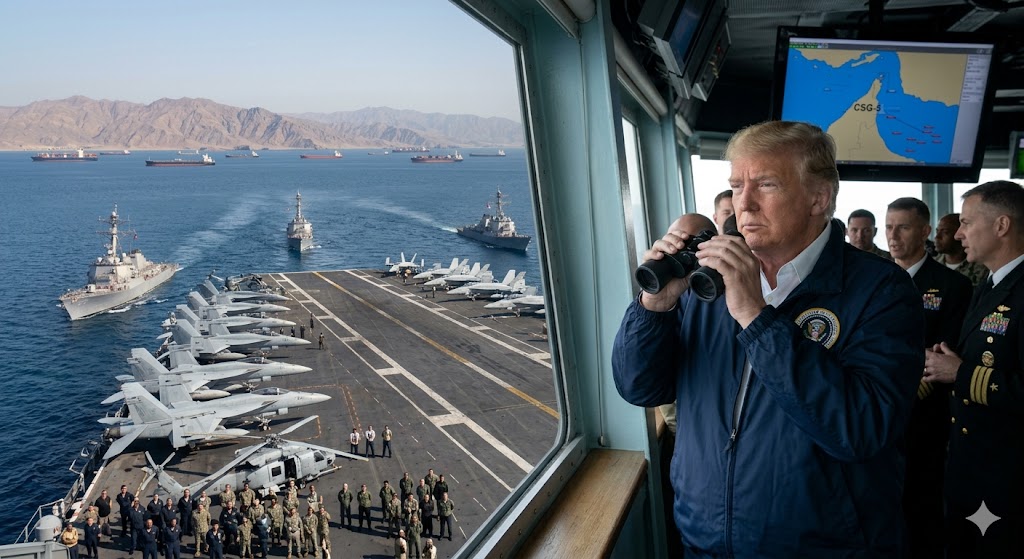
Trump gave it a name. He gave it a fleet. He gave it 100 aircraft and 15,000 service members. What he didn’t give it — at least not yet — is the one thing the world expected: US warships physically sailing alongside merchant ships through the Strait of Hormuz.
US Central Command forces will begin supporting President Donald Trump’s “Project Freedom” to “restore freedom of navigation” in the Strait of Hormuz. A US official told CNN that “Project Freedom” is not an escort mission. US Navy ships will be “in the vicinity” in case they need to prevent Iran’s military from attacking commercial ships moving through the strait.
Why “In the Vicinity” Is Not the Same as Safe
The strait is only about 10 miles across at its narrowest point. Navigable space is even less, especially for massive oil tankers — some over three football fields in length. That leaves little room for the tankers or the naval ships escorting them to maneuver. Warships, likely destroyers, need space to move around the giant tankers to get correct fire solutions on incoming targets like air or sea drones or missiles.
Washington has been reluctant to put US Navy warships within range of Iranian shore-based anti-ship missiles or small attack craft that Tehran can field in numbers in and around the strait. “The challenge is going to be dealing with the proximity of the drone launchers and the missile launchers that are going to be along the Iranian coast,” said Bryan Clark, an expert in naval operations with the Hudson Institute.

The Numbers Problem — Not Enough Destroyers
A basic naval escort operation would need between eight to 10 destroyers to protect convoys of between five to 10 commercial vessels in each transit, according to Lloyd’s List Intelligence editor-in-chief Richard Meade. Those ratios might mean escorts could restore Hormuz traffic back to just 10% of its pre-war levels.
The US doesn’t appear to have enough assets in the region to mount sustained escorts. As of April 24, the US Navy had 12 destroyers in the Middle East. Destroyers are also the primary air defense for aircraft carrier strike groups, so not all of them are available for strait duty.
The US Navy told shipping industry leaders directly that the sea service does not have naval availability to provide escorts through the Strait of Hormuz, according to Lloyd’s List intelligence.
What Project Freedom Actually Does — The Real Plan
The US navy will provide commercial ships with information on the best maritime lanes in the strait — especially lanes that were not mined by the Iranian military. US warships will be nearby and armed, but the ships themselves will be moving through without a physical military escort formation alongside them.
Multi-domain unmanned platforms — including aerial and marine drones — could move with ships through the strait or be in the vicinity to react to threats. Armed helicopters could fly over ships to take out small boats attempting to block passages. US Air Force A-10 attack jets could also hit targets on water or missile batteries ashore.
The Mine Problem — The Biggest Hidden Danger
CENTCOM has only acknowledged US destroyers going through the strait on one occasion — April 11 — “as part of a broader mission to ensure the strait is fully clear of sea mines.” Iran has laid mines throughout the waterway, and the US decommissioned its four dedicated Persian Gulf minesweepers last year, replacing them with Littoral Combat Ships using unmanned mine-hunting systems.
Between March 30 and April 5, there were 76 transits through the strait — the busiest week since the conflict began — but still less than 10% of typical daily flow. An estimated 500–700 vessels over 10,000 DWT are trapped in the Persian Gulf.
Iran Fires Back — “Violation of the Ceasefire”
Trump’s announcement of Project Freedom drew a quick rebuke from Iran. Ebrahim Azizi, the head of the Iranian parliament’s National Security Commission, warned that any US interference in the Strait of Hormuz would be considered a violation of the ceasefire in effect since April 8. “The Strait of Hormuz and the Persian Gulf would not be managed by Trump’s delusional posts!” he wrote on X.
Former Navy Rear Admiral and Pentagon press secretary John Kirby put it plainly: “You can shut down the strait through fear alone. In the first few days of this war, that’s exactly what happened. They hadn’t fired a single drone, hadn’t shot a missile, hadn’t laid a mine — but nobody was going through that strait because they were afraid.”
Project Freedom has a name, a fleet, and a mandate. What it doesn’t yet have is a path through 21 miles of mined, missile-lined, Iranian-patrolled water — without starting a whole new chapter of this war.
Disclaimer: This article is for general informational and news reporting purposes only. All military analysis, ship counts, and operational details are based on publicly available reporting from CNN, USNI News, Al Jazeera, The Hill, Axios, and Lloyd’s List Intelligence as of May 4, 2026. TrenBuzz.com does not represent any government or military body. Readers are encouraged to follow official CENTCOM and credible defense news sources for real-time operational updates on Project Freedom and the Strait of Hormuz situation.