



By TrenBuzz — Legal & policy explainer
Key points
- A divided three-judge panel of the U.S. Court of Appeals for the Fifth Circuit upheld a Trump-era immigration policy allowing broad categories of noncitizens to be detained without a bond hearing, reversing longstanding practice in many districts.
- The 2–1 ruling adopts a narrow reading of the 1996 immigration statutes and the Board of Immigration Appeals’ 2025 interpretation that expanded who counts as an “applicant for admission” — a category traditionally exempt from bond.
- Civil-liberties groups called the decision a serious blow to due process, while administration officials hailed it as a victory for enforcement; the case is likely headed toward the U.S. Supreme Court.
Court upholds Trump mass detention policy — what happened and why it matters
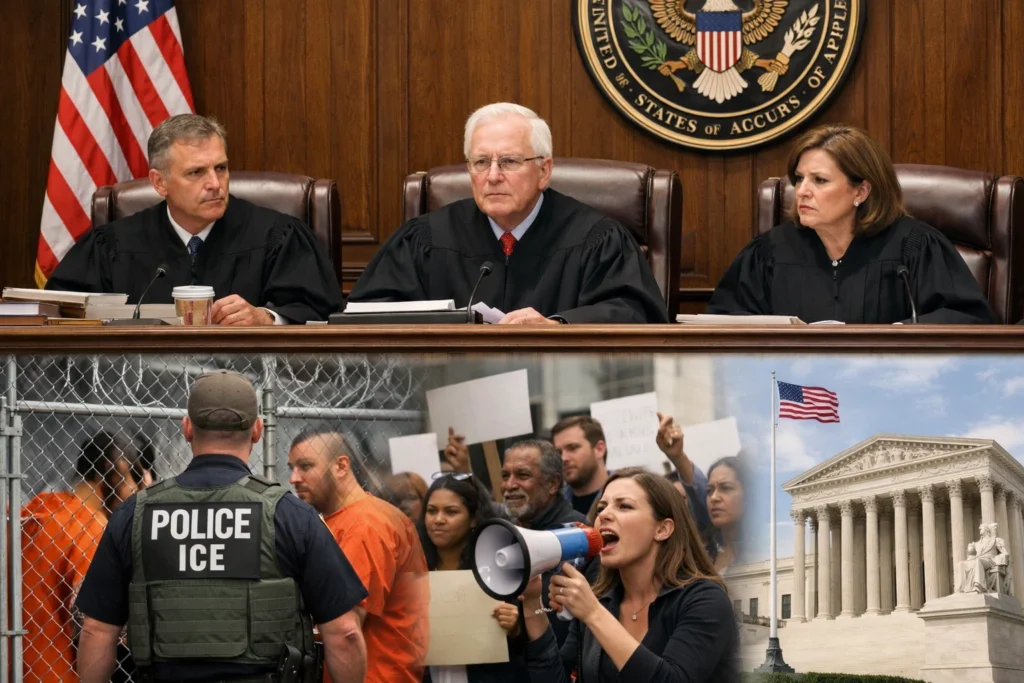
A federal appeals court on Friday upheld a Trump administration policy that allows immigration authorities to detain many noncitizens arrested in enforcement actions without offering a bond hearing. The decision, issued by the Fifth Circuit in a 2–1 ruling, marks the first appellate validation of the policy and upends years of lower-court rulings that had protected access to bond for many detainees. The ruling could broaden mandatory detention and narrow avenues for release during removal proceedings — a major shift in due-process practice for immigration law.
The basics — what the ruling says
- Legal posture: The majority read the 1996 statutory framework and the Board of Immigration Appeals’ recent interpretation to allow the government to classify more people as “applicants for admission,” a label that, under the statute, typically makes detention mandatory and bond hearings unavailable.
- Scope: The opinion applies most directly to enforcement in the Fifth Circuit’s jurisdiction (Texas, Louisiana and Mississippi) and to the plaintiffs in the consolidated appeals — but its reasoning can influence other circuits and set up a Supreme Court showdown.
- Dissent: The lone dissent warned the policy is an unprecedented expansion of executive power that would deny bond hearings to people who have long lived in the United States and been previously eligible for release.
Why judges split — the legal tension in plain English
There are two competing legal instincts at work:
- Statutory text and enforcement authority. The majority emphasized that the statute’s text, as interpreted recently by the BIA, permits treating certain detainees as outside the bond process — and that past administrations simply declined to exercise that enforcement option. The panel held that the court must defer to the agency’s reasonable interpretation.
- Due process and precedent. Dissenting judges and many lower-court rulings have stressed longstanding practice and constitutional protections that favor individualized bond hearings — especially for people who pose no public-safety risk. The dissent warned of sweeping consequences for families and community stability.

Reactions — who said what
- Administration & enforcement allies: Department of Homeland Security supporters called the ruling a major legal win that restores enforcement flexibility and helps remove people determined to be inadmissible or removable. (Administration statements and allied commentaries praised the decision.)
- Civil-liberties groups and immigrant advocates: Organizers described the ruling as a dangerous erosion of due process that could lead to indefinite detention for people who previously would have had a chance at release on bond. Several advocacy groups signaled imminent plans to seek Supreme Court review and to escalate public-interest litigation.
- Legal observers: Many lawyers note the Fifth Circuit’s decision directly conflicts with a raft of lower-court orders and is likely to prompt either en banc review (full court rehearing) or fast-tracked review by the U.S. Supreme Court.
Practical consequences — who could be affected
- Detainees: People arrested in large enforcement sweeps or targeted operations could face mandatory detention without an early opportunity to seek release, even if they have longstanding community ties and no criminal history.
- Courts and immigration judges: Courts may see surges in petitions for review and emergency filings; immigration judges will have fewer options to release detained respondents in affected jurisdictions unless other legal pathways apply.
- Communities and families: Advocates warn increased detention without bond may fracture families, strain legal-aid resources, and magnify humanitarian needs in jails and detention centers.
What happens next — legal and political pathways
- Appeal to the Supreme Court: The ruling is almost certain to be appealed; given the constitutional stakes and circuit conflicts, the Supreme Court is a likely ultimate arbiter. Many observers expect the case to arrive on the Court’s docket in expedited form.
- En banc rehearing: The Fifth Circuit could be asked to rehear the case before the full complement of judges — a step that would delay but potentially change the panel’s result.
- Congressional responses: Lawmakers who oppose the expansion could push statutory fixes or oversight hearings; supporters of enforcement will cite the ruling as validation for tougher detention policies. (Expect partisan legislative exchanges.)
Quick FAQ
Q: Does the ruling free immigration officials to detain anyone forever?
A: Not automatically. The decision upholds a legal route for mandatory detention without bond in particular categories, but other statutory protections, parole authorities, and procedural safeguards remain in play — and courts can still review detention conditions and constitutional claims.
Q: Will this apply nationwide right away?
A: The ruling directly governs the Fifth Circuit. Other circuits could reach different conclusions; nationwide effect depends on subsequent litigation, en banc review, or Supreme Court resolution.
Bottom line
The Fifth Circuit’s decision marks a major victory for the administration’s hardline immigration agenda — and a profound legal moment for due-process protections in immigration law. Because the ruling conflicts with prior decisions and raises constitutional alarms, the fight over bondless detention is likely to move to the Supreme Court and remain a flashpoint of U.S. immigration policy and litigation for months to come.