


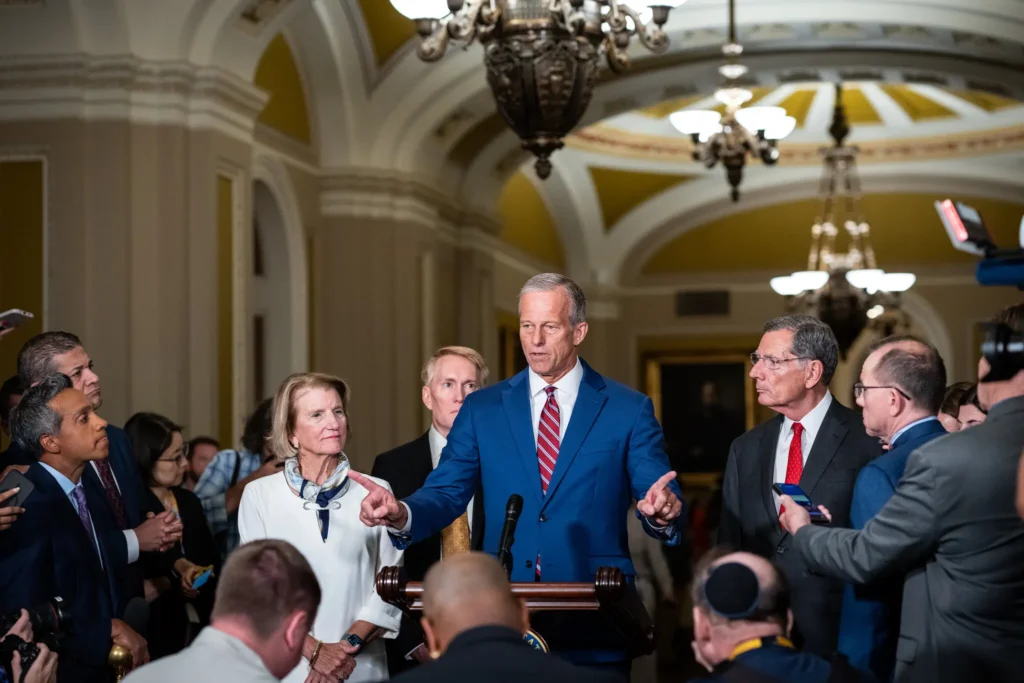
Key Points: Federal Voter ID Legislation
- Federal voter ID legislation debate took a strange turn when Democrats blocked their own stated position
- Every Senate Democrat voted against a standalone Husted bill despite previously backing voter ID
- The broader SAVE America Act remains stuck without the 60 votes needed to pass
- A separate, narrower Voter ID Act was introduced in June, adding yet another legislative track
Washington’s fight over voter identification just produced a genuinely confusing moment, one where Democrats appeared to vote against a position they’d publicly claimed to support.
Why The Federal Voter ID Legislation Debate Got Complicated
Senate Minority Leader Chuck Schumer stated publicly that “Democrats support voter ID,” referencing earlier comments made during discussions around the broader SAVE America Act.
Then came the twist. When Sen. Jon Husted introduced a standalone voter ID bill, every single Senate Democrat voted against it, contradicting Schumer’s own stated position.
Here’s the strategic explanation behind that apparent contradiction. Democrats argue voter ID alone isn’t their objection, it’s the additional provisions bundled alongside it in broader legislation like the SAVE America Act.
That distinction matters enormously for understanding this entire debate. A clean, standalone photo ID requirement could plausibly attract genuine bipartisan support, according to several political analysts tracking the legislation.
What The SAVE America Act Actually Requires
Here’s what makes the SAVE America Act far more expansive than a simple ID requirement. It would mandate documentary proof of citizenship at registration, not just identification at the polls.
Acceptable documents would include a REAL ID, passport, military identification, or other qualifying photo identification, according to the bill’s current text.
Here’s a practical hurdle critics keep raising. Less than half of American citizens currently hold a valid US passport, according to State Department figures, creating real access barriers for otherwise eligible voters.
The Senate began formal debate on this bill back in March, though it still lacks the 60 votes needed to overcome a filibuster months later.
Republicans hold 53 Senate seats currently, meaning they’d need at least seven Democratic votes to advance the bill, support that simply hasn’t materialized despite months of pressure.
A Third Legislative Path Emerges
Here’s a detail many following this story miss entirely. A separate, narrower bill called the Voter ID Act, H.R. 9368, was introduced in June, focused purely on photo identification requirements.
That bill amends the existing Help America Vote Act of 2002, requiring photo ID specifically as a condition of casting a ballot, without the broader citizenship documentation provisions.
Election law experts describe this pattern as strategic signaling more than genuine policymaking. Both parties appear to value the political fight itself over actually resolving the underlying disagreement.
With multiple competing bills now circulating simultaneously, and neither party showing genuine willingness to negotiate a narrower compromise, this debate looks likely to keep generating headlines without producing an actual law before the midterms arrive.