

► Key Points – Postal Voting
- New USPS proposed rules published June 10, 2026 will refuse mail ballot delivery in any state that does not hand over its voter lists to the federal government
- The rules stem from Trump’s March 2026 executive order directing federal agencies to crack down on mail-in voting ahead of the November midterms
- The DOJ has already sued 30 states to force them to surrender sensitive voter data, particularly states with universal mail-in voting programs
- Judge Carl Nichols declined to block the executive order last month, not because it was lawful but because implementation details were still unclear
- Senate Democrats filed a court brief Monday calling the order “unprecedented interference with state mail voting programs”
- Election experts warn the plan could disenfranchise millions if data mismatches prevent ballots from being delivered before Election Day
- The USPS proposal is open for public comment, with Democrats pushing the DC Circuit Court of Appeals for a ruling this summer
By TrenBuzz Staff · June 10, 2026 · 4 min read

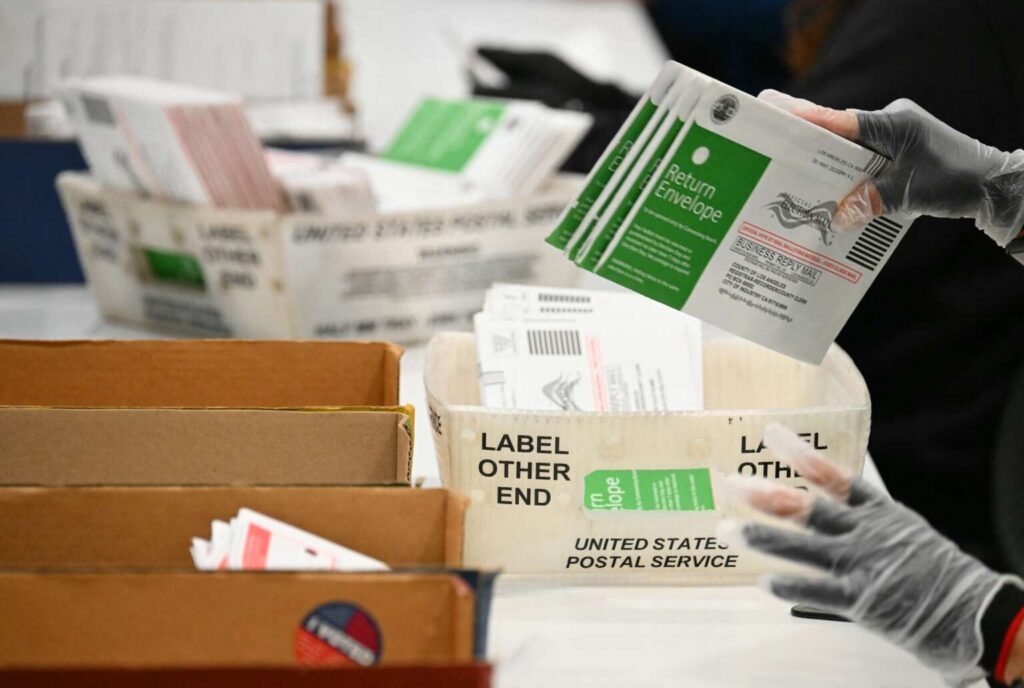
State election officials across the United States woke up Wednesday to one of the most alarming voting rights ultimatums in modern American history. Under newly published USPS proposed rules tied to President Trump’s March 2026 executive order, the postal service will not deliver mail ballots in any state that refuses to submit its full voter lists to the federal government. The postal voting USPS mail ballots voter lists Trump directive 2026 story is breaking across every major news network today and its implications for the November midterm elections are enormous.
The choice being handed to state election officials is stark. Surrender voter data to the Trump administration, including in universal mail-ballot states where essentially every registered voter would be on that list, or risk the postal service refusing to deliver your citizens’ ballots entirely. Experts are calling it an unprecedented federal intrusion into an election process the Constitution largely assigns to the states.
What the USPS Postal Voting Proposal Actually Requires
Under the proposed USPS rules, states must submit lists of voters who are eligible to receive mail ballots before the postal service will agree to deliver those ballots. If a state does not comply, the USPS will treat unverified mail ballots as undeliverable. The proposal gives states some flexibility to update voter lists as the midterm approaches, which is a slight softening from the original executive order language.
However, election officials point out that voter data is formatted differently across every state and even across counties within states. The practical challenge of aligning 50 states worth of voter data into a format that USPS systems can read and process before November ballots need to be sent is, in the words of one election data expert, “asking the impossible on a political deadline.” Errors in that process would mean eligible voters simply do not receive their ballots.
The proposal is currently open for public comment. But given the timeline pressure of a November midterm election and the legal battles already underway, many election lawyers expect the courts to be the final battleground before a single ballot is printed.
“If the Order remains in force, millions of American voters’ sensitive personal data will be amassed into inaccurate and unlawful databases and USPS will engage in unprecedented interference with state mail voting programs.”
Senate Democrats, DC Circuit Court Filing, June 9, 2026
The DOJ Data Grab Running Alongside the USPS Plan
The USPS proposal does not stand alone. Running parallel to it is an aggressive DOJ legal campaign that has filed lawsuits against 30 states demanding they hand over sensitive voter registration data. In states like Colorado, Oregon, Washington, and Hawaii, where all registered voters automatically receive mail ballots, compliance would mean handing the federal government a comprehensive list of virtually every citizen eligible to vote in those states.
Election officials and civil liberties groups describe the combination of the DOJ lawsuits and the USPS postal voting rules as a coordinated data-collection strategy. They argue the administration is using the threat of ballot delivery disruption as leverage to build a national voter database that could be used to challenge election results or target specific communities in future elections.
The Justice Department countered in its own court filings that states have no legal justification for refusing to share voter rolls with federal agencies, characterizing the data requests as standard election integrity measures. Republicans supporting the plan argue it prevents noncitizens from receiving ballots, a problem election authorities consistently say occurs at negligibly low rates in existing data.
Courts, Congress and a Midterm Election in the Crosshairs
This is not Trump’s first attempt to assert federal control over election rules. A 2025 executive order on elections was largely blocked by judges who ruled he has no unilateral authority to alter voting procedures without Congress. The same core legal argument is being deployed against the current order, but with far less time before a national election than those earlier challenges had.
Judge Carl Nichols declined to block the March 2026 order last month, but his ruling was explicitly narrow. He did not find the order lawful. He found implementation details were too unclear for him to intervene yet. That window is closing fast. Democrats are pushing the DC Circuit Court of Appeals to rule this summer, before USPS rules are finalized and states face an impossible choice between data surrender and ballot delivery disruption.
For the approximately one-third of Americans who voted by mail in 2024, the outcome of this legal fight is not abstract. It is the difference between receiving a ballot and not receiving one in November 2026. The postal voting USPS mail ballots voter lists Trump directive 2026 fight is now one of the most consequential voting rights battles the country has faced heading into a midterm election year.
🔗 Also Read: Judge Lets It Stand: Trump Mail-In Voting Executive Order Survives First Court Test With Midterms in the Crosshairs
Disclaimer: This article is intended for informational and news reporting purposes only. Content is based on publicly available information sourced from CNN Politics, Yahoo News, KVIA, Local News 8, IBTimes UK, and Joe My God as of June 10, 2026, and does not constitute legal, electoral, or political advice. TrenBuzz.com does not endorse any political party, candidate, government policy, or legal position. All trademarks and names belong to their respective owners.