


Key points
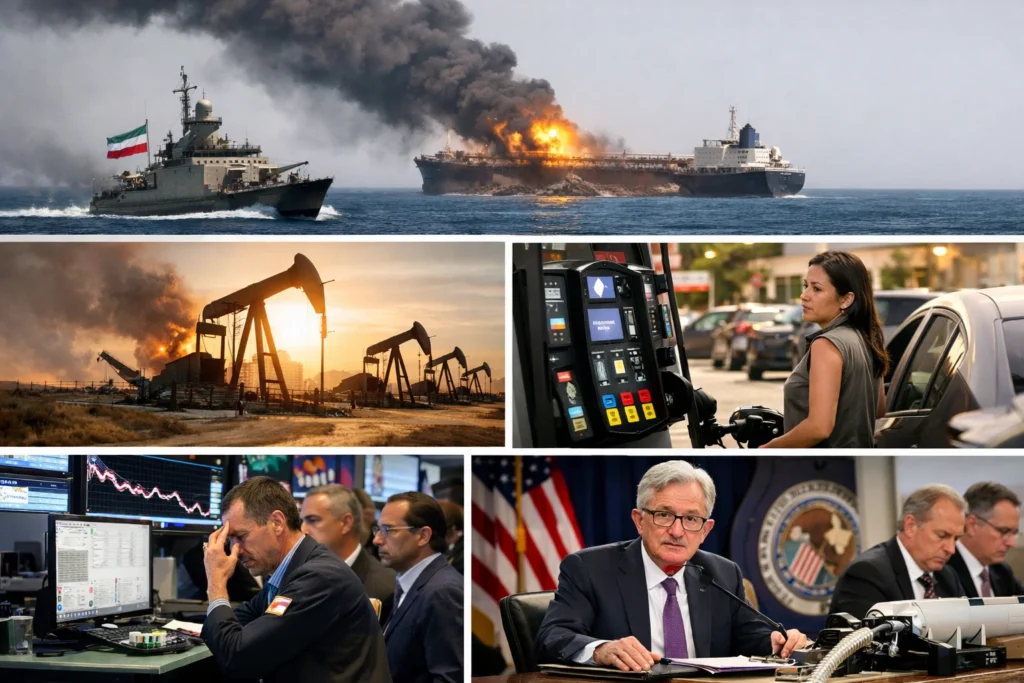
- The conflict with Iran has sharply tightened world energy supplies by choking tanker traffic through the Strait of Hormuz and by damaging Gulf export infrastructure — pushing crude briefly above $100/barrel.
- Higher oil lifted U.S. producers’ revenues (a multi-billion-dollar windfall for shale states) even as consumers face higher pump prices and strained household budgets.
- The White House released emergency reserves and markets priced in recession risks: banks warn persistent high oil could drive major equity losses and slow growth.
- Policymakers — including the Federal Reserve — must weigh inflation risks from energy with growth risks from tighter financial conditions; Treasury and Energy Department moves (SPR draws) are short-term relief tools.
What’s happening — Iran conflict is hitting the U.S. economy
Geopolitical shocks tied to Iran’s retaliation campaign and disruptions to Gulf shipping have sent oil sharply higher, squeezed global supply chains, nudged U.S. inflation expectations up, and produced a mix of winners (U.S. oil producers) and losers (drivers, airlines, energy-intensive manufacturers).
Energy & inflation — the direct channel
The conflict has two immediate energy channels into the U.S. economy:
- Supply shock: Damage to Middle East export hubs and de-facto closures of critical routes reduced available barrels for world markets — traders priced a large “scarcity premium,” lifting Brent and WTI above $100. That transmits to U.S. gasoline, diesel and heating fuel prices.
- Pass-through to consumer prices: Higher pump prices hit household budgets fast (estimates show Americans have spent billions more on fuel since the conflict intensified), which can blunt consumer discretionary spending and slow GDP growth while also feeding headline inflation. Policymakers watch whether high energy costs push core inflation upward enough to alter interest-rate plans.
Practical note: the Administration has authorized large Strategic Petroleum Reserve releases to add supply and calm markets, but those releases are temporary and won’t fully offset a prolonged Strait disruption.

Markets & financial stability — knock-on effects
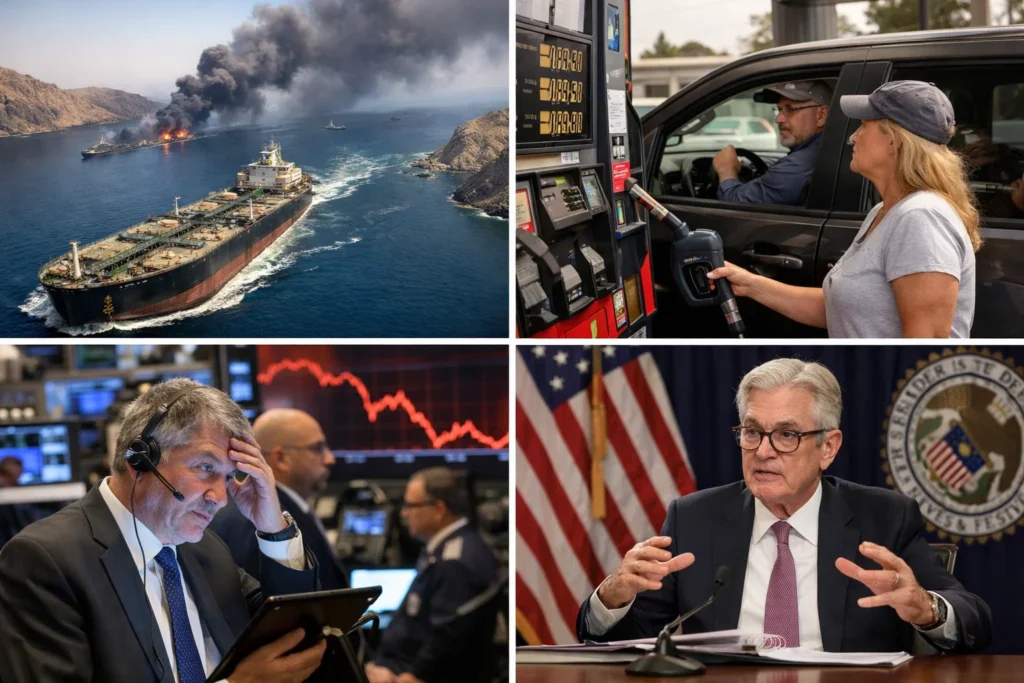
- Equities: Analysts warn that sustained oil above $90–$100 could trigger sizable stock market corrections by reducing consumer spending and corporate earnings across cyclical sectors; JPMorgan flagged scenarios where the S&P 500 could fall 10–15% under prolonged high-oil regimes. That raises the odds of a negative wealth effect on U.S. households.
- Bond yields & Fed reaction: Higher oil increases inflation risk, which can push yields up; but growth worries from consumption hits or trade disruptions can push yields down — leaving the Federal Reserve with a difficult tradeoff between anchoring inflation expectations and avoiding an avoidable recession.
- Corporate stress: Airlines, shipping firms and energy-intensive manufacturers face immediate margin pressure; insurers and shipowners also see costs rise, feeding through to freight rates and consumer prices.
Winners & losers inside the U.S.
- Winners: Domestic oil & gas producers (especially unconstrained shale operators) and energy-producing states see revenue gains that can help state budgets.
- Losers: Consumers at the pump, trucking and logistics firms, airlines, commodity-linked manufacturers (fertilizer, plastics), and low-income households who spend a larger share of incomes on energy. Small businesses with tight margins are especially vulnerable.
Supply-chain & sectoral effects
- Logistics & shipping: Tanker re-routing, insurance spikes and naval escort decisions slow deliveries and raise freight costs — a direct hit to time-sensitive supply chains.
- Fertilisers & food: Higher natural-gas and fuel prices raise fertilizer costs, which can raise agricultural input costs and feed into food prices months later.
- Tech & medical inputs: Reports show outages of specialized gases (e.g., helium) and disruptions to regional hubs can affect high-tech manufacturing and healthcare services in knock-on ways.
Policy response — what Washington and markets are doing
- Strategic reserve releases: The administration authorized a historic SPR release to replace some lost supply and cap price spikes — a short-term stabilizer, not a permanent fix.
- Diplomatic & naval steps: U.S. and allied naval escorts and pressure campaigns aim to reopen shipping lanes, but true normalization requires reduced regional hostility.
- Monetary policy vigilance: The Fed is monitoring the inflation vs. growth tradeoff closely; communication and data (CPI, PCE, payrolls) will guide whether further rate moves are needed.
What households and small businesses can do (practical steps)
- For households: tighten short-term budgets on discretionary travel, consider car-pooling or public transit where possible, and delay large fuel-intensive purchases if feasible. Shop around for fixed-rate energy plans if available.
- For small businesses: run stress tests for higher fuel and freight costs, renegotiate supplier contracts with fuel-pass clauses, and consider short-term hedges (fuel swaps/options) if your margins are sensitive.
- For investors: reassess equity exposure to consumer discretionary sectors, consider energy producers as a hedge, and watch bond yields and real-asset allocations for volatility-management opportunities.
What to watch next — the signals that decide the economic path
- Oil flow data & tanker counts through the Strait (how fast shipments resume).
- Daily oil price moves and gasoline price averages (local pump pricing).
- SPR drawdown announcements and any allied releases — scale matters for market psychology.
- Fed minutes / speeches that reveal the central bank’s tilt between inflation control and growth support.
- Equity market breadth & credit spreads — widening spreads + falling breadth often precede growth downgrades.
Bottom line
The Iran conflict is a classic geopolitical shock that propagates quickly into inflation, markets and real-world spending. The short-term winners are U.S. oil producers and state treasuries; the losers include household budgets, airlines and global supply chains. Policymakers have emergency tools (SPR releases, diplomatic pressure, naval escorts), but the real economic outcome — a temporary price spike vs. a longer-lasting inflationary shock that dents growth — will hinge on whether shipping lanes reopen and Gulf infrastructure is repaired. Watch oil flows, Federal Reserve signals and consumer-spending patterns closely over the next few weeks.