


By TrenBuzz — Special report
Key points
- María Corina Machado told CBS News she “will be president when the time comes,” while stressing that Venezuela’s future must be decided by free and fair elections.
- Machado made the comment during high-profile U.S. visits and interviews after meeting U.S. leaders — a sequence that has amplified her international profile and domestic political stakes.
- She said she expects to be elected “when the right time comes,” calling for a transition to electoral democracy rather than outside appointment or imposition. Observers see the line as both a personal pledge and a tactical message to allies and rivals.
- Machado is a polarizing but prominent figure in Venezuela’s opposition—winner of international recognition in 2025—and her timetable claim will sharpen debates over elections, transitional arrangements and U.S. influence.
María Corina Machado says — what she said and why it matters
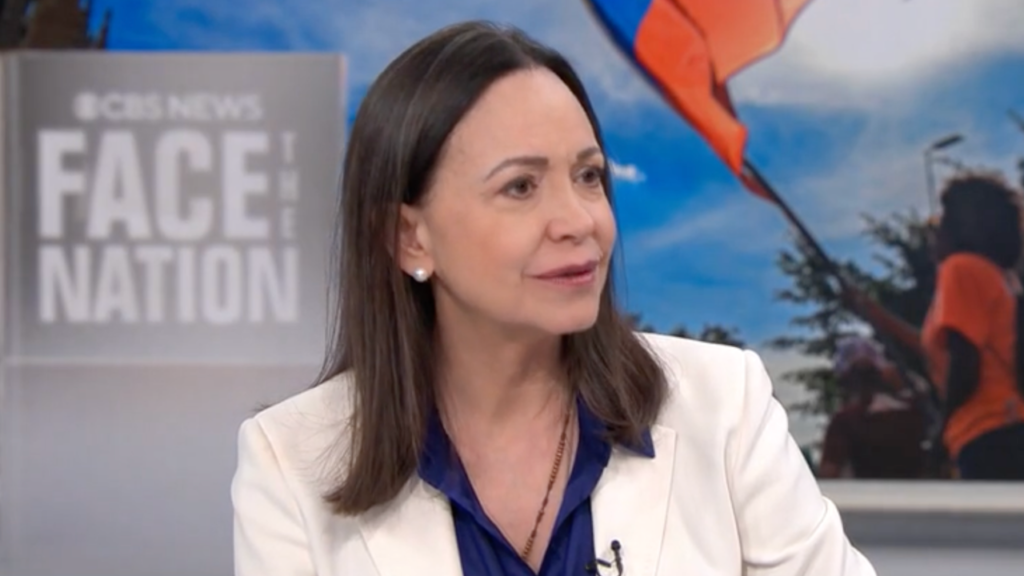
In an interview aired on Face the Nation, Venezuelan opposition leader María Corina Machado said she believes she will be elected president “when the time comes,” while stressing that it should be decided in elections by the Venezuelan people. The comment—short, emphatic and repeated in other media—matters because Machado is a leading opposition figure whose international visibility has grown after meetings with U.S. officials and high-level visits to Washington. Her statement signals confidence and ambition, but it also raises questions about sequencing, legitimacy and how a transition would be orchestrated.
The quote — in context
Asked about her political future, Machado told CBS News’s Margaret Brennan: “I will be president when the time comes. But it doesn’t matter. That should be decided in elections by the Venezuelan people.” The phrasing underlines two points at once: personal ambition and deference to electoral legitimacy.
Why the timing is significant
- Visibility after U.S. meetings. Machado’s recent meetings with U.S. officials and public appearances in Washington have elevated her international profile; U.S. media coverage of her interviews means her remarks quickly reverberate inside Venezuela and across regional capitals.
- Political environment in flux. Observers say Venezuela’s path—who organizes elections, timing, security guarantees, and whether exiled or barred politicians can compete—remains deeply contested. Machado’s statement places her publicly in the “ready and waiting” role that will shape opposition strategy.
- Balancing aid, sovereignty and optics. Machado’s insistence on elections signals she wants to avoid the appearance of being an externally installed leader while keeping pressure on a timetable that benefits her political coalition. Analysts treat the line as both domestic theater and international messaging.


Political reactions — domestic and international
- Domestic (Venezuela): Machado remains a divisive figure—popular among many opposition voters but distrusted by some who worry about polarization or disagree with her tactics. Her statement will be tested against the reality of electoral access, security arrangements, and transitional roadmaps.
- U.S. and regional capitals: Washington has signalled interest in a stable transition; the optics of U.S.–opposition engagement (including meetings and public interviews) complicate how third parties view legitimacy and sequencing. Some partners urge a transparent, Venezuelan-led process with international guarantees.
What Machado’s line means practically
- It’s a public claim of intent, not a timetable. Saying “I will be president when the time comes” is aspirational; the decisive variables—who runs the electoral process, voter access, security—are still unresolved.
- It pressures transition planners. The statement narrows political space for interim arrangements perceived as sidelining popular vote; it nudges negotiators toward clearer electoral roadmaps.
- It raises the stakes for safeguards. If Machado is a frontrunner, opponents and neutral observers will demand robust monitoring, vetting and dispute-resolution mechanisms to avoid contested results.
Interactive checklist — what to watch next
(Answer Yes/No and follow the recommended action.)
- Have Venezuelan authorities published an electoral timetable? — If Yes, compare the timetable to Machado’s public expectations. If No, watch for negotiation updates with international mediators.
- Is there an independent electoral commission or international monitoring plan announced? — If Yes, assess whether opposition leaders (including Machado) can register and campaign freely; if No, international pressure for guarantees will likely rise.
- Are regional actors (OAS, EU, UN) signaling support for a specific process? — If Yes, that strengthens legitimacy for electoral outcomes; if No, expect more contested politics.
Practical takeaways — for Venezuelans, diplomats and investors
- Venezuelans: Machado’s claim matters most if it translates into an inclusive, verifiable electoral contest. Demand clear rules, access, and monitoring so outcomes are respected.
- Diplomats & mediators: Focus on sequencing, security guarantees, and transparent timelines that allow opposition candidates to campaign safely and fairly.
- Investors & markets: Political clarity and credible electoral plans reduce systemic risk. Track announcements on electoral administration and transitional legal frameworks—those will be market drivers.
Bottom line
María Corina Machado’s declaration that she “will be president when the time comes” is a compact political signal: confidence, ambition and a public nudge toward electoral legitimacy. Whether that promise becomes reality depends less on rhetoric and more on practical arrangements—electoral access, monitoring, dispute resolution and transitional security. For now it sharpens the political calculus in Caracas and raises the stakes for negotiators and international partners trying to make Venezuelan elections credible and peaceful.