


Key Points: Social Security Administration Prepares 3.8% Payment Surge
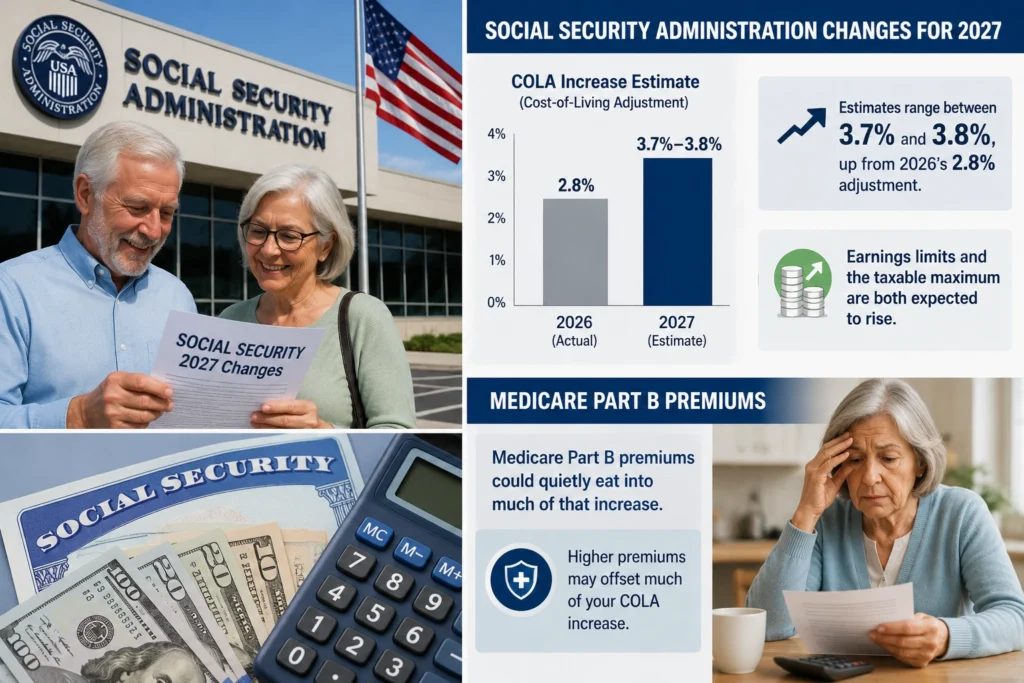
- Social Security Administration changes for 2027 point to a larger COLA increase than last year
- Estimates range between 3.7% and 3.8%, up from 2026’s 2.8% adjustment
- Earnings limits and the taxable maximum are both expected to rise
- Medicare Part B premiums could quietly eat into much of that increase
Millions of Americans planning their retirement budgets just got a preview of what’s coming next year, and the numbers look bigger than last year’s bump.
The Social Security Administration hasn’t confirmed final figures yet, but early projections point toward a meaningfully larger cost-of-living adjustment for 2027.
Here’s why. The Senior Citizens League currently estimates a 3.8% increase, while independent policy analyst Mary Johnson projects a slightly lower 3.7% adjustment.
Both estimates sit well above 2026’s actual COLA, which landed at just 2.8% based on that year’s inflation data.
The reasoning behind the jump connects directly to energy costs. Higher prices tied to the ongoing Iran war have pushed inflation upward throughout 2026.
Here’s how the calculation actually works. The Social Security Administration bases every COLA on the Consumer Price Index for Urban Wage Earners, measured specifically during each year’s third quarter.
That means the final number won’t be locked in until the Labor Department releases September inflation data on October 14.
There’s a detail here that catches many retirees off guard every year. A recent Nationwide Retirement Institute survey found 68% of adults don’t realize Social Security benefits are protected against inflation at all.
Beyond the headline COLA number, two other changes deserve real attention. The earnings limit for workers under full retirement age is expected to climb as well.
Current trustee projections put the lower earnings threshold at $25,200, up from this year’s $24,480, with the upper limit rising to roughly $67,200.
Here’s why that matters. Workers who claim benefits early while still working can see payments temporarily withheld if their income crosses these thresholds.
The taxable maximum is set to increase too, potentially climbing from $176,100 to somewhere near $184,000. Higher earners will simply pay Social Security tax on more of their income.
Here’s the catch most headlines skip past entirely. Medicare Part B premiums are projected to rise roughly 5%, climbing to around $213 monthly.
That premium increase gets deducted directly from Social Security checks, meaning a chunk of any COLA boost effectively disappears before retirees ever see it.
There’s also a longer term concern shaping this year’s announcement. The Social Security trust fund faces solvency challenges, with potential benefit reductions projected as early as 2032 without congressional action.
For now, retirees and workers alike should treat these figures as informed estimates, with the real numbers arriving straight from the Social Security Administration this October.