


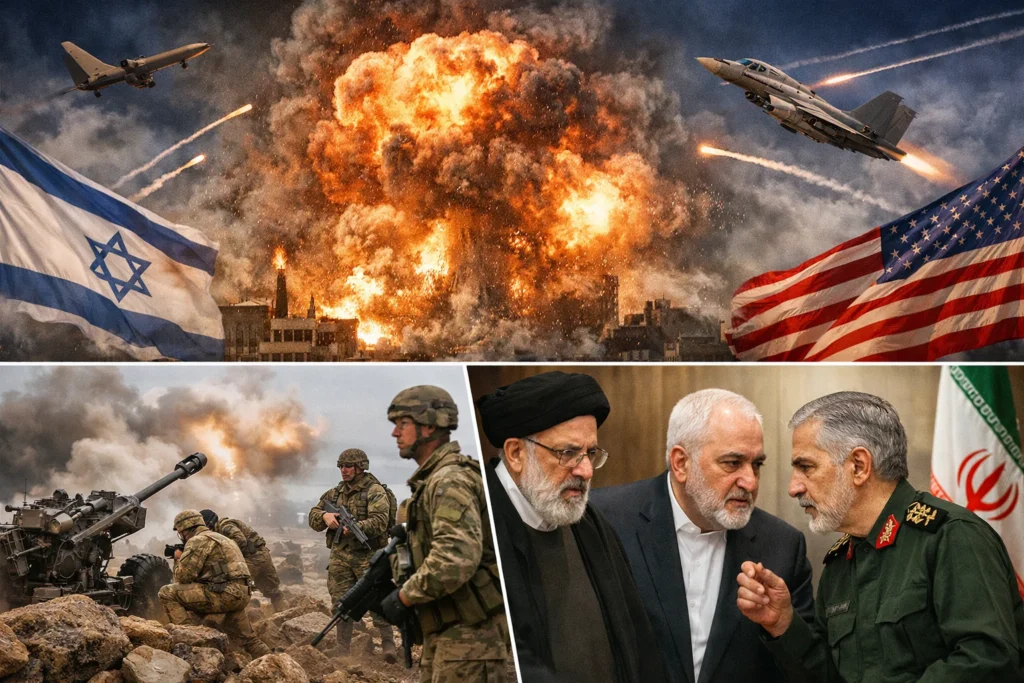
Table of contents
- Quick answer: no formal declaration
- What Iran’s president actually said (Dec. 27–28, 2025)
- Difference between rhetoric and a formal declaration of war
- The operational reality: have the U.S. and Iran been exchanging strikes?
- How U.S. officials describe the situation now
- Legal and diplomatic consequences of a formal declaration
- Risks of escalation — how close things are to open war
- What to watch next (who will speak and what to read)
- Reader poll
- Bottom line
- Disclaimer
1 — Quick answer : no formal declaration
Short version: Iran’s president has publicly said Tehran is “in a full-scale war” with the United States, Israel and parts of Europe, but Iran has not issued a formal declaration of war against the United States.
That rhetorical declaration is important — but it is not the same as a legal, treaty-style declaration that starts an internationally recognized state of war.
2 — What Iran’s president actually said (Dec. 27–28, 2025)
In an interview published on the website of Iran’s supreme leader, President Masoud Pezeshkian said Iran is in a “full-scale” or “total” confrontation with the U.S., Israel and Europe and vowed decisive responses if Tehran is attacked further.
Major international outlets including AP and Al Jazeera reported and quoted the president’s language as a clear escalation in rhetoric on Dec. 27–28, 2025.
3 — Difference between rhetoric and a formal declaration of war
A political leader’s statement that a country is “at war” is rhetorical and signals intent, posture and political framing.
A formal declaration of war is a specific legal act under international law or domestic statutes (Congressional declarations, formal notices between governments) and carries distinct diplomatic and legal consequences. Iran’s president’s comments to state media do not meet that formal standard.
4 — The operational reality: have the U.S. and Iran been exchanging strikes?
Yes—there have been serious hostilities earlier in 2025. In June, U.S. forces carried out strikes on multiple Iranian nuclear-related sites and Israel and Iran engaged in a short, intense air campaign that month.
Those kinetic events produced casualties and a tense ceasefire, and they explain why Tehran now uses “war” language to describe its relations with the West.
5 — How U.S. officials describe the situation now
U.S. defense and administration officials have repeatedly stressed they do not seek a prolonged war with Iran even while reserving the right to act to defend U.S. forces and partners.
After the June strikes U.S. leaders framed actions as limited and defensive, stressing diplomacy remains an option while warning Tehran against further attacks.


6 — Legal and diplomatic consequences of a formal declaration
If either government were to issue a formal, legally framed declaration of war, it would trigger treaty obligations, could change rules for detention of combatants, and would sharply raise the bar for international mediation.
Because that has not happened, most international-law and diplomatic mechanisms remain oriented to crisis management rather than full-belligerency procedures.
7 — Risks of escalation — how close things are to open war
Rhetoric has hardened: Tehran’s leader uses “full-scale war” language and military statements from both sides signal readiness.
But military analysts and allied officials judge that a combination of calibrated strikes, diplomatic backchannels and mutual deterrence has so far prevented a formal war declaration — even though the risk of miscalculation remains elevated.
8 — What to watch next (who will speak and what to read)
• Official Iranian channels (statements posted to the Supreme Leader’s media site) for any escalation beyond rhetoric.
• White House, Pentagon and State Department briefings for U.S. posture and alerts.
• Credible wire services (Reuters, AP, Al Jazeera) for rapid, corroborated reporting of any strikes, casualty counts or diplomatic demarches.
10 — Bottom line
Iran’s leadership has escalated public language — calling the current confrontation a “full-scale” war — reflecting deep anger after months of strikes and sanctions.
But there is an important difference between political rhetoric and a formal declaration of war; as of Dec. 28–29, 2025 there is no documented, formal Iranian declaration of war against the United States and U.S. officials continue to say they do not seek a full-scale war. Monitor official sources and reputable wire reporting for any change.
Disclaimer
This article synthesizes publicly available reporting and official statements current as of December 29, 2025. It explains difference between political statements and legally binding declarations of war, and summarizes the operational context leading to recent tensions. It is not an intelligence assessment; readers should treat breaking statements as provisional and consult primary official releases (White House, Pentagon, Iranian government) and major wire services for immediate updates.