


By TrenBuzz — Special report
Key points
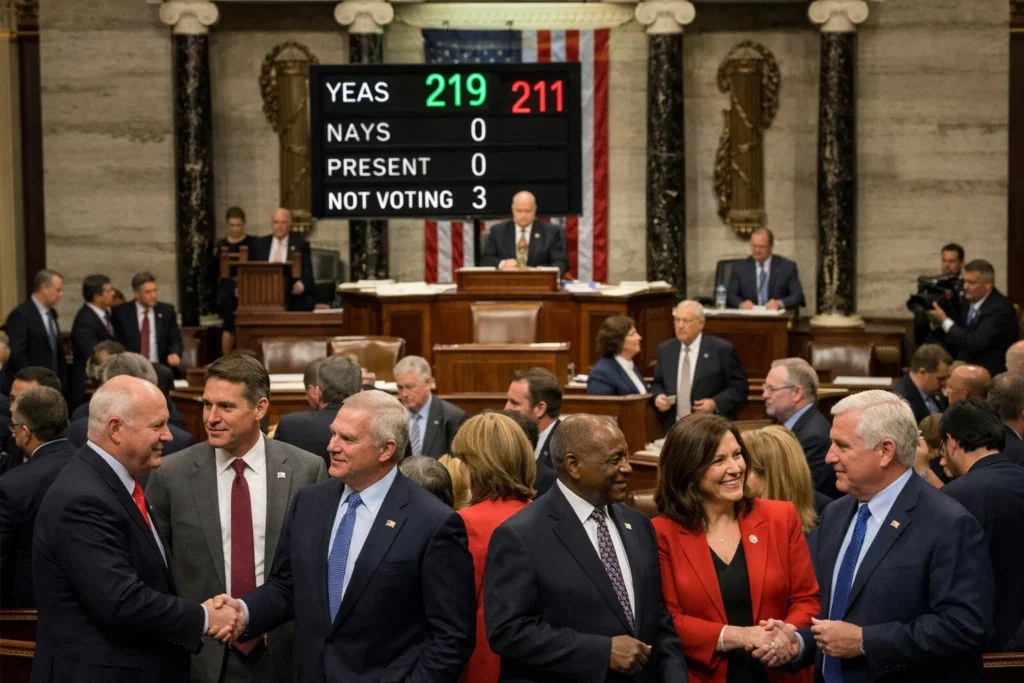
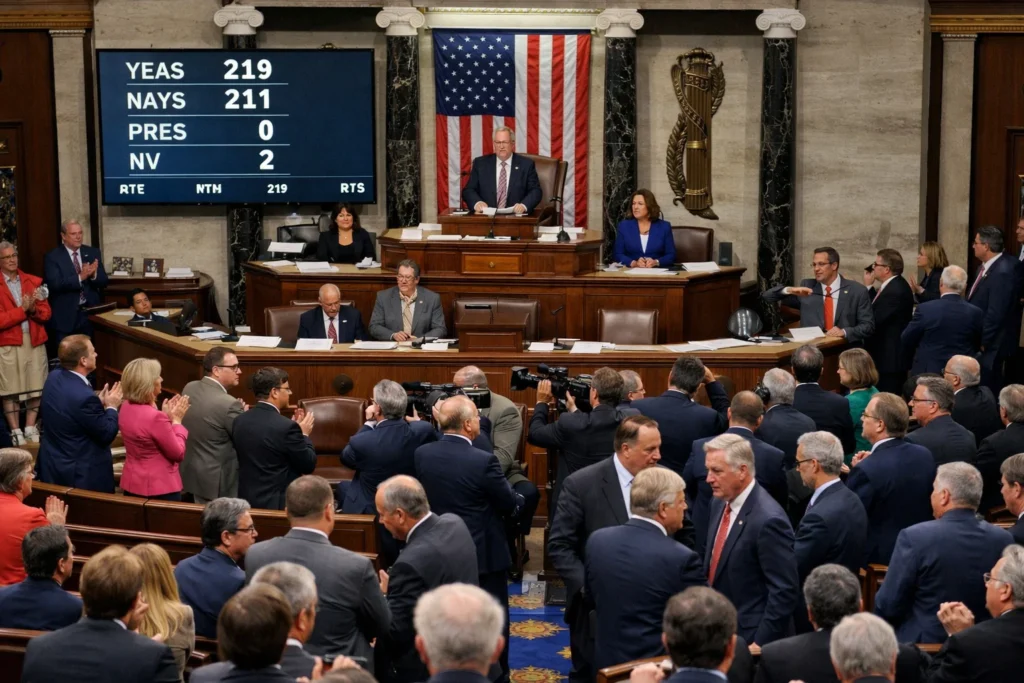
- The U.S. House of Representatives voted 219–211 to overturn President Trump’s tariffs on Canadian goods — a rare bipartisan rebuke in the Republican-led chamber.
- Six House Republicans joined Democrats to pass the measure, signalling growing GOP unease with broad unilateral tariffs — despite White House threats to punish dissenting Republicans.
- The resolution is likely symbolic unless the Senate acts and the president signs it; Trump has signalled he will veto efforts to repeal his tariffs.
- The vote follows earlier Senate actions and sustained business and allied pressure over the tariffs’ economic fallout.
Trump’s Canada tariffs— what happened and why readers should care
In a sharp—and politically rare—move, the U.S. House voted Wednesday to rescind the emergency declaration that underpins President Trump’s tariffs on Canada. The 219–211 margin included a handful of Republican defectors and amounts to a public rebuke of the White House’s trade aggression. While the measure faces an uphill path (the Senate would have to act and the president could veto), the vote marks a turning point in Washington’s debate over tariffs that have rattled supply chains, raised prices and strained relations with a key ally.
The vote, in plain terms
- What lawmakers did: The House approved a Democratic measure to terminate the national emergency authority used to justify the Canada tariffs, 219–211. That number included six Republicans who crossed party lines.
- Why it matters procedurally: The resolution can remove the legal basis for the tariffs, but unless the Senate passes the same measure and the president signs it (or Congress overrides a veto), the tariffs remain in force.
- Political context: The vote comes after business groups, state leaders and some Republican lawmakers warned the tariffs were hurting U.S. firms and voters — and after previous Senate action that signaled bipartisan skepticism about the policy.
What drove Republican defections
Several pressures pushed GOP members to break with the White House:
- Constituent impact: Manufacturers, farmers and energy companies in swing districts have felt tariff pain and lobbied hard for relief.
- Legal and strategic uncertainty: With court challenges and global trade backlash in play, some Republicans worried the long-term economic cost outweighed short-term political signaling.
- Electoral math: A growing number of lawmakers — mindful of midterm voters — judged that siding with local business interests was politically safer than reflexively backing unilateral tariff moves.

The immediate reaction — Washington and Ottawa
- White House: President Trump warned Republicans who vote against his tariffs that there would be political consequences at the ballot box, underscoring the administration’s determination to defend the policy.
- Canada: Canadian officials welcomed the vote; Ottawa has repeatedly protested the tariffs and lobbied for their removal. (Analysts say the House action signals warming political pressure for a diplomatic fix.)
Why this vote matters beyond politics
- Supply-chain relief: Rolling back tariffs would ease immediate cost pressure on industries that rely on cross-border inputs — autos, agriculture and energy among them.
- Congressional check on emergency powers: The vote underscores congressional unease with presidents using broad emergency authorities to reshape trade policy unilaterally. Expect further hearings and possible statutory fixes.
- Alliance dynamics: Trade rows with Canada have strained a strategic relationship; reversing tariffs would remove a major irritant in U.S.–Canada ties and reduce the risk of reciprocal measures.
Quick FAQ
Q: Does this mean the tariffs are gone?
A: Not yet. The House resolution is a crucial step, but the Senate must pass the same measure and the president must sign it — or Congress would need to override a veto, which requires two-thirds majorities. Until then, the tariffs remain in effect.
Q: Why didn’t more Republicans join?
A: Party leaders warned that breaking with the president would carry political risk; many GOP members weighed constituent economic concerns against party loyalty and the president’s influence. A small number crossed the aisle, enough to pass the measure.
Q: What happens next?
A: The resolution heads to the Senate. Even if it passes there, a presidential veto is likely — meaning the practical battle could move to courtroom challenges, further congressional maneuvers, or horse-trading with the White House.
Bottom line
The House vote to rescind Trump’s Canada tariffs is a politically notable and economically consequential step — a rare public split within the GOP over trade tools the president favors. But the measure’s future is uncertain: it faces procedural hurdles, a probable veto and the messy reality that reversing tariffs is as much about legal mechanics and diplomacy as it is about congressional politics. Still, the vote signals growing momentum in Washington to push back on sweeping unilateral tariff policy — and that momentum alone could nudge the White House toward negotiation and restraint.