


Key Points: US European Command Israel Defense
- US European Command Israel defense capacity is stretched thin without another destroyer
- Gen. Alexus Grynkewich warned the Pentagon he may prioritize the US homeland instead
- The Iran war entering its sixth month is straining naval assets across the Mediterranean
- Only two of five Rota-based destroyers remain stationed near Israel right now
America’s top military commander in Europe just delivered a warning that cuts straight to the heart of a resource crisis nobody wanted to admit out loud.
Why US European Command Israel Defense Is Under Strain
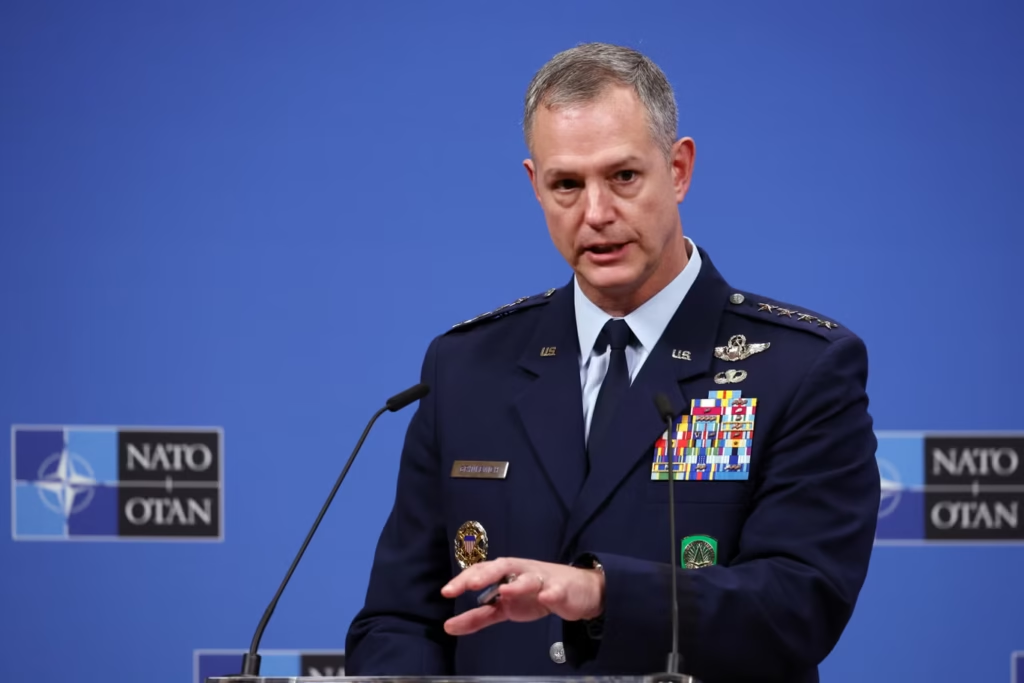
Gen. Alexus Grynkewich, head of US European Command, sent Pentagon leadership a written warning this week about a genuine capacity shortfall.
Without another Navy destroyer, he stated plainly, his command will be forced to choose between defending the US homeland and continuing to defend Israel.
Here’s what makes that warning so significant. European Command coordinates Mediterranean operations, where its ships help intercept ballistic missiles launched at Israel from Iran and Houthi rebels in Yemen.
That same command also handles NATO defense responsibilities, guarding against potential Russian aggression, a dual mission now colliding directly with Israel’s ongoing missile defense needs.
The Numbers Behind This Naval Squeeze
Here’s the resource math driving this crisis. European Command normally operates five Rota, Spain-based destroyers, but only two remained stationed in the Mediterranean as of this weekend.
Meanwhile, the broader US military presence near Iran has grown substantially, with at least 11 destroyers and multiple aircraft carriers redeployed to enforce a naval blockade on Iranian ports.
That blockade began after ceasefire talks between the US and Iran collapsed in early July, restarting active combat operations that are now entering their sixth consecutive month.
Here’s the deeper strain this points toward. A separate earlier warning already flagged depleting US ammunition stockpiles, suggesting this isn’t an isolated equipment shortage but a broader capacity problem.
What This Means For Washington And Jerusalem
A Pentagon defense official characterized Grynkewich’s warning as standard military procedure, simply flagging operational risk to senior leadership rather than an unusual escalation.
Still, the political timing matters enormously. In mid-July, nearly half of House Democrats voted to eliminate billions in aid specifically tied to Israel, a sign that domestic political appetite for continued support is already fracturing.
Neither the Pentagon, European Command, nor Israeli officials have publicly commented on the warning, leaving its full implications largely speculative for now.
Here’s the strategic tension underlying all of this. Every destroyer redirected toward the Iran blockade is one fewer available for intercepting missiles aimed at Israeli territory.
With no confirmed timeline for additional naval reinforcements, and the war showing no signs of winding down, this resource gap could force genuinely difficult choices in Washington within weeks rather than months.