


Key points
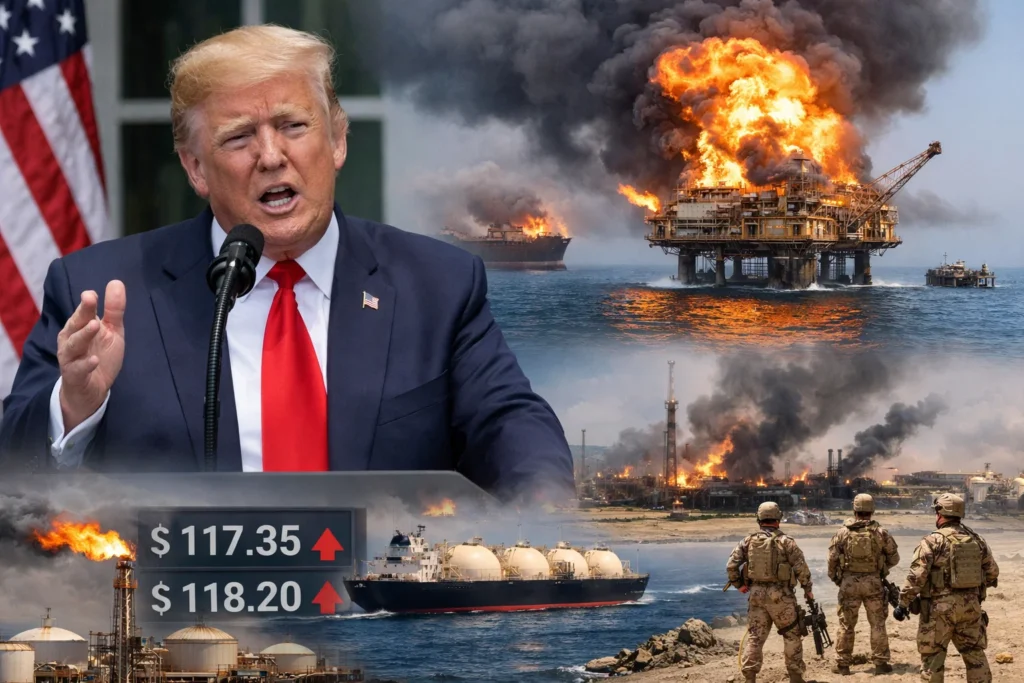
- President Donald Trump said Israel struck Iran’s South Pars gas field without U.S. or Qatari involvement, and he warned Iran against hitting Qatar again. Reuters reported that he also threatened U.S. retaliation if Iranian attacks expand further.
- South Pars is not just another energy site: Reuters says it is the world’s largest offshore gas field and a vital source of domestic fuel for Iran, while AP says it supplies a very large share of Iran’s natural gas needs.
- The threat comes as the conflict has already pushed Brent crude sharply higher, with Reuters, AP and MarketWatch reporting prices near or above the $110–$119 range and wider strain across gas markets.
- Gulf energy infrastructure has become a direct battlefield, with retaliatory attacks reported in Qatar, Saudi Arabia and the UAE, adding new risk to shipping, LNG exports and inflation.
Why this threat matters now
Trump’s warning over Iranian gas fields is not just a headline-grabber. It sits at the intersection of military escalation, energy security and market psychology. Reuters reported that Trump publicly tied the strike on Iran’s South Pars field to Israel, said the U.S. was not involved, and then warned Tehran not to keep targeting Qatar, which shares the field with Iran. That matters because South Pars is not a symbolic target; it is central to Iran’s domestic energy supply and one of the most sensitive pieces of infrastructure in the Gulf.
The larger danger is that energy assets are now being treated as leverage points in a widening conflict. AP reported that retaliation has already spread beyond Iran and Israel, with attacks and damage affecting facilities in Qatar, Saudi Arabia and the UAE. Once energy infrastructure enters the cycle of strike and counterstrike, the cost is no longer limited to the region. It can show up in fuel prices, shipping insurance, airline costs and inflation far from the battlefield.
What Trump actually said
The president’s comments were unusually blunt. Reuters reported that he said Israel acted independently in striking South Pars, that neither the U.S. nor Qatar had been involved, and that Iran should not attack Qatar in response. He also warned that if Tehran expanded its retaliation, the U.S. would respond forcefully. Other outlets described the warning in even starker terms, but the core message was the same: keep Gulf energy sites out of the crosshairs.

There is also an important distinction here. Trump’s threat is about escalation management, not a formal policy document. That means markets and foreign governments must react to words that can move faster than official diplomatic channels. In a crisis like this, a single statement can change risk pricing for oil, gas and shipping within minutes.
Why South Pars is the flashpoint
South Pars sits at the center of the issue because it is strategically huge. Reuters describes it as the world’s largest offshore gas field, and AP says it provides a large share of Iran’s gas, which powers homes, electricity and industry. It is also shared with Qatar, which makes any strike or counterstrike there especially dangerous for regional energy stability.
That shared geography raises the stakes. A strike on the Iranian side can spill over into the Qatari side, and vice versa. In a region where LNG exports, refinery throughput and shipping lanes are already under stress, even a limited hit can create outsized consequences. Reuters and AP both show that the conflict has already spread into broader Gulf energy infrastructure, including facilities tied to LNG export capacity.
What the market is telling us
The market reaction has been immediate and harsh. Reuters, AP and MarketWatch reported Brent moving sharply higher, with some trading near or above $110 and briefly pushing toward the upper $110s. MarketWatch also noted that European natural gas prices jumped as traders priced in a deeper supply shock.
That matters because energy shocks do not stay in one lane. Higher crude feeds into gasoline and diesel prices, while higher gas prices can affect electricity, petrochemicals, fertilizer and shipping. In plain English: a threat to an Iranian gas field can become a cost-of-living issue in the United States faster than many people expect.
Why allies are uneasy
The problem for Washington is not only the conflict itself, but the uncertainty around how far it will go. Reuters reported that allied governments have urged restraint and called for the reopening or protection of key shipping routes, while Japan, the UK and other partners have warned about wider energy security risks. When allies start talking about the Strait of Hormuz and Gulf infrastructure in the same breath, it is a sign the crisis has moved from military news to global economic threat.
Qatar is especially sensitive here. It is a major LNG supplier, and any damage to its export hubs can ripple through Europe and Asia. Reuters and AP both reported strikes or damage tied to Qatar’s energy facilities, which is why Trump’s warning about attacking Qatar is not a side remark; it is a warning aimed at preventing a broader energy cascade.
What readers should watch next
The most important indicators are simple to track. First, watch whether there are fresh strikes on Gulf energy sites or shipping routes. Second, watch Brent and European gas prices for signs that traders believe supply is being disrupted for more than a few days. Third, watch official statements from Qatar, Saudi Arabia, the UAE and the U.S. because those countries are now effectively part of the energy front line.
A second thing to watch is whether the U.S. keeps trying to separate itself from the initial strike while still threatening consequences if Iran retaliates further. Reuters’ reporting suggests that is exactly the balancing act Trump is trying to maintain: distance from the first blow, but deterrence for the next one.
What this means for households and businesses
If energy prices keep rising, consumers may feel it first at the gas pump and later in groceries, travel and utility bills. Businesses with heavy transport or power costs will feel it in margins. Even companies that do not touch oil directly can face cost pressure through shipping and insurance. That is why a warning about Iranian gas fields can matter far beyond the Middle East.
For investors and readers following the story closely, the key question is not whether the threat sounded dramatic. It did. The real question is whether it becomes a short-lived warning or the opening of a deeper energy war across the Gulf. Based on the latest reporting, the risk of escalation is still elevated.
Reader take
Trump threatens Iranian gas fields: This is a story where geopolitics and the fuel bill meet in the same place. Trump’s threat over Iranian gas fields signals that the conflict is now tied directly to global energy security, not just military retaliation. South Pars is the nerve center of that risk. If it stays under pressure, markets will keep reacting fast, and the rest of the world will keep paying attention.