


Key points
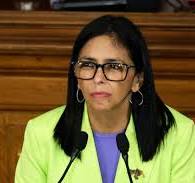
- Acting President Delcy Rodríguez told oil workers in Puerto La Cruz that Venezuela has “had enough” of Washington’s orders, a sharp public rebuke that signals rising friction with the U.S. amid the country’s fragile transition.
- The remarks were broadcast on state television and come after U.S. forces captured Nicolás Maduro earlier this month — an event that radically changed Caracas–Washington relations and prompted intense diplomatic give-and-take.
- Rodríguez has previously courted U.S. cooperation while also trying to hold together Maduro loyalists; this statement looks intended to reassure domestic supporters and push back against perceived outside control.
Venezuela’s acting president says — what happened and why it matters
In a forceful speech to oil-sector workers on state TV, Venezuela’s acting president Delcy Rodríguez said “Enough already of Washington’s orders over politicians in Venezuela”, calling for Venezuelans to resolve their own political disagreements without foreign interference. The line is notable because Rodríguez has been balancing cooperation with Washington (needed for oil revenues, reconstruction and stability) against the need to retain domestic legitimacy among chavistas and nationalists.
The facts — plainly
- Where and when: Rodríguez spoke at Puerto La Cruz in Anzoátegui state; the address was carried live on state-run Venezolana de Televisión.
- The quote: “Enough already of Washington’s orders over politicians in Venezuela,” was reported verbatim by multiple outlets.
- Context: The remarks arrive several weeks after U.S. forces seized former President Nicolás Maduro in an operation that stunned regional capitals and shifted the balance of power in Caracas. Since then Washington and Rodríguez’s interim government have engaged in a cautious, transactional relationship—cooperation on certain matters (notably oil proceeds and some security assurances) alongside repeated reminders of Venezuelan sovereignty.


Why Rodríguez said it — three likely motives
- Domestic politics and legitimacy. Rodríguez needs to reassure pro-Maduro constituencies and security services that she is not a U.S. puppet; firm rhetoric helps prevent internal splits or militia push-back.
- Pushback on policy pressure. Washington has pushed for rapid oil-sector decisions and other reforms; the rebuke signals impatience with what Caracas sees as micromanagement on sovereign policy decisions.
- Play for diplomatic leverage. Publicly asserting independence can strengthen Rodríguez’s hand in behind-the-scenes negotiations by showing she answers to Venezuelans first—useful when bargaining over sanctions relief, revenue access or security guarantees.
How Washington and others are likely to react
- U.S. posture: Officials have signalled they want a stable transition and access to Venezuelan oil revenues, but public tensions could harden conditionality or slow cooperation if rhetoric looks like a policy pivot away from agreed steps. (Background on prior engagement is in Reuters coverage.)
- Regional governments: Latin American capitals will watch closely; some that supported U.S. action may be concerned about renewed instability, while others will take Rodríguez’s comments as a reason to push for a negotiated, non-coercive path.
- Markets and oil buyers: Traders and refiners watching Venezuelan output and the legal status of oil proceeds may price in more volatility if political signaling implies weaker cooperation on exports or asset management. Bloomberg and market wires have flagged investor legal risks tied to the transition.
What this means for Venezuela’s transition
Rodríguez’s comment tightens an already delicate balancing act: to secure revenue, humanitarian aid and some continuity for institutions she needs Washington’s cooperation; to maintain domestic control she must appear sovereign and independent. That duality can produce tactical cooperation (e.g., limited oil sales, prisoner releases) while leaving a persistent risk of diplomatic rupture if either side publicly escalates.
Frequently asked questions (short)
Q: Is this a break with the U.S.?
Not necessarily. It’s a public assertion of sovereignty. Practical cooperation can continue even amid sharp rhetoric; much will depend on back-channel diplomacy.
Q: Will the U.S. withdraw support?
Unclear. Washington’s priorities (stability, legal accountability for Maduro, energy flows) mean it may tolerate some hedging, but sustained obstruction could prompt a reassessment of engagement terms.
Bottom line
Delcy Rodríguez’s declaration that Venezuela has “had enough” of U.S. orders is a high-visibility assertion of sovereignty at a sensitive moment. It’s designed to shore up domestic support and reset negotiating posture, but it also risks complicating the fragile, transactional cooperation that Washington seeks to keep Venezuelan institutions functioning and oil exports flowing. The coming days—U.S. statements, Venezuelan policy signals and market reactions—will show whether this is a rhetorical posture or a turning point in the transition.