


Published: June 29, 2026 | TrenBuzz.com
Key Points – Why Did Trump Returns to Iran Nuclear Talks
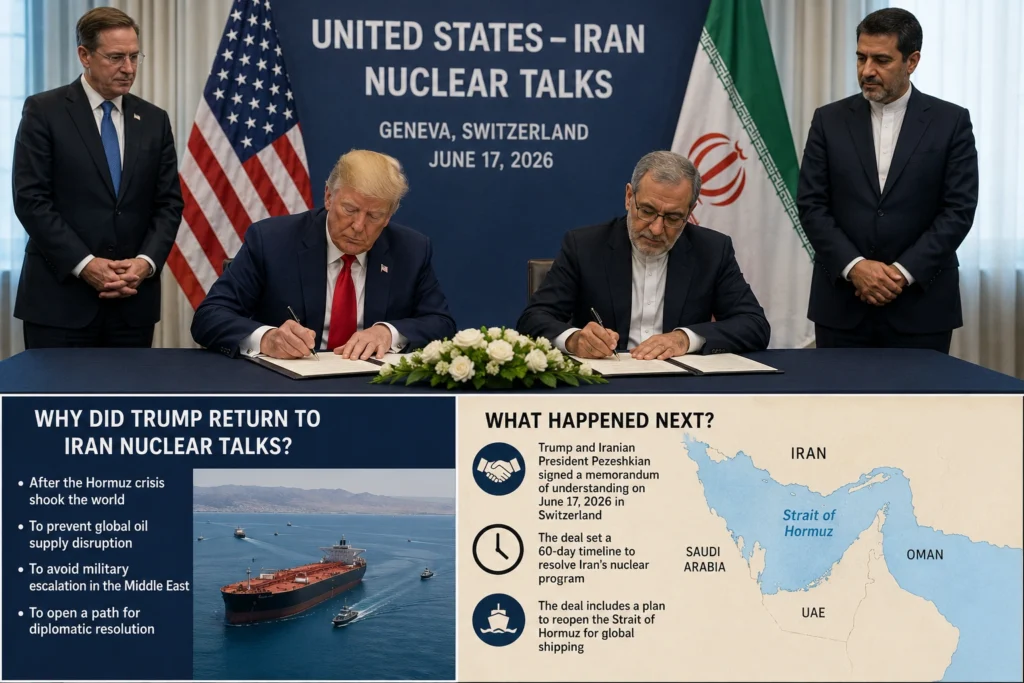
- Trump and Iranian President Pezeshkian signed a memorandum of understanding on June 17, 2026 in Switzerland
- The deal set a 60-day timeline to resolve Iran’s nuclear program and reopen the Strait of Hormuz
- Iran effectively closed the Strait of Hormuz in late February 2026, halting 20% of global oil supply
- JD Vance led the US delegation at the Lake Lucerne Summit on June 21 to advance the deal
- Iran’s nuclear weapons status remains unresolved and is the biggest sticking point of upcoming talks
- Oil prices dropped sharply after Trump announced the Hormuz agreement, offering global relief
The world held its breath for months. Now the United States and Iran are sitting back at the table, and the stakes could not be higher.
The 2026 Iran war began on February 28, 2026, when US and Israeli forces launched nearly 900 strikes in 12 hours targeting Iranian missiles, air defenses, military infrastructure, and leadership, killing Supreme Leader Ali Khamenei and dozens of other officials.
Iran struck back hard at the global economy. Iran effectively controlled the Strait of Hormuz shortly after the war began, virtually shutting down the vital passage for around 20% of the world’s oil, causing fuel shortages across parts of Asia and sending ripple effects across global markets.
How Trump’s Iran Nuclear Talks Reached the Hormuz Deal
A fragile ceasefire was agreed on April 7, 2026, but both sides kept pushing each other to the edge. Trump threatened to resume bombing Iran and take over the Strait of Hormuz, saying “If they don’t make a deal, we’ll collect tolls,” while Iran initially refused to continue talks after the threats were aired.
Mediators kept the process alive. On June 14, Pakistan’s Prime Minister Shehbaz Sharif announced that the US and Iran had finalized a memorandum of understanding, and Trump announced the immediate lifting of the US naval blockade of ships in the Strait of Hormuz.
The deal was signed on June 17 by Trump and Iranian President Masoud Pezeshkian and set a 60-day timeline for an agreement on Iran’s nuclear program, with Iran reaffirming it would not pursue a nuclear weapon.
JD Vance then flew to Switzerland to cement the next steps. Senior US and Iranian negotiators wrapped up initial talks in Switzerland on June 22, producing a 60-day roadmap toward a broader agreement and establishing mechanisms addressing the Strait of Hormuz and the conflict in Lebanon.
What the Iran Nuclear Tensions Mean for the World
The economic fallout from the Hormuz crisis was brutal. The conflict set off what Gulf states called the worst global energy crisis in decades, with higher energy prices feeding rising US inflation and raising expectations that the Federal Reserve may need to increase interest rates.
The 14-point agreement includes provisions for reopening the Strait of Hormuz, easing financial restrictions on Iran, and setting out expectations for future technical talks on Iran’s nuclear program, though the text does not mention any requirement for Iran to restrict its missile program.
Iran’s foreign minister warned that the next phase of the US-Iran deal will be more difficult than reaching the memorandum, saying: “Implementing international agreements is always far more difficult than drafting them.”
The nuclear question remains the final boss. Trump returned to Iran talks not out of goodwill but out of necessity. The Hormuz crisis proved that when oil stops flowing, the entire world feels it. The next 60 days will decide whether this becomes history or just another pause before the next explosion.