


By TrenBuzz — Special report
Key points
- U.S. Vice President JD Vance said European partners have already made concessions to the United States over Greenland in recent talks, and that Copenhagen’s public objections mask private compromises.
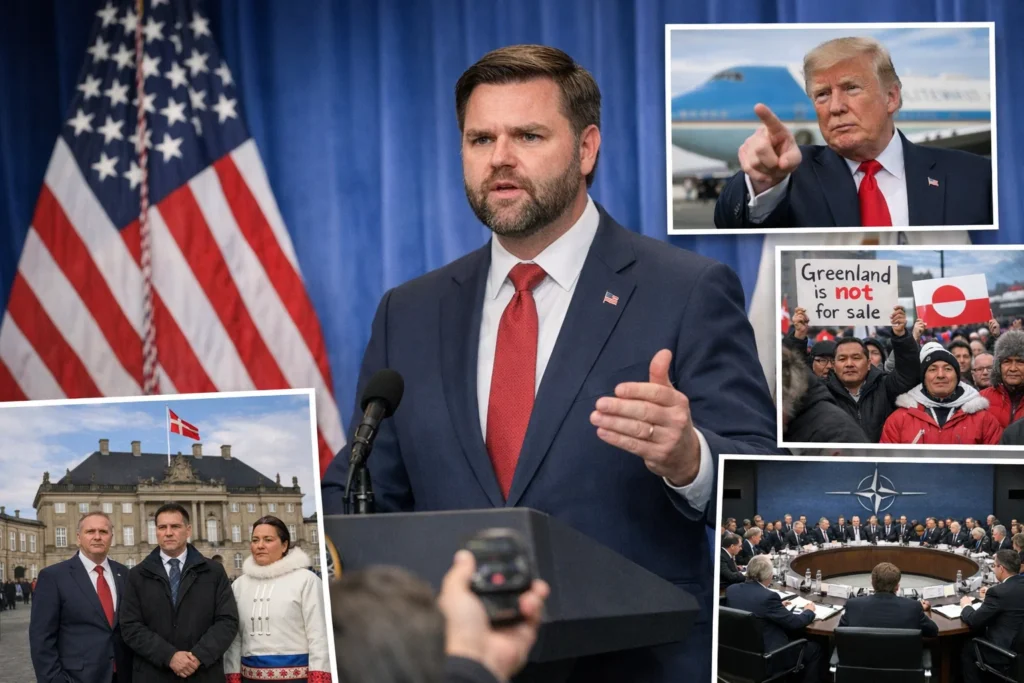
- His comments come after a diplomatic storm over President Trump’s renewed push for influence on Greenland — remarks that have strained relations with Denmark and alarmed many Greenlanders.
- Greenland’s political leaders and large majorities of island residents have rejected ceding control to the U.S.; Danish and Greenlandic officials stress sovereignty and local consent. That political reality complicates any U.S. claims about “concessions.”
- Analysts say Vance’s framing aims to shift diplomatic pressure back onto Europe (to do more on Arctic security), but it risks deepening mistrust with NATO partners and strengthening domestic resistance in Greenland.
Europeans have made concessions to US — the short version
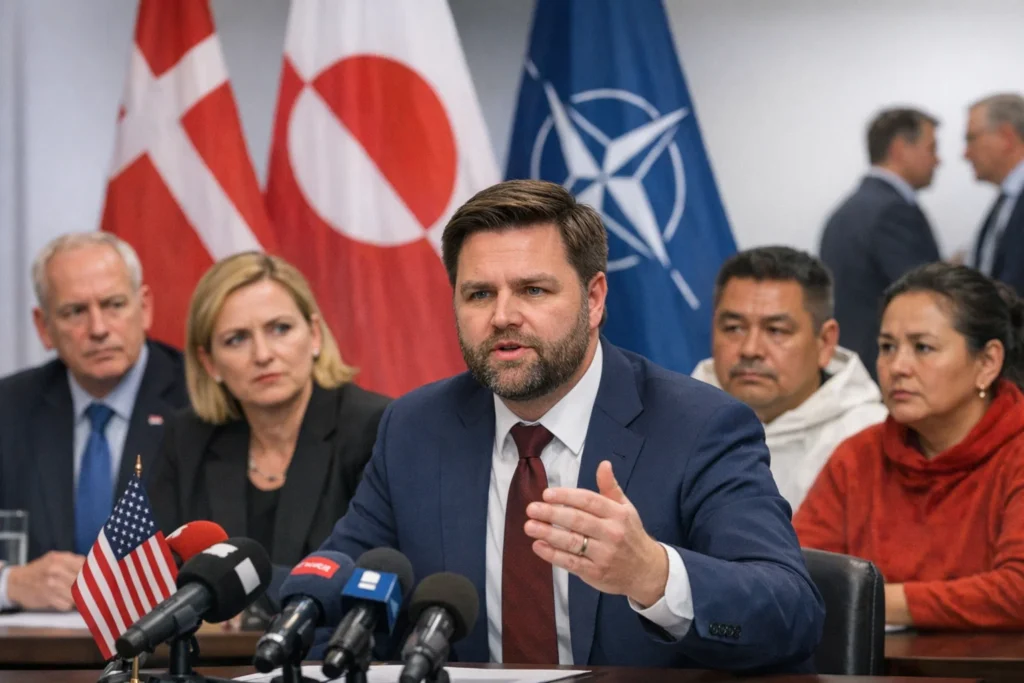
At a recent public briefing, Vice President JD Vance said European governments had made concessions to the United States over Greenland — comments that come amid an unusually heated diplomatic episode over U.S. interest in the Arctic island. The claim has provoked pushback from Denmark and Greenlandic leaders, who say any decision about Greenland’s future is theirs alone. The exchange highlights how security, resources and domestic politics are colliding in the Arctic.
What Vance actually said
Vance told reporters that Europe should be taken seriously about Greenland’s security commitments — and argued that, privately, European governments had given ground to the U.S. on elements of the framework under discussion. He framed the U.S. approach as driven by strategic concerns (missile defence and Arctic access) and said allies must step up or Washington would act.
How Europeans and Greenlanders have reacted
- Denmark: Copenhagen has repeatedly insisted Greenland is part of the Kingdom of Denmark and not for sale. Danish leaders publicly reject any suggestion of transferring sovereignty and stress consultations with Greenlandic authorities.
- Greenland: Political leaders in Nuuk and recent public polling show strong resistance to U.S. acquisition or outside control; many Greenlanders prioritize Danish welfare ties and local consultation over transactional deals. Mass public unease and local protests have been widely reported.
- EU/NATO capitals: Officials in Brussels and other European capitals have expressed alarm at the tone of U.S. demands; some view Vance’s comments as pressure intended to extract security concessions, while others privately caution against moves that could alienate partners.
Why the claim of “concessions” is politically sensitive
- Sovereignty vs. security trade-offs: Any perceived trade of sovereignty for security guarantees — even limited bases, mineral-access deals, or commercial arrangements — touches raw political nerves in Greenland and Denmark. Public and parliamentary legitimacy matters here more than closed-door bargaining.
- Domestic optics: In Greenland, the idea that foreign capitals quietly agree to tradeoffs risks provoking nationalist reaction and political realignment—exactly what some analysts say has happened since U.S. pressure intensified.
- Allied trust: If partners feel coerced or mischaracterized, NATO cohesion — especially on Arctic posture and missile-defence cooperation — could suffer, complicating collective security planning.

The strategic context: why Greenland matters
Greenland’s location gives it outsized importance for Arctic surveillance, early-warning systems and maritime routes. The U.S. has long maintained facilities (e.g., Pituffik/Thule) there; renewed interest reflects great-power competition in the Arctic and concern about Russian and Chinese activity. That geostrategic logic underpins why U.S. officials press allies about defense commitments.
What to watch next
- Official text of any framework or agreement: If European capitals have privately agreed measures, the details (legal status, basing rights, resource clauses) will matter. Watch for formal readouts.
- Statements from Nuuk and Copenhagen: Any sign that Greenlandic institutions or Danish parliamentarians endorse or reject specific measures will determine the political feasibility of U.S. objectives.
- NATO and EU diplomacy: Look for emergency consultations or clarifying communiqués about Arctic security responsibilities and burden-sharing.
Bottom line
JD Vance’s assertion that Europeans have made concessions over Greenland escalates an already fraught diplomatic episode. Even if allies are negotiating security or economic measures behind closed doors, the politics on the ground in Nuuk and the sensitivities in Copenhagen mean any deal that looks like a trade of sovereignty for security will be contested. The next phase will test whether talks can produce a transparent, locally legitimate arrangement — or whether pressure tactics will deepen mistrust across the Atlantic.