


Published by TrenBuzz.com | May 11, 2026
Key Points at a Glance – Trump Flies to Beijing
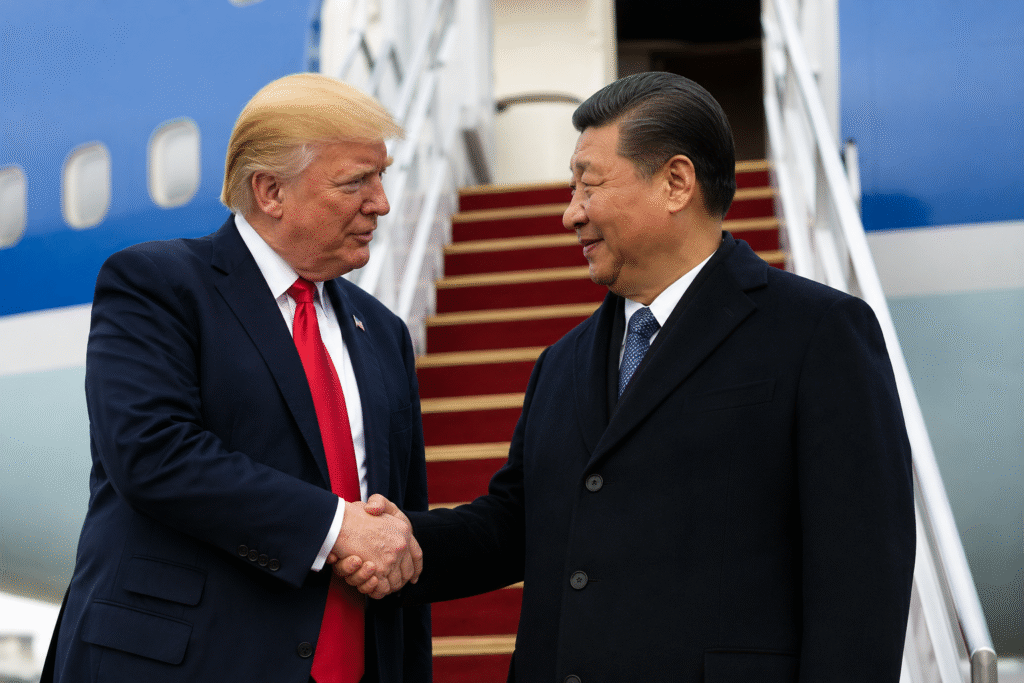
- Trump arrives in Beijing on May 14–15, 2026 — his first China visit since November 2017 and the first US presidential visit to China in nearly a decade.
- Current US tariffs on Chinese imports stand at 47% — down from a peak of 140%+ after the October 2025 Busan truce.
- China is defying US oil sanctions by continuing to buy Iranian crude, openly rejecting the “Operation Economic Fury” framework.
- The Iran war is expected to dominate the summit — pushing tariffs and rare earth supply deals to the back of the agenda.
- China hosted Iran’s FM Araghchi just days before the summit — sending a direct message about its leverage.
- Beijing’s chief demand: greater tariff predictability and an end to US tech export controls on Chinese firms.
- US chief demand: China pressure Iran to agree to peace terms — including closing the Strait of Hormuz dispute.
- China’s rare earth export controls remain Trump’s biggest vulnerability — Beijing used them twice in 2025 to make Trump blink.
- Chinese exports to the US fell 11% year-on-year in early 2026 — China has diversified away from US dependence faster than expected.
- Analysts at CFR warn: “Xi will have the upper hand” at this summit.
When Air Force One touches down in Beijing on May 14, Donald Trump will land in a country that believes — with growing confidence that it is winning.
When President Donald Trump arrives in Beijing on May 14, the summit will fall far short of his last trip in 2017. Then, Xi staged a “state visit-plus,” including a private dinner in the Forbidden City and a Great Hall ceremony unveiling $250 billion in business deals. Xi has long told cadres that “the East is rising and the West is declining” and that “time and momentum” are on China’s side.
Where US-China Tariffs Stand Right Now
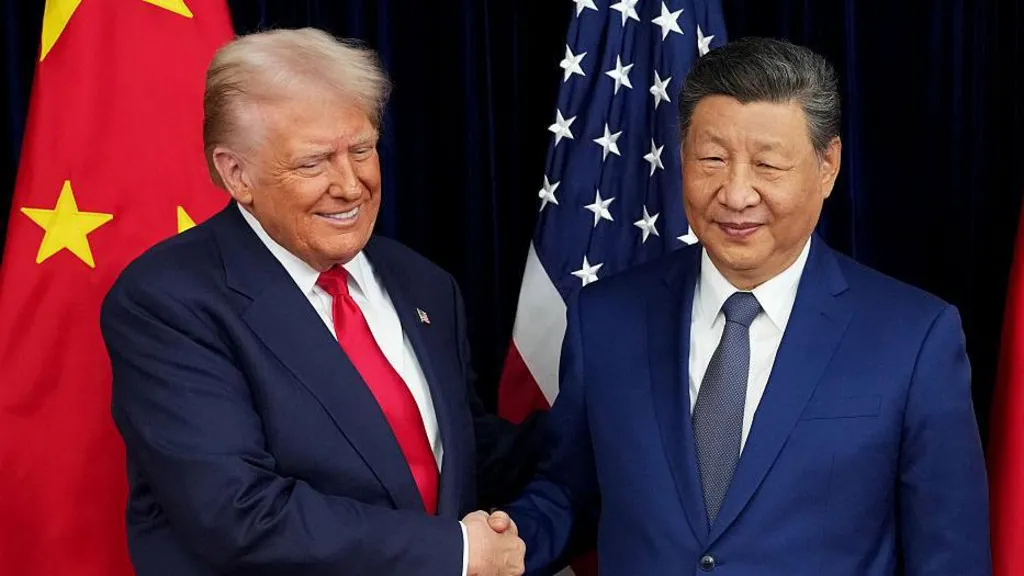
Most recently, in 2025 in Busan, South Korea, the two leaders gathered for a meeting that resulted in the lowering of US tariffs on Chinese imports from 57% to 47%. Trump later scored the successful meeting as a 12 out of 10. In October 2025, the two countries reached a trade agreement that reduced tariffs on Chinese goods and secured US access to critical minerals. Even so, Chinese exports to the US have continued to fall, dropping by 11% year-on-year in early 2026.
China’s top priority is greater stability and predictability on tariffs. Beijing hopes that successful leader-level engagement will sideline those within the Trump administration who would like a more competitive approach.
The Iran Wildcard — Why Beijing Holds the Cards
The Iran war is likely to take center stage at the summit, leaving less scope to resolve issues like tariffs and rare earth supplies. Treasury Secretary Scott Bessent has already said Iran will be a topic in the meetings. China hosted Iran’s foreign minister for the first time since the war began raising hopes for a peace deal, sending oil prices lower and fueling stock-market gains.

China has refused to comply with US oil sanctions on Iran continuing to purchase Iranian crude through teapot refineries and brushing off Washington’s “Operation Economic Fury” with its own counter-injunction. That defiance is simultaneously Beijing’s biggest bargaining chip and its biggest challenge to the summit’s credibility.
China’s Rare Earth Leverage — Trump Already Blinked Twice
Xi’s confidence further strengthened last year when he successfully beat back Trump’s unprecedented trade escalation which pushed tariffs past 140% by wielding China’s “break glass” tool of rare earth minerals and magnets. When Xi threatened to restrict those flows in April and October 2025, Trump folded rather than credibly threaten escalation.
That pattern of Beijing threatening, Washington retreating, and then both sides declaring a deal is the structural dynamic that will define these talks — and China knows it.
What Both Sides Actually Want
China feels confident enough to stand up to Trump on many key issues, including sanctions, technology controls, critical minerals, and Iran. US Trade Representative Jamieson Greer has discussed a “Board of Trade” to formalize bilateral trade flows, including defining priority goods for import and export.
Outside observers should have low expectations. While the relationship has stabilized since the two leaders met last November, it remains fragile — defined more by an absence of friction than any affirmative agenda or deep dialogue on the substantial differences that bedevil the relationship.
The Taiwan Anxiety — Reading Between the Lines
Taipei is worried that Trump will negotiate with Xi on arms sales to Taiwan, thereby undermining one of President Ronald Reagan’s Six Assurances. Taiwan worries that Trump’s confidence in his own relationship with Chairman Xi will lead to a lessening of US commitment to the island’s defense.
Trump heads to Beijing with three wars on his mind — Iran, Ukraine, and the one over trade that never fully ended. Xi arrives at the table having outlasted the tariff storm, secured his rare earth leverage, and positioned China as Iran’s most influential external backer.
The summit starts in four days. The world is watching to see who blinks first.
Disclaimer: This article is for general informational and news reporting purposes only. All tariff figures, summit details, and geopolitical analysis are sourced from Brookings Institution, Council on Foreign Relations, CSIS, World Economic Forum, CNBC, and Foreign Policy as of May 10–11, 2026. The Trump-Xi summit agenda may differ from expectations — readers are encouraged to follow credible news and official government sources for real-time updates during and after the Beijing meetings.