


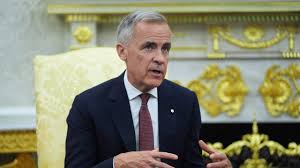
Mark Carney says the recent United States and Israel strikes on Iran expose “a failure of the international order,” and he is urging rapid de-escalation while stressing that his country supports containment of Tehran’s nuclear program — albeit “with regret.” United Nations and the International Atomic Energy Agency, he said, have worked for decades to prevent the very outcome unfolding now. Lowy Institute hosted the remarks during the prime minister’s Asia-Pacific trip. Canada’s official readout and international reporting make clear he also criticized the lack of allied consultation before the strikes.
Key points
- Carney called recent U.S. and Israeli strikes on Iran “another example of the failure of the international order,” and urged the use of U.N. mechanisms and renewed diplomacy.
- He said Canada supported actions to counter Iran’s nuclear threat “with regret,” but said powerful states acted without consulting allies.
- The remarks signal a presidential-level rebuke of unilateral military steps and underline Canada’s push for multilateral crisis management.
Lead — what Carney said and why it matters
Speaking at a policy event in Australia on the second leg of a diplomatic tour, the prime minister framed the strikes as symptomatic of a broader breakdown in rules-based international diplomacy: decades of resolutions, inspections and sanctions had failed to head off a kinetic escalation, he said — and now major powers acted outside of full U.N. or allied consultation, increasing the risk of wider regional fallout. The comments combine a critique of tactics with a call to restore international mechanisms for dispute resolution.
The political balance in Carney’s message
Carney’s statement walks a careful line. On one hand he reaffirmed concern about Tehran’s nuclear program and the need to contain destabilizing behavior. On the other he publicly flagged a diplomatic and legal problem: major military moves without U.N. engagement or allied consultation weaken the multilateral system and complicate global coordination. That dual posture is significant: it signals Canada’s endorsement of deterrence against nuclear proliferation while insisting that responses stay within agreed international frameworks.
How allies and audiences will read it
- Washington and Tel Aviv: The message will be read as a gentle rebuke — not a rupture — because Canada supports non-proliferation goals even while criticizing process. Expect private diplomatic notes and possible requests for clearer consultation channels.
- Multilateral institutions and partners: The U.N. and inspectors are likely to welcome calls to re-engage international mechanisms; states uncomfortable with unilateral action can use the remarks to push for immediate procedural steps.
- Domestic audiences in Canada: Carney’s framing gives political cover for a government that wants to appear firm on non-proliferation while distancing itself from unconsulted use of force — a posture that plays to centrist and internationalist voters.
Practical implications — what could happen next
- Diplomatic push for U.N. involvement: Expect Canada to press for emergency Security Council briefings or special sessions to codify next steps and reduce scope for ad-hoc strikes.
- Calls for evidence and legal review: Allies and international bodies may demand clearer legal justification for the strikes if they appear inconsistent with international law. Carney explicitly left legal judgments to appropriate institutions while urging transparency.
- Coalition-building by middle powers: Carney emphasized cooperation among middle powers during his tour; we may see Canada join or help convene like-minded meetings with partners to draft de-escalation proposals.
Quick explainer — “failure of the international order”
When leaders use this phrase they mean the network of treaties, inspections, sanctions, and institutions (the U.N., specialized agencies, multilateral diplomacy) has been ineffective at preventing or resolving a crisis — either because enforcement lacked teeth, diplomacy was sidelined, or major powers acted unilaterally. Carney’s comment is a shorthand call to restore those systems rather than letting kinetic responses become the default.
What to watch (immediate signals)
- Official notes and briefings: Watch Canada’s foreign ministry and the prime minister’s office for follow-up notes to allies or proposals for U.N. engagement.
- Allied reactions: U.S. and Israeli responses in the coming 48–72 hours will indicate whether Carney’s comments spur consultation or are treated as rhetorical.
- Security Council activity: Any request for meetings, fact-finding missions or formal condemnations will be visible on the U.N. docket and could shift diplomatic momentum.
Bottom line
Prime Minister Carney’s public remarks blend support for non-proliferation with a blunt critique of process: he framed the U.S. and Israeli strikes as symptomatic of a system that failed to resolve the crisis through established multilateral channels. That stance positions Canada as a proponent of renewed international engagement and gives Carney leverage to rally middle powers around procedural fixes — while leaving room for cooperation on security goals.