


Key points
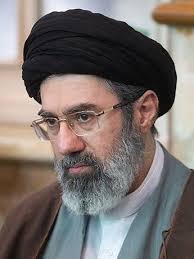
- Mojtaba Khamenei, Iran’s newly announced supreme leader, issued a first statement promising revenge for recent strikes and vowing continued pressure on enemies — including keeping the Strait of Hormuz closed as leverage.
- The message was read on state media rather than delivered in public person, prompting questions about his health and the role of the Islamic Revolutionary Guard Corps in shaping policy.
- Markets reacted immediately: tanker attacks and threats to Hormuz pushed oil prices sharply higher and heightened the risk of broader regional escalation involving the United States and Israel.
Iran new leader vows revenge— the short story
Iran’s new supreme leader, Mojtaba Khamenei, issued a defiant first statement saying Tehran will avenge recent attacks and use tools such as holding the strategic Strait of Hormuz as leverage. The declaration — read on state TV rather than delivered in person — ratcheted up regional tensions, sent oil prices higher and renewed debate over whether Iran’s military axis will widen the conflict.
What he said (what’s public)
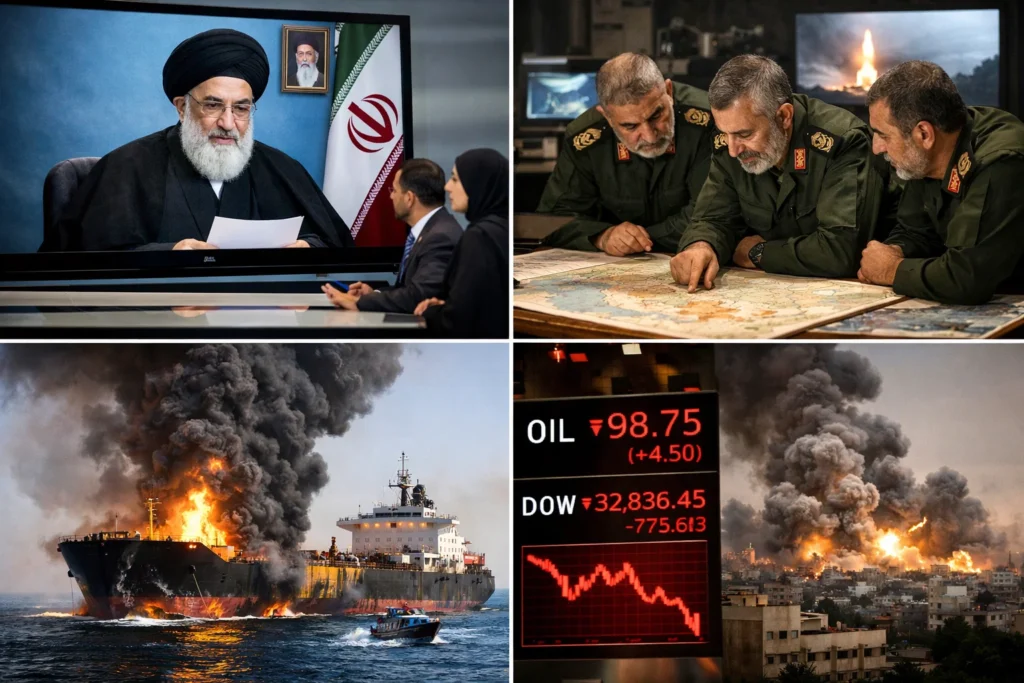
State media broadcast a message attributed to Mojtaba Khamenei saying Iran will continue to retaliate against those responsible for strikes that killed senior officials and civilians, and that the country will “pressure the enemy” by, among other options, keeping the Hormuz route effectively closed. The readout emphasised revenge and compensation as policy goals. Officials close to Iran’s leadership have described the statement as reflecting a hardline posture aligned with the IRGC.
Why the delivery matters — who’s really calling the shots?
Observers note two important signals from the way the message was issued:
- State-media reading vs. public appearance. The statement was not delivered as a televised speech by the leader himself; that fuels questions about his health and mobility and raises the prospect of deputies or military figures drafting public messaging.
- IRGC influence. Reporting indicates the Islamic Revolutionary Guard Corps has played a central role in elevating the new leader and will likely be a driving force behind operational choices. That makes the IRGC’s doctrine—favoring asymmetric attacks and proxy mobilization—central to what comes next.

Immediate strategic implications
- Shipping & energy: Threats to keep the Strait of Hormuz closed and attacks on tankers or terminals push up insurance and freight costs and drove crude prices sharply higher in early trading. Markets reacted to the risk of prolonged supply disruption.
- Escalation vectors: The statement explicitly warned the United States and Israel, increasing the chance of tit-for-tat strikes, expanded maritime harassment, and cyber or proxy actions across the region.
- Proxy activation: Iran’s allies (Hezbollah, the Houthis, and Iraqi militias) were praised in the message; while some proxies will calibrate responses to local costs, others may be encouraged to escalate against regional targets.
How governments and markets reacted
- U.S. and allied responses: Western capitals warned of consequences for further attacks and discussed options to secure shipping lanes, including naval escorts and coordinated insurance backstops.
- Energy markets: Front-month crude jumped on news of tanker attacks and Hormuz disruptions; traders priced a higher risk premium into Brent/WTI. That has immediate implications for consumer fuel costs and inflation expectations.
- Diplomacy: Calls for de-escalation from the U.N. and regional actors were reported alongside sharper rhetoric from adversaries — a mixed track of emergency diplomacy and military preparation.
What to watch next — concrete signals that matter
- Maritime traffic: AIS vessel counts through the Hormuz corridor and insured transits (a rapid decline signals practical closure).
- IRGC activity: Claims of responsibility for attacks or announcements of new maritime harassment tactics.
- Allied military moves: U.S. carrier and escort deployments, naval convoy decisions, or announcements of international security coalitions for shipping lanes.
- Energy metrics: Daily Brent and WTI moves, bunker and freight-rate spikes, and IEA/IEA-like advisories on releases from strategic reserves.
Bottom line
The first public message attributed to Mojtaba Khamenei signals a hardline, retaliatory stance and gives priority to asymmetric tools — from proxy mobilization to maritime disruption — that can magnify economic and security pain far beyond Iran’s borders. The delivery method (state-media reading) and IRGC prominence suggest policy will be driven as much by military actors as by personal leadership. For markets, navies and diplomats, the next 72 hours of ship-transit data, military movements and coalition diplomacy will determine whether threats remain mostly rhetorical or turn into a prolonged regional crisis.