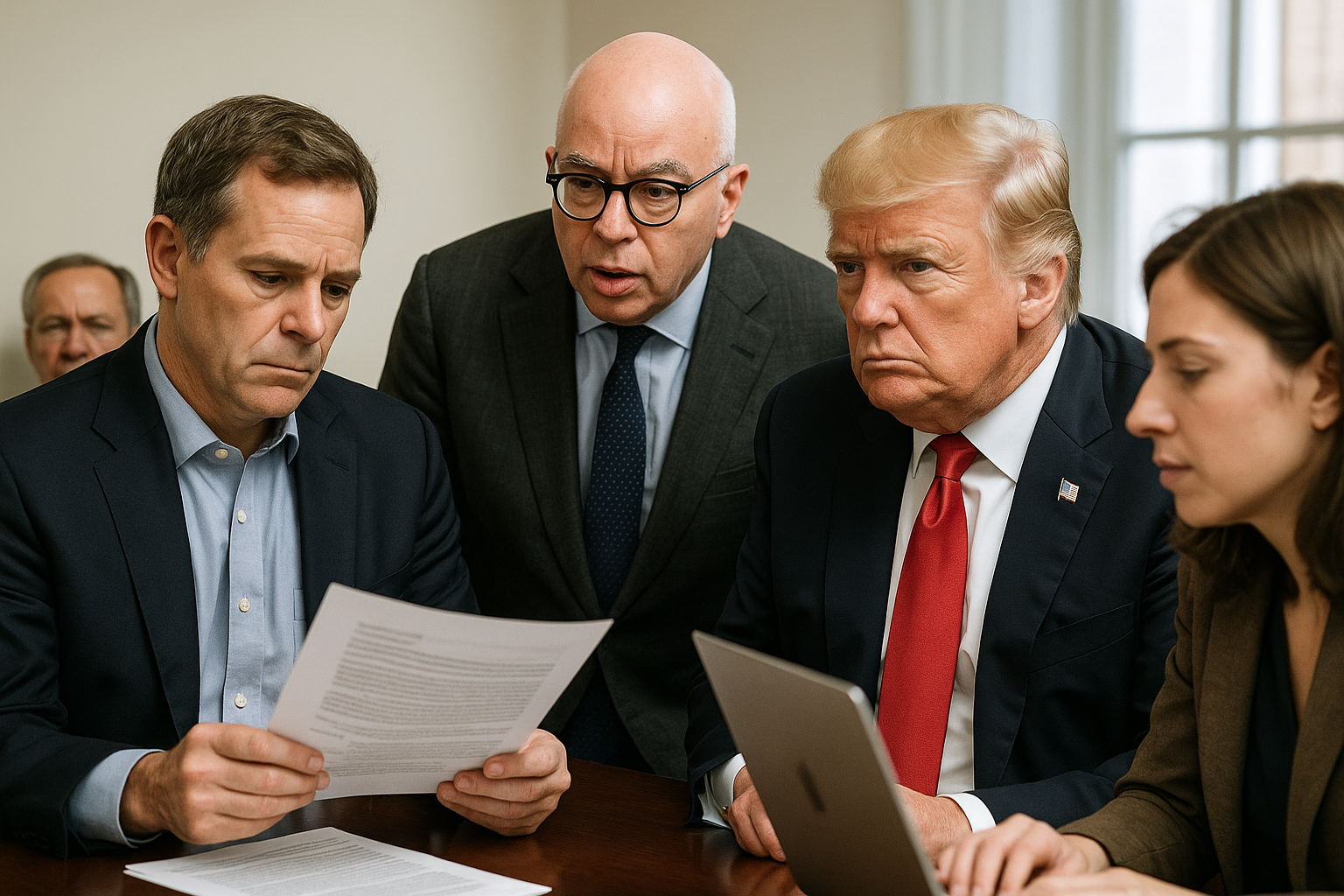
Epstein Emails About Trump Bombshell — this TrenBuzz deep-dive explains what House Democrats just released from the Jeffrey Epstein estate, what the emails actually say (and don’t say), who appears in the cache (Michael Wolff, Larry Summers, reporters including Landon Thomas Jr.), how the White House and allies are responding, and how to read the documents responsibly — using the Sherlock-Holmes idea of “the dog that didn’t bark” as a reporting tool.
Epstein Emails About Trump Bombshell (one-paragraph summary)
House Democrats publicly released a tranche of emails from Jeffrey Epstein’s estate that include private notes in which Epstein refers to Donald Trump, names people who attended Epstein’s homes, and exchanges with writers and public figures such as Michael Wolff and Larry Summers. The emails contain blunt, sometimes salacious claims — including a line saying Trump “spent hours at my house with [a victim],” and another where Epstein calls Trump “the dog that hasn’t barked.” The White House says the release is politically motivated; Trump denies wrongdoing.
What exactly was released — and who released it?
Congressional Democrats on the House Oversight Committee published thousands of pages supplied by the Epstein estate; the public tranche includes emails and short notes spanning multiple years. The committee’s release was a targeted publication of documents that congressional staffers say shed light on Epstein’s network.
The most newsworthy lines (what got headlines)
Among the most quoted items are a 2011 message from Epstein to Ghislaine Maxwell saying a “victim” had “spent hours at my house with him” and that “the dog that hasn’t barked is Trump,” and later emails to author Michael Wolff in which Epstein discusses Trump. Those phrases — short and provocative — are now leading coverage.
Important caution: emails ≠ proven facts
An email is a primary source for what its author wrote, not proof of the truth of every allegation embedded inside it. Epstein was a known braggart and manipulator; he also lied, cultivated stories and sometimes tried to use journalists and intermediaries for leverage. Treat the statements as contemporaneous claims that now require verification, not as court-proven findings. Responsible reporting keeps that distinction front and center.

Where Michael Wolff and other named figures fit in
The released cache includes exchanges between Epstein and several writers and public figures. Michael Wolff — the author of multiple books about Trump — appears in those exchanges, sometimes discussing how a media narrative might be handled. Larry Summers (former Harvard president and Treasury official) also appears in the emails, typically in the role of a correspondent, not a defendant. Journalists such as Landon Thomas Jr. are named in threads about reporting and sources. Those entries show how Epstein cultivated and communicated with influential people.
What the emails say about Donald Trump — exact phrasing matters
The newly public lines are inflammatory but limited. In one note Epstein wrote that a victim “spent hours at my house with him,” and he used the “dog that hasn’t barked” phrase to single Trump out. In other exchanges Epstein criticized Trump’s behavior and referenced Mar-a-Lago logistics. The material raises questions — especially because some of the passages reference named victims who have publicly spoken about Epstein — but the documents do not include a smoking-gun record showing Trump committing a crime.
How the White House and allies are reacting
The White House has called the release a politically motivated smear and has defended the President. Press Secretary Karoline Leavitt said the emails “prove absolutely nothing” beyond Trump’s innocence, and the President himself has dismissed the disclosures as a partisan distraction. At the same time, some members of Congress from both parties are pressing for broader transparency and for the release of all Epstein-related files.
Why “the dog that didn’t bark” is a useful lens for readers
Sherlock Holmes’ famous clue — that a guard dog’s silence can be more revealing than barking — is a compact way to think about absence as evidence. In this reporting context, ask: who should have spoken up earlier? Which witnesses, institutions, or records are silent now, and why? That absence can be as probative as an explicit line in an email — but it requires disciplined, corroborating work to turn silence into firm inference.
Timeline & context — how these emails fit existing records
The new tranche joins previously released materials: court filings, flight logs, Epstein’s little black book, and testimony produced during Ghislaine Maxwell’s trial. Those earlier sources established Epstein’s network; these emails add private commentary and occasional names, but they do not, by themselves, resolve outstanding legal questions about who knew what and when. Think of the cache as filling gaps and raising fresh questions rather than answering them all.
On victims and Virginia Giuffre: a sensitive but essential fact
One of the people commonly referenced in public discussion of the emails is Virginia Giuffre, a prominent accuser in the Epstein/Maxwell cases who died by suicide in April 2025. Her death and her published accounts are part of the larger record; some of the newly released notes appear to reference victims who have already spoken publicly. Survivors’ rights to privacy and safety must guide coverage of names, redactions and allegations.
What the emails do not show (and why that matters)
Crucially, the email snippets in the public release do not show Trump communicating directly with Epstein about the allegations, nor do they show Trump participating in the trafficking crimes that Epstein was charged with. They are contemporaneous statements by Epstein and by others — valuable, but not dispositive. That distinction is central to fair coverage and to avoiding defamation risks.
Legal and political fallout to watch next
• Congressional action: some House Democrats and bipartisan allies are pushing to make the full Justice Department/US Attorney files public. Expect hearings and new subpoenas.
• White House posture: expect continued denials and efforts to portray the release as a partisan stunt. Watch press briefings and responses from the President’s lawyers.
• Media verification: reporters will be trying to corroborate dates, travel logs, and third-party confirmations for key lines in the emails. That is the hardest — and most important — part of this phase.
Who is Mark Epstein and what is his reaction?
Mark Epstein — Jeffrey Epstein’s brother and the estate representative in many matters — has responded to media inquiries about the new release without confirming or denying every excerpt. He’s been quoted as saying he wouldn’t be surprised if more material existed, but he has not provided a full defense or explanation for the content of the released emails. Expect Mark Epstein’s public posture to remain cautious as congressional scrutiny intensifies.
Why Michael Wolff’s name matters here
Michael Wolff, a journalist and author known for books about the Trump era, appears in the cache. The exchanges with Epstein show them discussing messaging and how press narratives might be shaped. That matters because it reveals Epstein’s media strategies and his attempts to influence coverage — another strand of the historical record around him. But Wolff’s presence in emails does not equate to knowledge or involvement in crimes; it shows correspondence.
Larry Summers and other powerful correspondents
The release reminded readers how Epstein inserted himself into elite networks. Former Harvard president and Treasury official Larry Summers exchanged messages with Epstein; those emails read as part of Epstein’s social and policy networking rather than criminal admissions. Still, the presence of high-profile correspondents raises uncomfortable questions about proximity and influence that institutions are now being asked to explain.
What the “Epstein files” phrase means — and why advocates want fuller disclosure
When people talk about “the Epstein files” they typically mean the full investigative, prosecutorial and administrative records related to Epstein — including flight logs, logs of visitors, grand jury material, and correspondence. Advocates and some lawmakers argue those files could show who benefited from Epstein’s network or who failed to act; opponents warn about privacy and legal limits. The new email tranche is one piece in that larger, contested set.
How this story will likely evolve over the next weeks
Expect waves of reporting: deep dives by investigative teams, congressional hearings, pushback from the White House, and — perhaps — new documents released under pressure. Much of the public debate will hinge on whether corroborating records surface that confirm or refute Epstein’s allegations about particular people. Until then, treat this as an active, unsettled story.
Final note (ethics & verification)
This explainer uses the House Oversight Committee release and contemporaneous reporting from major outlets to summarize what’s public as of Nov 13, 2025. I intentionally frame emails as claims produced by Epstein and his correspondents, not as adjudicated facts.
Key primary and authoritative sources used for this explainer include the House Oversight Committee release and reporting by Reuters, The Guardian, ABC/CBS/NYT reporting on the cache and the specific email lines, plus coverage of Virginia Giuffre’s earlier death and public record.