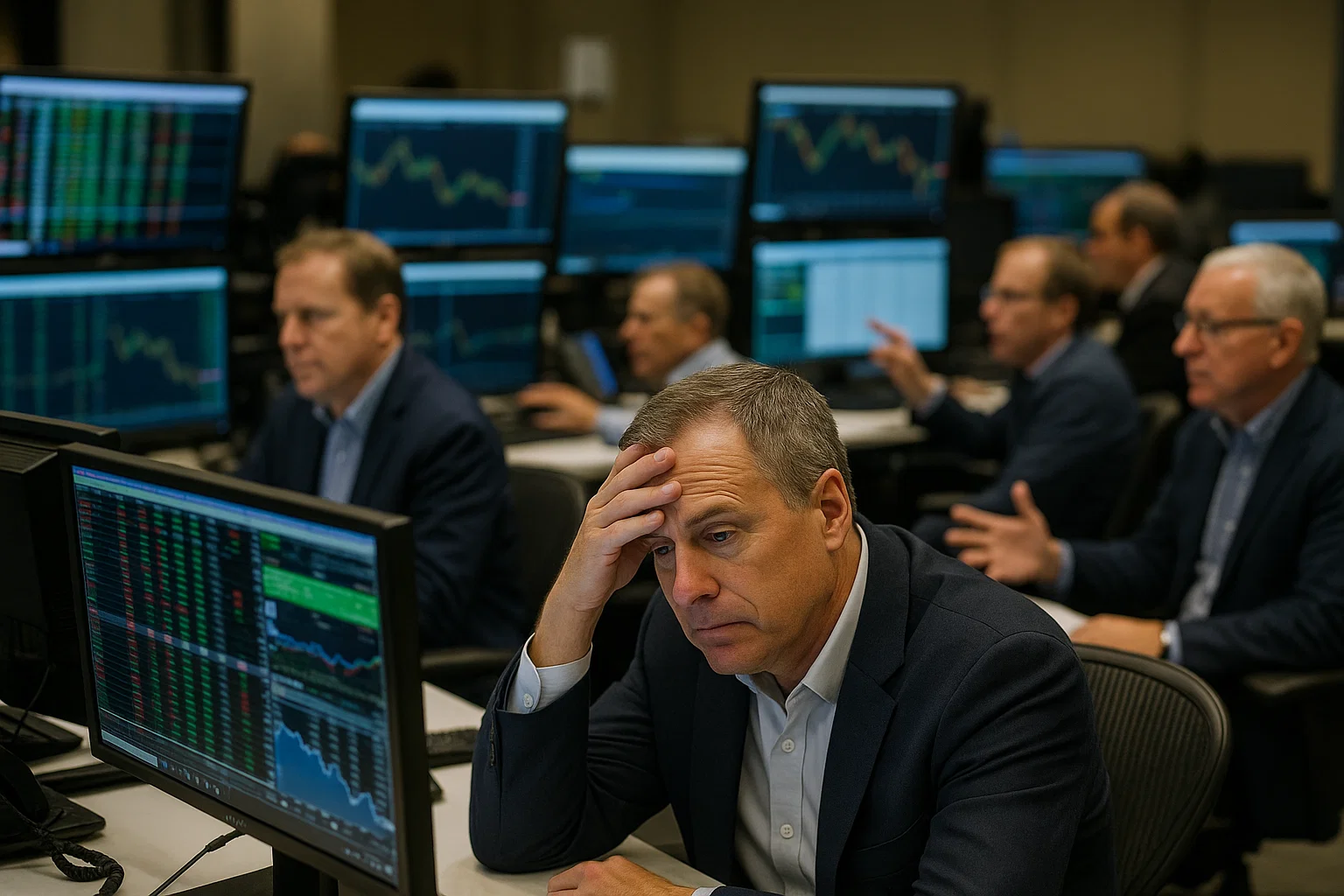
A major technical failure at a data center forced the Chicago Mercantile Exchange to halt trading across core futures markets on November 28, 2025.
The disruption froze FX, commodities, Treasuries and stock-index futures — and briefly left the Dow Jones, Nasdaq and other markets operating with incomplete price signals.
This article explains what happened, why the CME outage halts trading mattered for the Dow Jones today and Nasdaq today, and what investors and retail traders should watch next.
We break the coverage into background, timeline, market impacts, practical steps and policy takeaways.
How CME Outage Impacted Trading — short and clear
CME Group’s trading systems went offline after a cooling-system failure at a CyrusOne data center near Chicago.
The outage halted the Globex platform, BrokerTec and EBS, pausing price feeds and futures execution for many benchmarks.
Hours later CME began restoring services and trading resumed after engineers stabilised cooling and systems came back online.
The interruption stretched into the U.S. morning session and lasted longer than typical exchange glitches.
Why the halt hit more than “just futures”
Futures markets provide continuous, near-real-time price discovery for equities, bonds and commodities.
When futures stop, the Dow Jones Industrial Average and Nasdaq cash markets may open with less clarity on where prices should trade, increasing short-term uncertainty.
Index futures (S&P 500, Nasdaq 100 and Dow contracts) act as the market’s real-time barometer outside regular hours.
A freeze in those benchmarks can create wider bid-ask spreads, slower fills, and operational headaches for brokers and market-makers.

Timeline — step by step
- Early-morning hours: CME posted that markets were halted due to a cooling issue at a CyrusOne facility.
- Brokers and trading platforms reported suspended products or fallback pricing as liquidity evaporated.
- By late morning/early afternoon, systems were restored and trading on Globex and other platforms resumed.
Immediate market effects — Dow today and Nasdaq today
U.S. cash indices ultimately opened and traded, but the lack of reliable futures pricing added volatility to opening prices.
Short-term moves in the Dow Jones and Nasdaq were amplified by thin holiday liquidity and compressed time for price discovery.
Traders who rely on futures for hedging or execution were forced to use internal models or pause activity, pushing some to defer trades.
That operational squeeze can make “stock market today” headlines look choppier than underlying fundamentals justify.
Who felt the pain (and why)
• Retail traders faced wider spreads and possible failed fills during the halt.
• Institutional desks had to manage open positions without normal hedging tools.
• Commodity and FX users — from airlines to importers — saw price feeds lag for inputs such as oil and currencies.
The event underscores that a concentrated infrastructure failure can ripple through many “on-exchange” products at once.
Practical guidance for investors — what to do now
- Check your broker’s notices and trade confirmations for any execution or allocation notes.
- If you trade futures or use options, confirm margin calls and settlement details with your clearing broker.
- Avoid overreacting to headline volatility; market open dislocations often correct as liquidity returns.
Keep your risk sizing conservative on days when core market infrastructure is stressed.
Exchanges and clearinghouses are reliable most of the time, but outages can produce outsized short-term moves.
Longer-term implications — beyond today’s headlines
This outage reopened debates about resilience, redundancy and concentration in financial-market infrastructure.
When the largest exchange operator by derivatives volume goes dark, systemic questions about backup sites and third-party dependencies surface.
Regulators and market operators may face renewed pressure to review contingency plans, data-center diversity, and vendor SLAs.
Expect discussions about whether more distributed architectures or alternate trading rails are needed to reduce single-point risks.
How exchanges try to prevent these scenarios
Exchanges maintain backup data centers, redundant networks, and failover procedures to limit downtime.
But physical constraints—like a chiller failure—can still create cascading issues if a key vendor’s facility is affected.
Quick FAQ — short answers
Q: Is my retirement account at risk from a CME outage?
A: Your long-term holdings are unlikely to be impacted materially, but short-term trade timing and fills can be affected.
Q: Will Dow futures halt again soon?
A: Hard to predict; exchanges will review and may introduce additional resiliency measures to lower the chance of repeat events.
Do you trust market infrastructure (exchanges and data centers) to handle major outages?
Final take — calm and actionable
The CME outage halts trading headline is a reminder that market plumbing matters as much as markets themselves.
For most investors, the sensible path is to check confirmations, avoid knee-jerk trading, and watch how exchanges and regulators respond in the coming days.
Disclaimer: This article summarises reporting and market developments available as of November 28, 2025.
It is for informational purposes only and does not constitute investment advice; consult your broker or financial advisor for decisions that affect your portfolio.