Table of contents
- Quick summary
- The incident in brief — what Polish forces say
- Immediate military response and who scrambled jets
- Why this matters now — regional context and recent Russian activity
- NATO’s posture and allied responses
- Possible motives for the Russian sortie (open-source analysis)
- What Warsaw and Moscow are likely to do next
- Risks of escalation and the limits of current safeguards
- What to watch in the coming 72 hours
- Reader poll (interactive)
- Verification notes
- Disclaimer
1. Quick summary (Poland Intercepts Russian Aircraft)
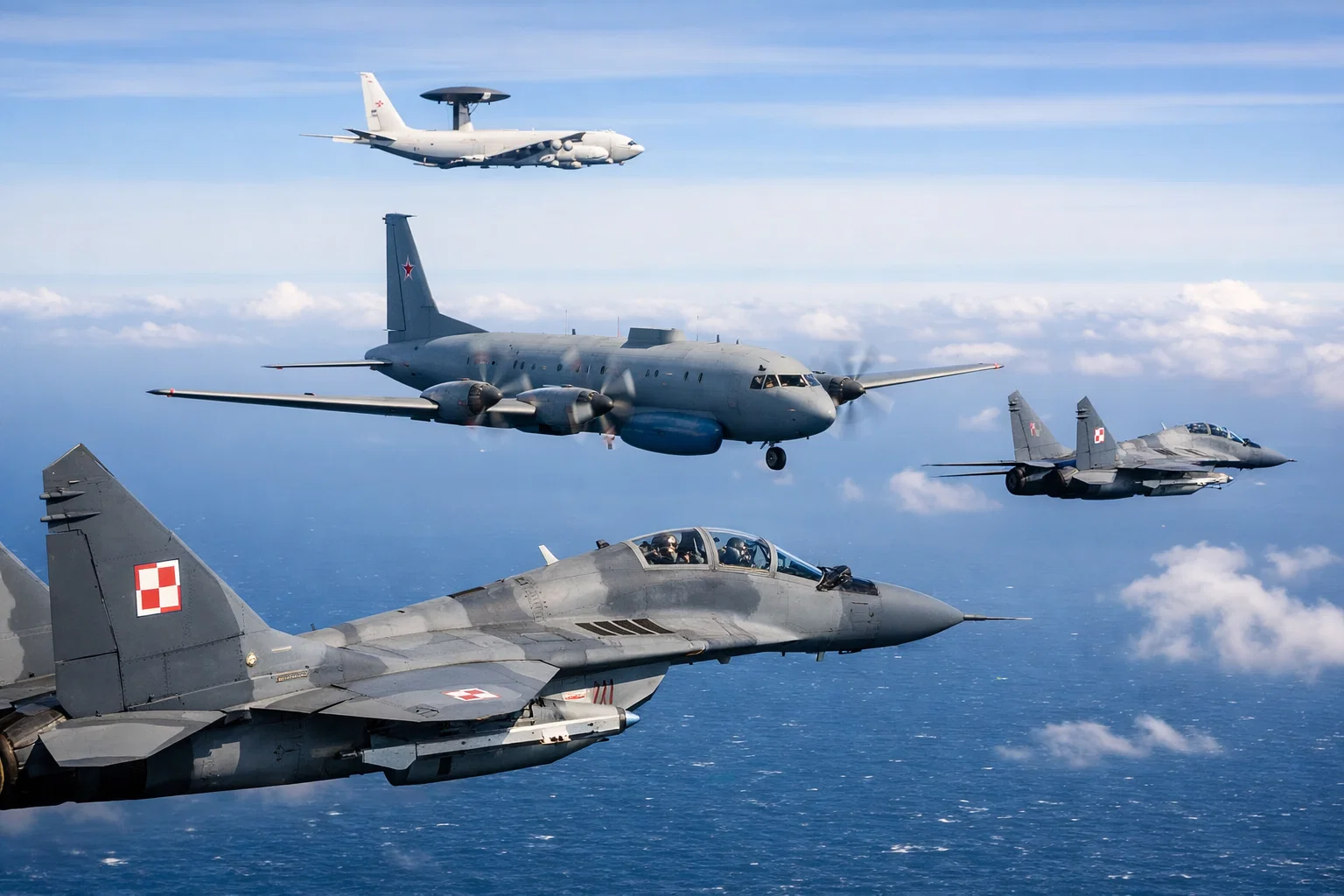
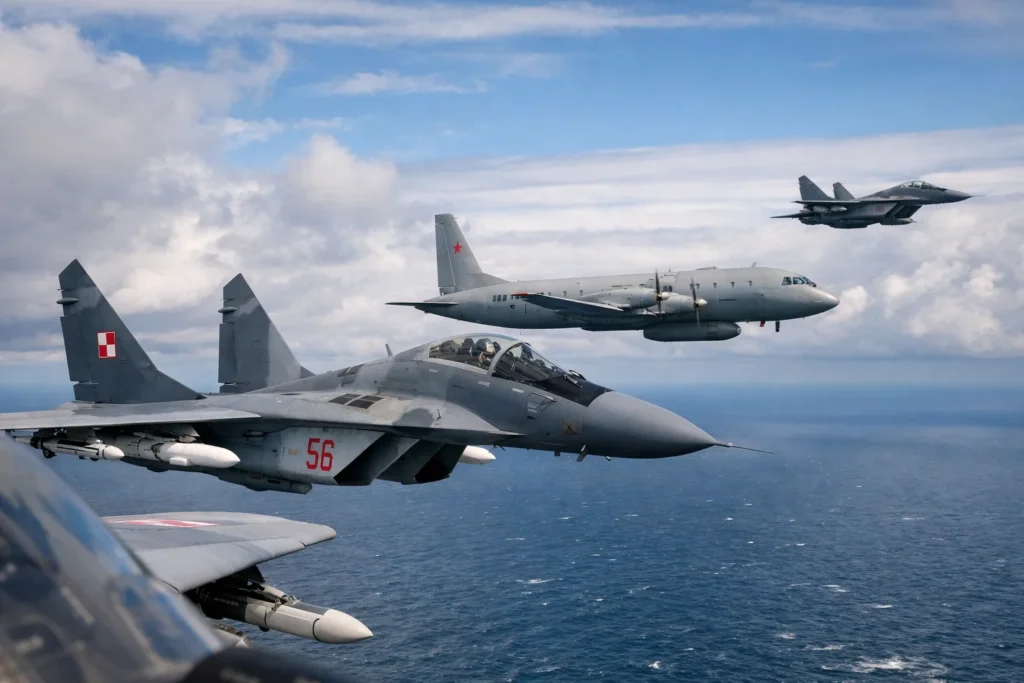
Poland’s air force intercepted and escorted a Russian reconnaissance aircraft operating near the Baltic Sea on Dec. 25, 2025, Warsaw’s Operational Command said.
Polish commanders described the flight as “close to its airspace,” prompting a defensive scramble that NATO and regional press quickly reported.
2. The incident in brief — what Polish forces say
Polish fighter jets identified and escorted the Russian aircraft while it remained over international waters, and officials reported no violation of sovereign airspace.
Operational Command noted the scramble occurred during what it called a busy night for Poland’s air-defense services.
3. Immediate military response and who scrambled jets
Poland’s response included scrambling on-duty MiG-29s to intercept and shadow the reconnaissance platform until it left the area of responsibility.
NATO partners have frequently contributed quick-reaction fighters to Baltic air policing missions; allied aircraft commonly coordinate identification and escort duties in the region.
4. Why this matters now — regional context and recent Russian activity
The interception follows a string of aggressive Russian air and drone operations near NATO borders, and comes after recent Russian strikes inside Ukraine that raised Polish alert levels.
Poland’s eastern flank has experienced repeated incidents—drones and aircraft near or briefly inside NATO airspace—prompting upgraded radar watches and periodic intercepts.
5. NATO’s posture and allied responses
NATO has sustained enhanced air policing and surveillance over the Baltic and Black Sea regions as a consequence of the war in Ukraine; allies routinely share AWACS and fighter coverage.
Allied command channels and diplomatic notes typically follow any intercept, both to reduce misunderstanding and to register political concern.
6. Possible motives for the Russian sortie (open-source analysis)
Mission objectives for maritime reconnaissance flights can include signals intelligence collection, maritime domain awareness, and exercises to probe response times.
Analysts point out that transponder-off flights and unfiled routes complicate identification and are consistent with intelligence-gathering profiles.
7. What Warsaw and Moscow are likely to do next
Poland will likely publish formal operational notes to NATO and record the incident in diplomatic channels; Warsaw may also increase short-term air defenses near vulnerable sectors.
Moscow’s official line typically frames such sorties as lawful operations over international waters; expect terse statements stressing routine activity unless a political escalation occurs.
8. Risks of escalation and the limits of current safeguards
Frequent intercepts increase the risk of miscalculation—close passes, radio misunderstandings or accidental maneuvers can create dangerous situations.
That risk is mitigated by existing NATO rules of engagement, routine identification procedures and the operational discipline of professional aviators, but the margin for error is thin.
9. What to watch in the coming 72 hours
Watch for: (1) official Polish Operational Command briefings clarifying flight path and aircraft type; (2) NATO statements about allied involvement; (3) any reciprocal Russian or Belarusian military notes.
Also monitor diplomatic traffic — embassy demarches and public foreign-ministry replies — which often indicate whether the incident remains tactical or becomes political.
11. Verification notes
Where reporting cited differing specifics—aircraft types or allied involvement—We relied on official Polish statements and widely corroborated reporting. Readers should treat early tactical reporting as provisional pending formal military releases.
12. Disclaimer
This TrenBuzz article synthesizes public reporting and official statements current as of Dec. 25, 2025.
It aims to explain the operational facts and likely implications of Poland’s interception of a Russian reconnaissance aircraft; it is not an intelligence assessment and should not be treated as definitive operational analysis.