Table of contents
- Quick summary
- What China announced and why (official line)
- The drills — scale, assets and geographic scope
- Taiwan’s immediate military and civilian response
- International reactions: US, Japan and regional partners
- How these drills fit the PLA’s evolving doctrine
- Risks of escalation and the “grey-zone” problem
- What to watch in the coming 72 hours
- Reader poll (interactive)
- Bottom line
1. Quick summary (China Starts their Largest Millitary Drills)
China on Dec. 29 launched multi-service live-fire drills around Taiwan, dubbed “Justice Mission 2025,” that Beijing said were aimed at deterring “separatists” and external interference.
Taiwan reported record numbers of PLA aircraft and many ships near its waters, described the moves as destabilizing, and put its forces on high alert.
2. What China announced and why (official line)
Chinese state and military spokesmen framed the exercises as a stern warning to Taiwan independence forces and to foreign governments supporting the island.
Beijing explicitly cited recent U.S. arms sales and comments by Japanese leaders as triggers for the operation.
3. The drills — scale, assets and geographic scope
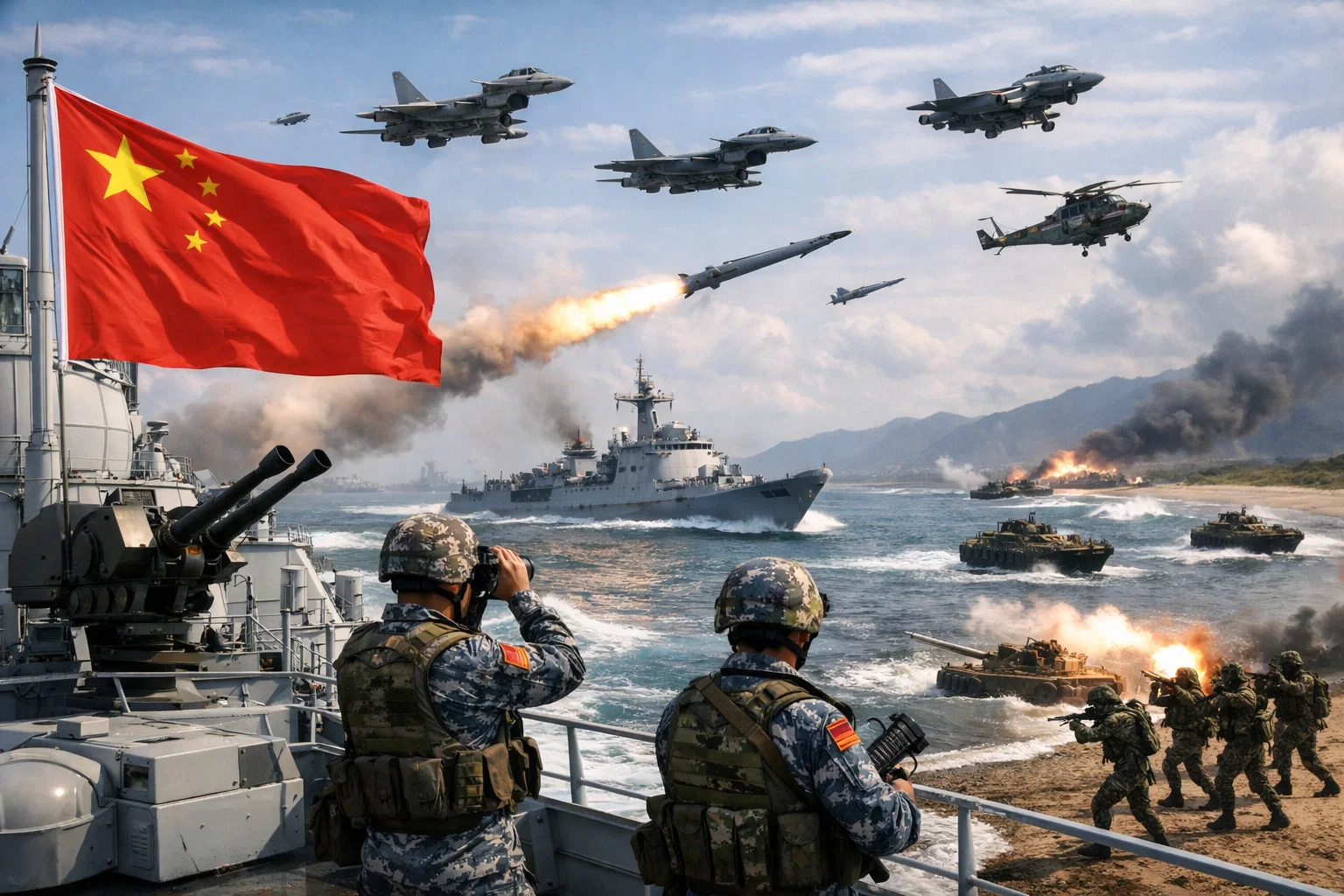
Reports describe combined-arms live-fire activity across multiple zones — air, sea and rocket forces plus simulated blockades targeting Keelung and Kaohsiung.
Taiwan’s defense ministry logged dozens of PLA aircraft and several dozen ships, and international outlets called it one of the largest post-2022 exercises.
4. Taiwan’s immediate military and civilian response
Taipei scrambled jets, mobilized rapid-response units, and announced its own drills to demonstrate readiness and deterrence.
Civil disruptions were severe: airlines reported thousands of cancelled or delayed flights and port schedules were affected as the drills simulated a naval blockade.
5. International reactions: US, Japan and regional partners
The U.S. State Department expressed deep concern and urged restraint while reiterating commitment to regional stability; Tokyo condemned the drills and warned against unilateral force.
Regional partners stressed de-escalation; diplomatic notes and coordinated statements are likely in the hours after such large exercises.
6. How these drills fit the PLA’s evolving doctrine
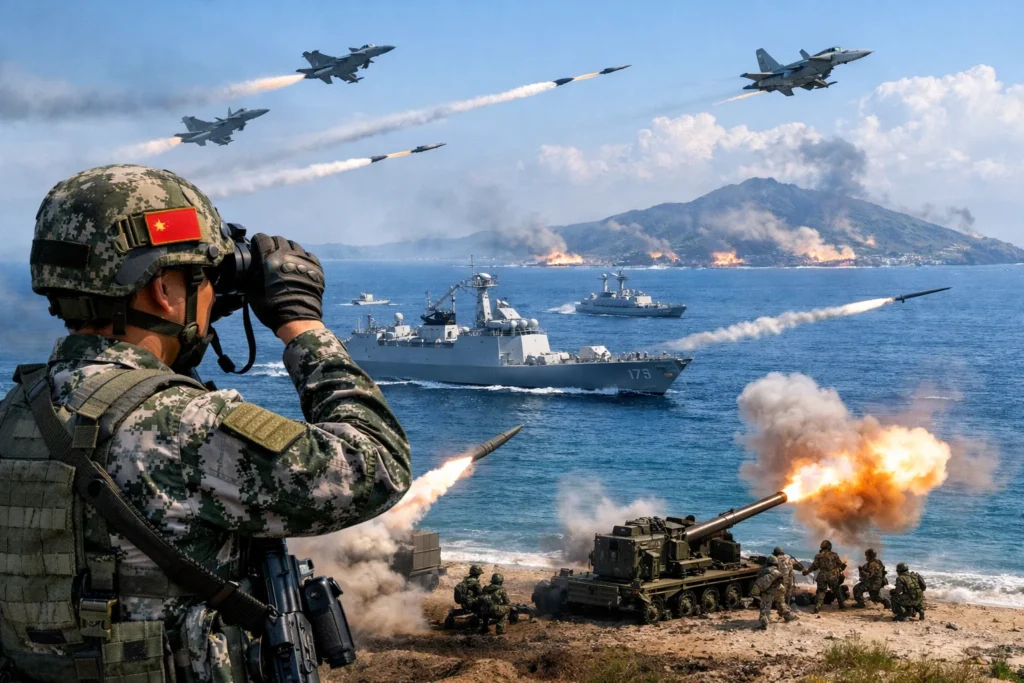
Analysts say the PLA is practicing a two-pronged approach: sustained pressure below the threshold of full invasion, and the capability to conduct high-tempo blockade operations if ordered.
Exercises increasingly integrate rockets, drones, electronic-warfare units and maritime sealift in scenarios that simulate isolating Taiwan from overseas support.
7. Risks of escalation and the “grey-zone” problem
Large drills create multiple flashpoints—close aircraft passes, contested maritime moves and misinterpreted signals—that raise the risk of accidental clashes.
Because both sides seek to avoid a fully declared war, each incident becomes an episode in a dangerous “grey zone” where escalation can spiral quickly.
8. What to watch in the coming 72 hours
Watch for: (1) official PLA maps and after-action statements that show whether drills stay in international waters; (2) Taiwan’s defense briefings for aircraft/ship tallies; (3) U.S. carrier/aircraft movements and allied consultations in Tokyo and Canberra.
Also monitor flight cancellations and shipping advisories—sustained logistical disruption signals the drills’ real operational reach.
10. Bottom line and sources
Bottom line: China’s Justice Mission 2025 drills mark a significant escalation in scale and intent around Taiwan, combining live-fire, blockade simulation and multi-service coordination to signal deterrence to Taipei and to outside supporters.
The immediate risk is tactical miscalculation; the strategic question is whether repeated high-tempo pressure will change how democracies in the region posture and cooperate.
Disclaimer: This article synthesizes reporting current as of Dec. 29, 2025. It aims to explain the facts and likely implications of China’s military exercises around Taiwan. For live updates, rely on official defense and diplomatic channels and major wire services cited above.